Kaladar
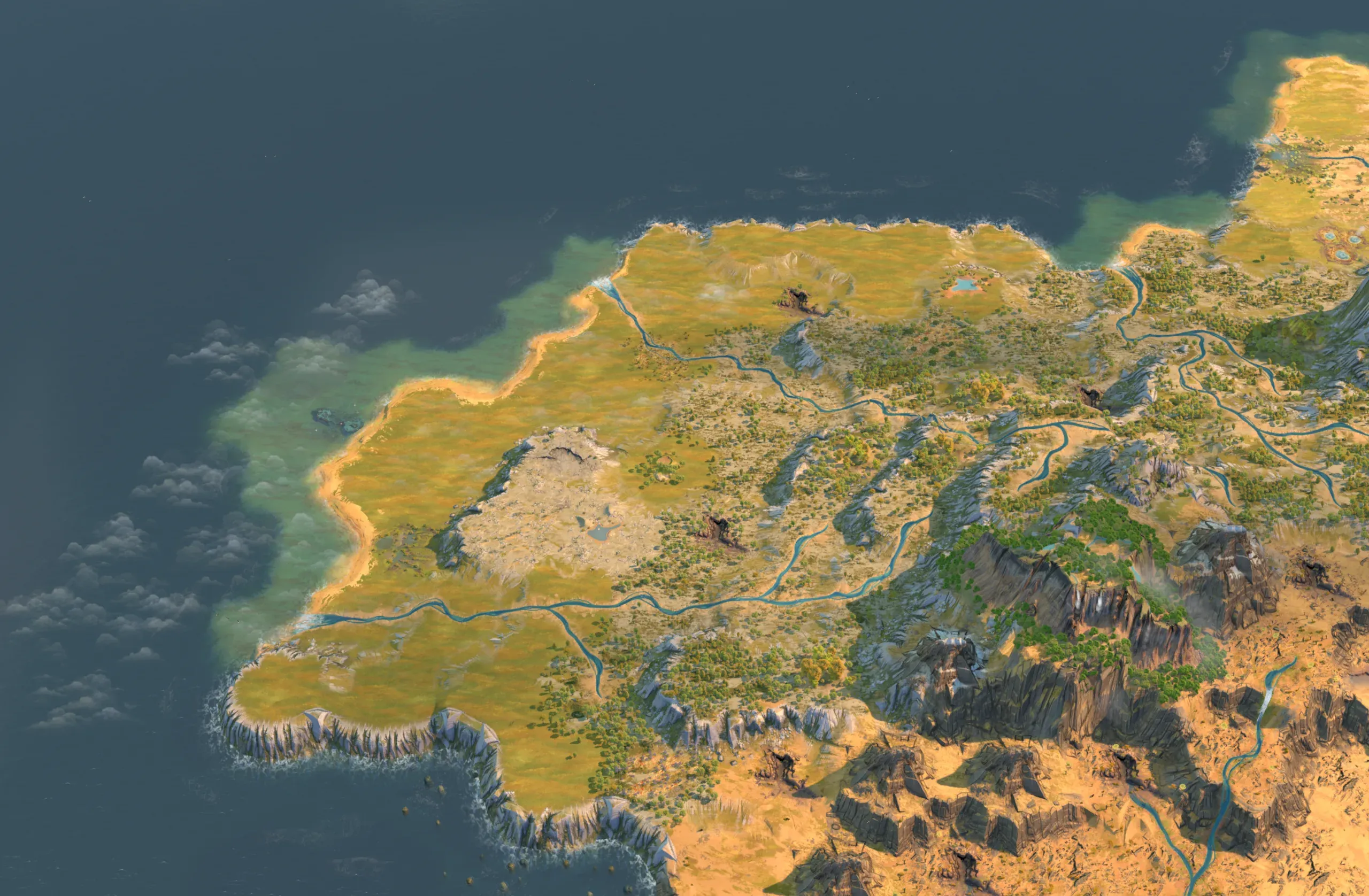
History of Kaladar
Section titled “History of Kaladar”Overview
Section titled “Overview”The history of Kaladar is defined by cycles of innovation, rivalry, and survival.
From its earliest coastal trade settlements, Kaladar developed into a network of competitive city-states whose prosperity depended on technology and commerce. These rival cities fought numerous wars among themselves before gradually uniting under the Concordance of Cities, forming the technocratic republic that exists today.
Throughout its history, Kaladar has faced persistent threats from neighboring powers, particularly Esken to the east and the Voltroyas Dwarven Kingdoms to the south. In response, Kaladaran engineers developed increasingly advanced military technologies, most notably the creation of Warforged constructs, which reshaped warfare across the region.
Origins of Kaladar
Section titled “Origins of Kaladar”Exploration Era (EE) — Early Settlement
Section titled “Exploration Era (EE) — Early Settlement”During the Exploration Era, the region that would become Kaladar was first settled by scattered communities of humans, dwarves, and halflings along the fertile coasts and river valleys of western Shezul.
Early Kaladaran settlements developed as independent trade cities, connected by river routes and coastal shipping lanes.
Key developments:
- establishment of the earliest port settlements along the Northal Sea
- expansion of agriculture across the fertile western plains
- discovery of mineral resources in the Voltroyas foothills
- early trade contact with neighboring cultures of Esken
During this period, Kaladar possessed no unified political identity, consisting instead of competing trade towns and frontier settlements.
The Age of Rival Cities
Section titled “The Age of Rival Cities”Inquiry Era (IQE)
Section titled “Inquiry Era (IQE)”As trade expanded and knowledge spread across Geminaea, Kaladaran settlements grew into prosperous city-states.
Each city developed its own government, alliances, and military forces.
Characteristics of the period:
- rapid growth of maritime trade
- increasing cultural exchange between human, dwarven, halfling, and azuran communities
- emergence of powerful merchant houses
- construction of early infrastructure linking cities
Despite their shared economic interests, rivalries between cities frequently escalated into commercial wars and territorial conflicts.
Several periods of intense conflict during the Inquiry Era nearly destroyed the fragile trade networks that sustained the region.
The Arcane Industrial Awakening
Section titled “The Arcane Industrial Awakening”Arcane Era (ACE)
Section titled “Arcane Era (ACE)”The Arcane Era marked a turning point in Kaladaran history as scholars and engineers began to apply emerging arcane knowledge to practical technologies.
Kaladar became one of the first regions of Aradaea to pursue systematic technological innovation.
Major developments:
- early experiments with Aethyr manipulation
- construction of arcane-powered irrigation and transport systems
- expansion of metallurgy and engineering industries
- development of the first aethyr engines
However, these advances also intensified rivalries between cities, leading to several destructive conflicts known collectively as the Forge Wars.
During these wars:
- rival cities deployed experimental arcane weapons
- several early Aethyr catastrophes devastated entire districts
- the first documented appearances of Aethyrborn entities occurred near industrial centers
These disasters contributed to growing pressure for political cooperation between the cities.
The Warforged Legions
Section titled “The Warforged Legions”Late Arcane Era
As conflicts with neighboring civilizations intensified, Kaladaran engineers sought new methods of warfare that could compensate for their relatively small population.
This led to the creation of the first Warforged.
Warforged were arcane constructs designed to function as tireless soldiers, combining mechanical bodies with bound magical intelligence.
Their introduction transformed Kaladaran warfare.
Key effects:
- armies could be fielded without relying entirely on civilian populations
- Warforged garrisons secured trade routes and frontier cities
- Kaladar gained a powerful deterrent against Esken and Voltroyas aggression
The Warforged legions played decisive roles in several major conflicts during this period.
The Era of Unification
Section titled “The Era of Unification”Convergence Era (CVE)
As the Convergence Crisis overshadowed Geminaea, the rival city-states of Kaladar gradually set aside their internal conflicts.
Facing the prospect of planetary catastrophe, Kaladaran leaders formed a political coalition that would eventually become the Concordance of Cities.
During this era:
- trade and infrastructure were unified under shared regulations
- Warforged armies were reorganized into coordinated defense forces
- Aethyr research accelerated dramatically
Though the cities retained local autonomy, the foundations of the modern republic were established during this period.
The Lunar Transformation
Section titled “The Lunar Transformation”Early Lunar Era (LE)
Section titled “Early Lunar Era (LE)”The creation of Ravena radically altered Kaladar’s geopolitical position.
Because much of Kaladar lies within the optimal latitudes for Raveni shuttle travel, the region became a major gateway for interplanetary commerce.
Consequences included:
- explosive economic growth
- expansion of skyship infrastructure
- increased migration from across Geminaea
- rising influence of guilds and industrial houses
Kaladar’s cities grew into some of the most technologically advanced centers in Aradaea.
The Border Wars
Section titled “The Border Wars”Despite its prosperity, Kaladar continued to face persistent military threats.
Major conflicts during the Lunar Era include:
The Esken Wars
A series of ideological and territorial conflicts between Kaladar’s technocratic republic and Esken’s theocratic regime.
These wars led to the militarization of eastern frontier cities such as Gate Astrava.
The Voltroyas Conflicts
Periodic clashes with the Chaos-Dwarf kingdoms of the Voltroyas mountains over mining rights and mountain passes.
These tensions led to the construction of fortified cities such as Vedrassa.
Warforged legions proved crucial in defending Kaladar’s borders during these conflicts.
The Modern Republic
Section titled “The Modern Republic”Over time, the Concordance of Cities evolved into the political system that governs Kaladar today.
In the modern era:
- the Grand Conclave of Inventors coordinates policy between cities
- guilds and industrial houses dominate economic power
- Warforged forces remain an important component of national defense
- Aethyr technology continues to drive innovation
Yet Kaladar’s prosperity comes with persistent challenges:
- economic inequality between industrial elites and laborers
- tensions between rival cities
- ongoing border conflicts
- the controversial existence of Aethyrborn entities
Kaladar remains a powerful but precarious civilization whose future depends on maintaining balance between progress, stability, and survival.
Politics of Kaladar
Section titled “Politics of Kaladar”Overview
Section titled “Overview”Kaladar is a technocratic mercantile republic formed from a network of powerful city-states united by trade, infrastructure, and shared dependence on Aethyr-powered technology.
Political authority is distributed among cities, guilds, and industrial houses, each competing for prestige and economic dominance while cooperating to maintain the stability of the republic.
Innovation is the cultural cornerstone of Kaladaran identity, but beneath its gleaming skyports and engineered landscapes lies a society shaped by intense competition, economic inequality, and constant external pressure.
The Concordance of Cities
Section titled “The Concordance of Cities”Kaladar originated as a collection of independent trade cities that gradually unified under a framework known as the Concordance of Cities.
This agreement established:
- mutual defense between cities
- standardized trade laws
- shared infrastructure systems
- coordinated regulation of Aethyr technology
While the Concordance binds Kaladar together, individual cities retain significant autonomy, and political rivalry between them remains a defining feature of the republic.
The Grand Conclave
Section titled “The Grand Conclave”The central governing body of the republic is the Grand Conclave of Inventors.
The Conclave is composed primarily of:
- master engineers
- industrial magnates
- guild representatives
- delegates from the largest cities
Its responsibilities include:
- regulating Aethyr technologies
- coordinating infrastructure projects
- managing foreign diplomacy
- overseeing military policy
Despite its authority, the Conclave rarely acts without the backing of the powerful guilds and merchant consortiums that finance Kaladar’s economy.
Guilds and Industrial Houses
Section titled “Guilds and Industrial Houses”The true engines of political power in Kaladar are its guilds and industrial houses.
These organizations control the republic’s most vital industries:
- Aethyr refinement
- skyship construction
- arcane engineering
- trade fleets
- infrastructure development
Competition between guilds is fierce, and political maneuvering within the Conclave often reflects the interests of rival industrial factions.
In many cities, civic leadership is effectively determined by whichever guild controls the dominant local industry.
Economic Stratification
Section titled “Economic Stratification”Though Kaladar prides itself on progress and innovation, its prosperity is unevenly distributed.
Society broadly divides into several economic tiers:
Industrial Elite
- Inventor dynasties and guild magnates
- Control patents, factories, and trade fleets
- Maintain enormous political influence
Technical Class
- Engineers, artificers, navigators
- Skilled workers essential to Kaladar’s infrastructure
- Generally comfortable but politically subordinate
Laboring Majority
- Factory workers
- dockhands
- miners
- agricultural laborers
These citizens sustain the republic’s industrial output but often live in dense worker districts surrounding manufacturing centers.
In frontier and industrial cities, labor disputes and unrest are not uncommon.
The Aethyr Economy
Section titled “The Aethyr Economy”Kaladar’s prosperity depends on refining highly concentrated Aethyr energy, which powers everything from skyships to irrigation networks.
Aethyr refineries, crystal reactors, and arcane turbines form the backbone of the republic’s infrastructure.
However, the concentration of such energies produces an unpredictable byproduct.
The Aethyrborn
Section titled “The Aethyrborn”Intense concentrations of Aethyr occasionally coalesce into ephemeral entities known as Aethyrborn.
These beings are short-lived manifestations of magical energy that develop a fragile form of consciousness.
To maintain their existence, Aethyrborn must continuously consume Aethyr.
Because they draw from the same energy sources that power Kaladar’s technology, most citizens view them as parasitic manifestations that threaten vital infrastructure.
Throughout Kaladar’s history:
- Aethyrborn have been systematically hunted and destroyed
- refinery districts maintain specialized extermination teams
- entire communities of Aethyrborn have been eradicated when discovered
Some Aethyrborn have attempted to organize into insurgent groups, arguing that their sentience entitles them to recognition as mortal beings.
A small minority of Kaladaran scholars and philosophers have expressed sympathy for their cause, but such views remain controversial.
To most citizens, the Aethyrborn remain a dangerous byproduct of progress.
Internal Rivalries
Section titled “Internal Rivalries”Even within the Concordance, competition between cities remains intense.
Cities compete for:
- trade dominance
- engineering prestige
- infrastructure investment
- access to Aethyr resources
While open warfare between cities is forbidden under the Concordance, economic sabotage, espionage, and political maneuvering are common.
External Pressures
Section titled “External Pressures”Kaladar’s unity is reinforced by the threats that surround it.
Esken
A long-standing rival whose theocratic ideology sharply contrasts with Kaladar’s technocratic culture.
Voltroyas
The Chaos-Dwarf kingdoms of the mountains maintain a tense relationship defined by both trade and suspicion.
Moorthal
The harsh southern lands periodically send raiders into Kaladar’s frontier territories.
These external dangers encourage cooperation between Kaladar’s cities, even as internal rivalries simmer beneath the surface.
The Balance of Progress
Section titled “The Balance of Progress”Kaladar’s society is built upon the belief that technological advancement will ultimately benefit all citizens.
Yet this progress carries a cost.
Economic inequality, political intrigue, and the consequences of uncontrolled Aethyr manipulation continually threaten the stability of the republic.
Whether Kaladar’s relentless pursuit of innovation will secure its future or ultimately fracture its fragile unity remains an open question.
List of Settlements
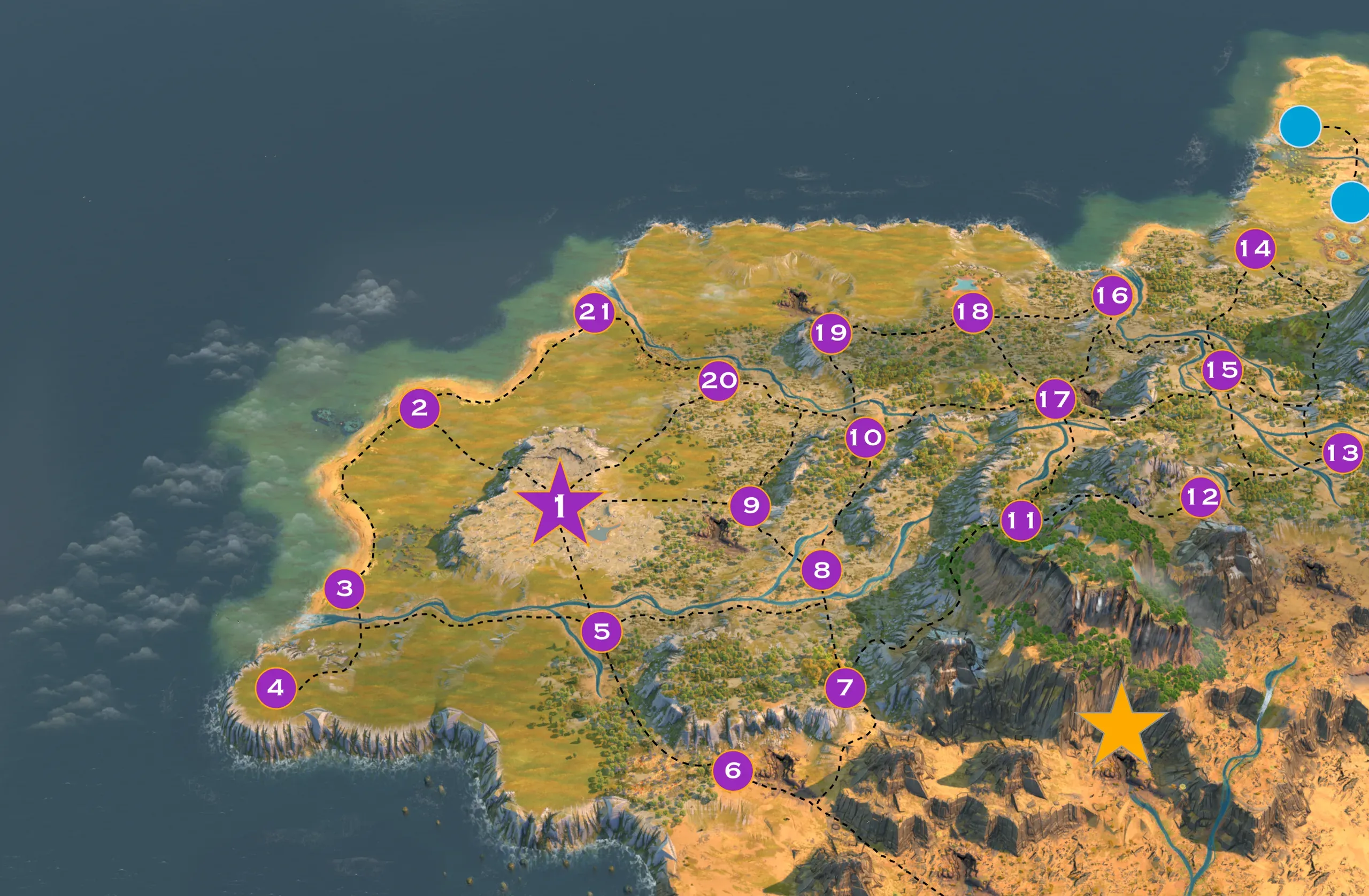
Section titled “List of Settlements”(1) Kalivara, Kaladar’s Pulsing Heart
Section titled “(1) Kalivara, Kaladar’s Pulsing Heart”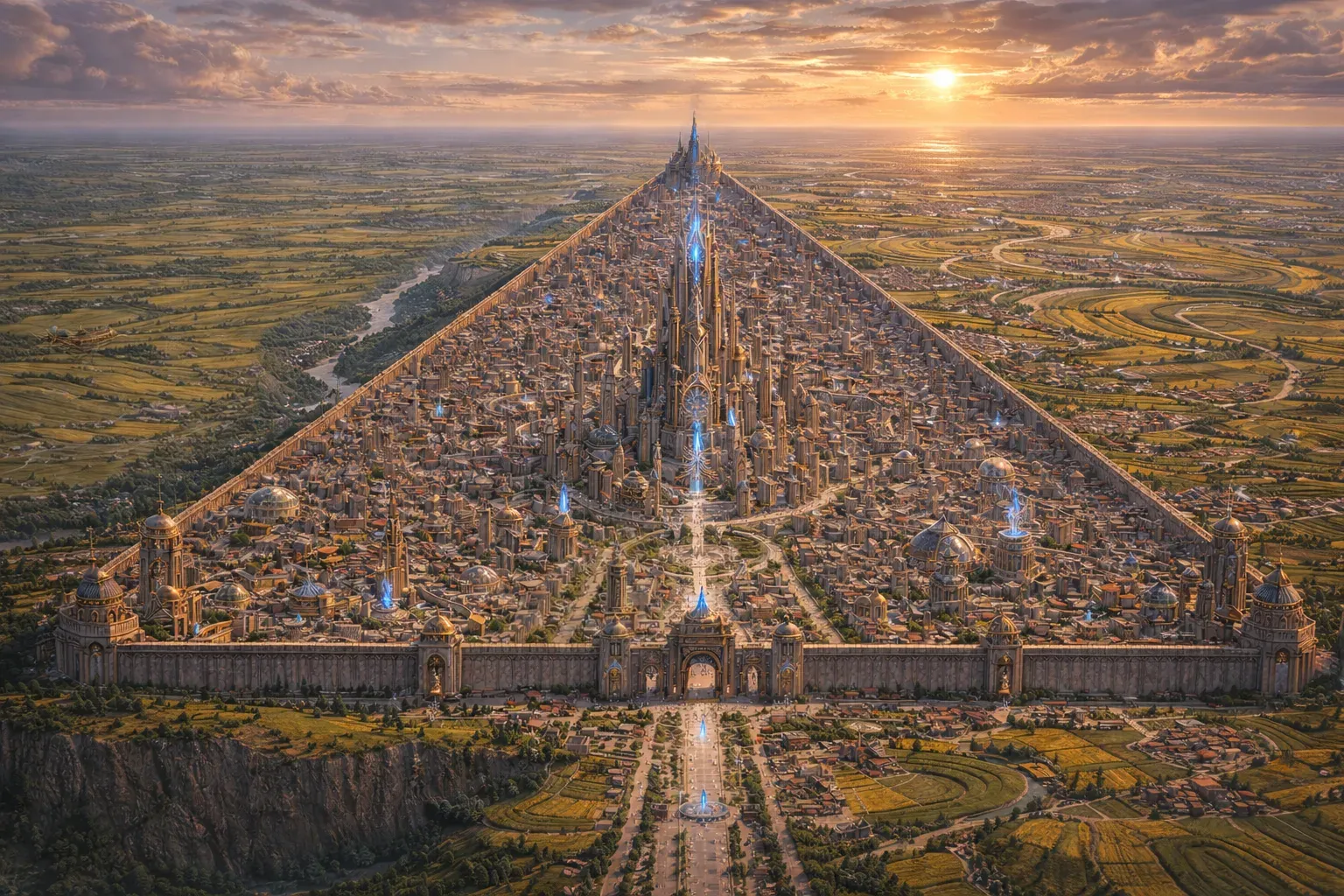
Rich Visual Description
The city sits atop a massive rocky plateau surrounded by fertile plains and rivers, with sheer slopes descending into surrounding farmland and wetlands. The plateau is carved into a perfect isosceles triangular city plan, each edge stretching roughly twenty miles, forming a carefully engineered urban grid radiating from the city’s center.
The architecture blends Kaladar’s arcane technology with renaissance trade-city elegance: gleaming copper and brass towers, ivory stone academies, intricate bridges, skyship docks, and enormous aethyr turbines rising above the skyline.
At the heart of the city stands the Grand Conclave Spire, an immense crystalline and metal structure surrounded by concentric civic districts. From it radiate wide avenues and canal systems dividing the city into geometric districts dedicated to governance, research, industry, and habitation.
Throughout the city, towering aethyr turbines, glowing crystal reactors, and arcane power pylons hum with magical energy. Floating platforms and skyship docks drift above the skyline, connected by elegant arcane cables and lift towers.
Massive skyships and aerial vessels move slowly through the sky lanes, docking at towering mooring spires. Streams of smaller courier craft weave between them.
Districts of the city show distinct architectural character:
- University districts filled with domed academies, observatories, and arcane laboratories
- Industrial districts with massive foundries, crystal refineries, and aethyr engine factories
- Residential districts of elegant multilevel stone buildings, gardens, and terraces
- Market districts with colorful canopy bazaars and busy plazas
Citizens of many cultures move through the streets: humans, dwarves, halflings, half-elves, and small clever azurans wearing arcane gadgets and mechanical tools.
Personal magical devices glow faintly in belts, gauntlets, and mechanical harnesses worn by engineers and inventors.
Above the city, faint aethyr currents shimmer in the air, powering floating constructs and illuminating the skyline with subtle magical light.
The triangular city walls are enormous engineering marvels, reinforced with arcane conduits and defense towers, while three monumental gates open toward the surrounding regions of Kaladar.
Outside the plateau, vast agricultural terraces, irrigation canals, and small satellite towns spread across the surrounding plains.
Population: ~420,000
Heritage Breakdown
- Humans: 38%
- Half-elves: 22%
- Azurans: 17%
- Dwarves: 10%
- Halflings: 8%
- Other: 5%
Economic Specializations
- Aethyr engine design
- Skyship construction
- Arcane engineering universities
- Central governance of the republic
- Aethyr power grid management
Cultural Distinctions
- The Grand Inventors’ Conclave governs the republic here.
- The city skyline is filled with aethyr turbines and floating platforms.
- Massive Inventors’ Festivals are held annually.
- Citizens commonly wear personal arcane devices for daily tasks.
(2) Port Veshara, Gateway of the Northal Sea
Section titled “(2) Port Veshara, Gateway of the Northal Sea”Population: ~180,000
Heritage Breakdown
- Humans: 52%
- Half-elves: 18%
- Halflings: 10%
- Azurans: 10%
- Dwarves: 8%
- Other: 2%
Economic Specializations
- Maritime trade
- Skyship drydocks
- Navigation instrumentation
- Northal fishing fleets
Cultural Distinctions
- Cosmopolitan port culture with foreign merchant enclaves.
- Known for sky-lantern harbors guiding vessels through fog.
- Night markets sell rare goods from Azura, Ashton, and beyond.
(3) Port Velorin, Gateway of the Velos River
Section titled “(3) Port Velorin, Gateway of the Velos River”Population: ~95,000
Heritage Breakdown
- Humans: 56%
- Halflings: 16%
- Azurans: 12%
- Dwarves: 10%
- Half-elves: 5%
- Other: 1%
Economic Specializations
- River barge trade
- Agricultural exports
- Irrigation engineering
Cultural Distinctions
- Massive tiered river docks and automated floodgates.
- Halfling-run trade houses manage most river commerce.
(4) Asterhal, The Beacon Hold
Section titled “(4) Asterhal, The Beacon Hold”Population: ~55,000
Heritage Breakdown
- Humans: 60%
- Halflings: 12%
- Azurans: 10%
- Dwarves: 10%
- Half-elves: 6%
- Other: 2%
Economic Specializations
- Lighthouse engineering
- Coastal defense
- Signal tower networks
Cultural Distinctions
- Home to the towering Aethyr Beacon, visible far offshore.
- Maintains Kaladar’s coastal signal relay system.
(5) Pelendra, The Verdant Wash
Section titled “(5) Pelendra, The Verdant Wash”Population: ~75,000
Heritage Breakdown
- Humans: 42%
- Halflings: 20%
- Azurans: 18%
- Dwarves: 15%
- Half-elves: 4%
- Other: 1%
Economic Specializations
- Arcane agriculture
- Engineered seed production
- Irrigation technologies
Cultural Distinctions
- Known for vast aethyr-regulated orchards and vineyards.
- Famous export: Sunfruit wine.
(6) Karaveth, The Dune Watch
Section titled “(6) Karaveth, The Dune Watch”Population: ~32,000
Heritage Breakdown
- Humans: 65%
- Dwarves: 15%
- Halflings: 8%
- Azurans: 7%
- Half-elves: 4%
- Other: 1%
Economic Specializations
- Frontier defense
- Caravan trade
- Salt extraction
Cultural Distinctions
- Headquarters of the Dust Guard, defending the Moorthal frontier.
(7) Gate Khazura, The Crag Watch
Section titled “(7) Gate Khazura, The Crag Watch”Population: ~41,000
Heritage Breakdown
- Dwarves: 38%
- Humans: 32%
- Azurans: 15%
- Halflings: 8%
- Half-elves: 6%
- Other: 1%
Economic Specializations
- Mountain trade
- Ore transport
- Tunnel engineering
Cultural Distinctions
- Built into sheer cliff faces with enormous mechanical lifts.
- Primary passage to the Voltroyas trade routes.
(8) Vashara-Casca, The Stone Wash
Section titled “(8) Vashara-Casca, The Stone Wash”Population: ~50,000
Heritage Breakdown
- Humans: 38%
- Dwarves: 28%
- Azurans: 18%
- Halflings: 10%
- Half-elves: 5%
- Other: 1%
Economic Specializations
- Stoneworks
- Aqueduct construction
- Bridge engineering
Cultural Distinctions
- Known for elaborate water-channel architecture.
(9) Sur-Kallion, The Sunken Sanctuary
Section titled “(9) Sur-Kallion, The Sunken Sanctuary”Population: ~38,000
Heritage Breakdown
- Humans: 32%
- Azurans: 28%
- Dwarves: 18%
- Half-elves: 12%
- Halflings: 8%
- Other: 2%
Economic Specializations
- Archaeology
- Aethyr research
- Historical preservation
Cultural Distinctions
- Built around partially buried ancient ruins predating Kaladar.
(10) Varketh, The Stepped Hold
Section titled “(10) Varketh, The Stepped Hold”Population: ~60,000
Heritage Breakdown
- Dwarves: 33%
- Humans: 32%
- Azurans: 18%
- Halflings: 9%
- Half-elves: 6%
- Other: 2%
Economic Specializations
- Metallurgy
- Geothermal power
- Industrial engineering
Cultural Distinctions
- City built on massive terraced mountain steps.
(11) Vornastra, The Wooded Sanctuary
Section titled “(11) Vornastra, The Wooded Sanctuary”Population: ~70,000
Heritage Breakdown
- Half-elves: 38%
- Humans: 26%
- Halflings: 16%
- Azurans: 10%
- Dwarves: 8%
- Other: 2%
Economic Specializations
- Forestry
- Arcane botany
- Living wood architecture
Cultural Distinctions
- Houses grown from shaped living trees.
(12) Arithal, Between Two Peaks
Section titled “(12) Arithal, Between Two Peaks”Population: ~48,000
Heritage Breakdown
- Half-elves: 34%
- Humans: 28%
- Halflings: 18%
- Dwarves: 10%
- Azurans: 8%
- Other: 2%
Economic Specializations
- Mountain pass trade
- Astronomical observatories
- Aethyr wind capture
Cultural Distinctions
- Known for sky observatories studying Ravena’s orbit.
(13) Vedrassa, The High Watch
Section titled “(13) Vedrassa, The High Watch”Population: ~85,000
Heritage Breakdown
- Dwarves: 34%
- Humans: 30%
- Half-elves: 15%
- Halflings: 10%
- Azurans: 8%
- Other: 3%
Economic Specializations
- Raveni shuttle terminal
- Mountain trade with the Voltroyas
- Skyship logistics and heavy airship construction
- Military engineering and defensive infrastructure
- Metallurgy and aethyr-infused armaments
Cultural Distinctions
- Built atop a series of stepped basalt terraces carved into the Voltroyas foothills.
- Massive skyship docks and Raveni shuttle towers dominate the skyline.
- The city is ringed with dwarven-engineered fortress walls and artillery platforms designed to deter aggression from the Chaos-Dwarf kingdoms deeper within the Voltroyas.
- Despite the tense border, trade caravans from the Voltroyas dwarves regularly arrive, seeking access to Raveni markets through Kaladar’s shuttle network.
- A strong dwarven cultural presence influences the city’s architecture, with stone halls, forge districts, and subterranean transit tunnels running beneath the city.
(14) Gate Astrava, The Esken Watch
Section titled “(14) Gate Astrava, The Esken Watch”Population: ~44,000
Heritage Breakdown
- Humans: 42%
- Half-elves: 20%
- Halflings: 12%
- Azurans: 11%
- Dwarves: 12%
- Other: 3%
Economic Specializations
- Border defense and military command
- Intelligence and reconnaissance operations
- Aethyr weapons testing and deployment
- Military logistics and supply production
Cultural Distinctions
- Gate Astrava is a fortified bastion-city, guarding the eastern approaches to Kaladar.
- Enormous aethyr cannon towers and arcane artillery batteries line the eastern cliffs, capable of striking deep into Esken territory.
- The city maintains a network of observation spires and scrying arrays that monitor movement across the border.
- Though some architectural influence from Esken exists due to centuries of proximity, the atmosphere is tense and militarized.
- Streets are dominated by soldiers, engineers, and intelligence agents rather than merchants.
- The fortress walls are reinforced with aethyr-conductive crystal lattices, enabling the city’s defensive weapon systems.
(15) Kalestra, The Cliff Wash
Section titled “(15) Kalestra, The Cliff Wash”Population: ~36,000
Heritage Breakdown
- Humans: 40%
- Half-elves: 28%
- Halflings: 18%
- Dwarves: 8%
- Azurans: 4%
- Other: 2%
Economic Specializations
- Terraced agriculture
- Silk production
- Vineyards
Cultural Distinctions
- Famous for dramatic cliffside gardens.
(16) Niravel, Gateway of the Niras River
Section titled “(16) Niravel, Gateway of the Niras River”Population: ~72,000
Heritage Breakdown
- Humans: 44%
- Halflings: 22%
- Half-elves: 18%
- Azurans: 9%
- Dwarves: 5%
- Other: 2%
Economic Specializations
- River transport
- Timber rafting
- Grain trade
Cultural Distinctions
- Headquarters of the Niras River Guild.
(17) Serevath, The Five-Point Crossing
Section titled “(17) Serevath, The Five-Point Crossing”Population: ~68,000
Heritage Breakdown
- Humans: 36%
- Half-elves: 24%
- Halflings: 20%
- Azurans: 12%
- Dwarves: 6%
- Other: 2%
Economic Specializations
- Regional trade crossroads
- Road engineering
- Merchant guildhouses
Cultural Distinctions
- Five grand bridges meet at the city’s central plaza.
(18) Arvessa, Traveler’s Rest
Section titled “(18) Arvessa, Traveler’s Rest”Population: ~27,000
Heritage Breakdown
- Humans: 48%
- Halflings: 24%
- Half-elves: 16%
- Azurans: 7%
- Dwarves: 4%
- Other: 1%
Economic Specializations
- Caravan rest hub
- Hospitality
- Livestock trade
Cultural Distinctions
- Known for luxurious caravanserais and inns.
(19) Khazura, The Mist Hold
Section titled “(19) Khazura, The Mist Hold”Population: ~34,000
Heritage Breakdown
- Dwarves: 42%
- Humans: 32%
- Azurans: 12%
- Halflings: 8%
- Half-elves: 5%
- Other: 1%
Economic Specializations
- Mining
- Ore refining
- Stonecraft
Cultural Distinctions
- Built among volcanic mist vents.
(20) Salenara, The Scholar Sanctuary
Section titled “(20) Salenara, The Scholar Sanctuary”Population: ~52,000
Heritage Breakdown
- Azurans: 34%
- Humans: 30%
- Half-elves: 18%
- Halflings: 12%
- Dwarves: 4%
- Other: 2%
Economic Specializations
- Universities
- Aethyr theory
- Experimental arcane research
Cultural Distinctions
- Home of the Academy of Aethyric Harmonics.
(21) Astravel, Gateway of the Astras River
Section titled “(21) Astravel, Gateway of the Astras River”Population: ~61,000
Heritage Breakdown
- Humans: 42%
- Halflings: 24%
- Half-elves: 16%
- Azurans: 10%
- Dwarves: 6%
- Other: 2%
Economic Specializations
- River delta trade
- Fishing fleets
- Aethyr-powered watermills
Cultural Distinctions
- Famous floating markets and lantern festivals.