Valdesh
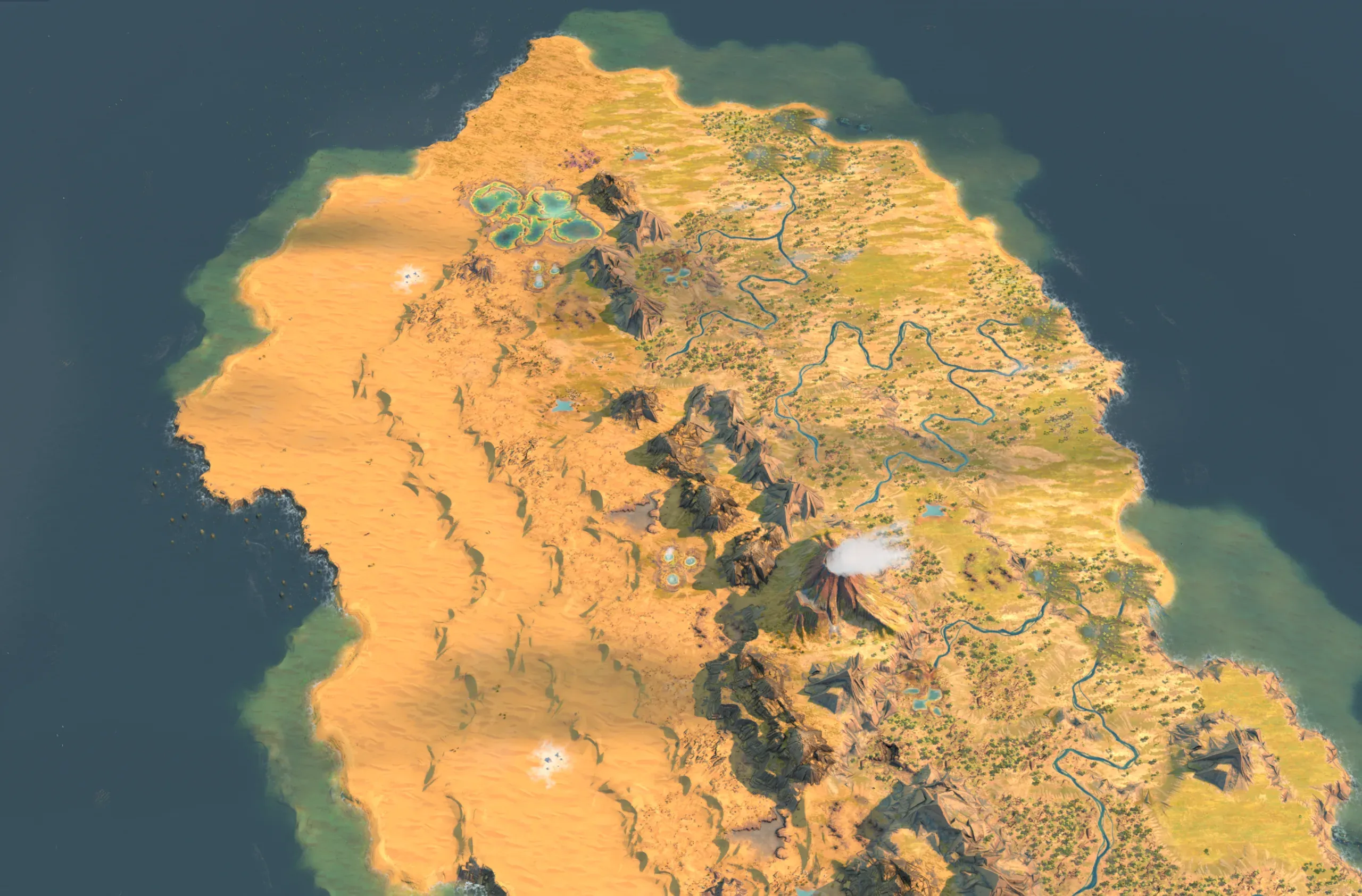
North Valdesh
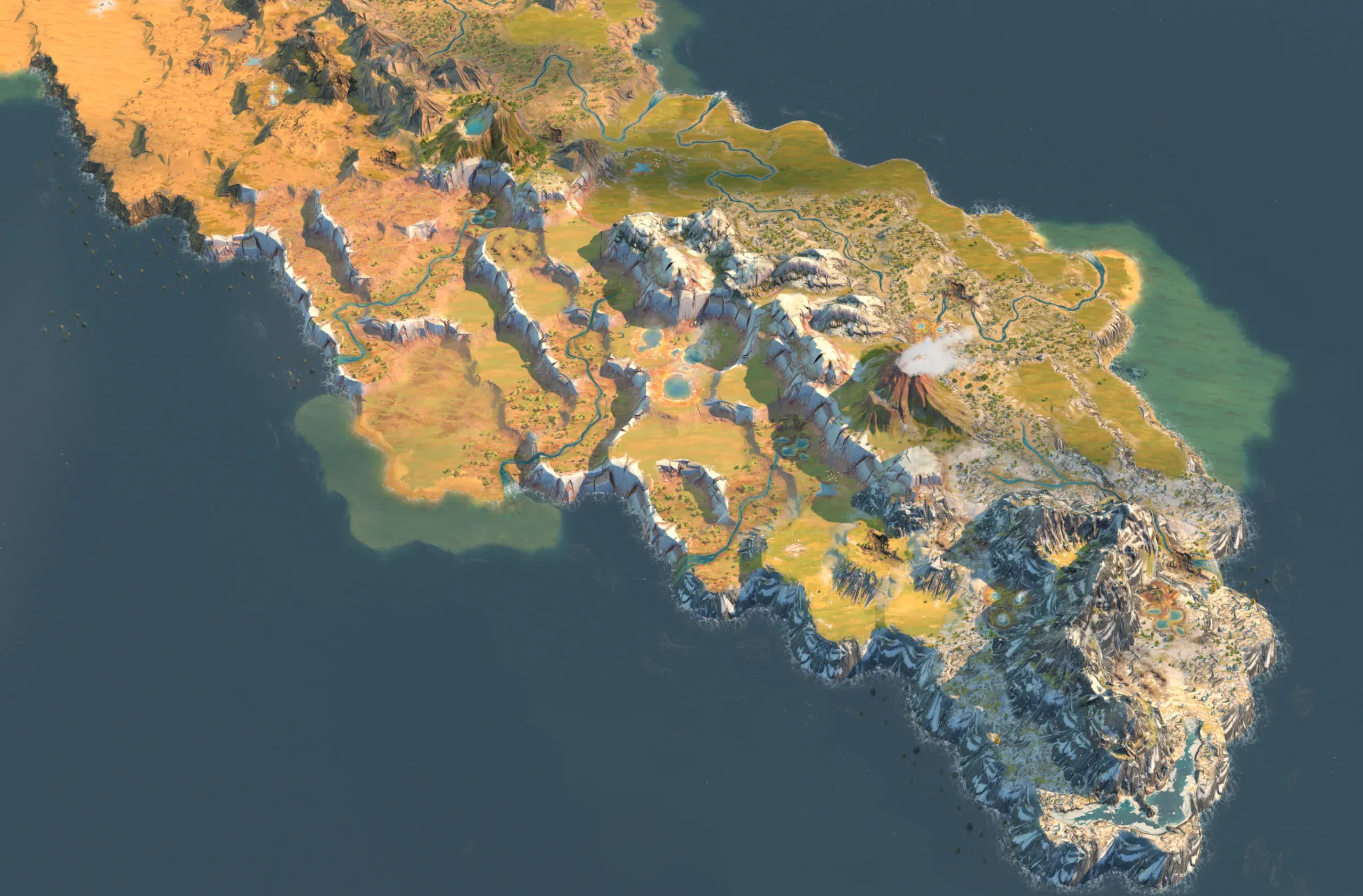
South Valdesh
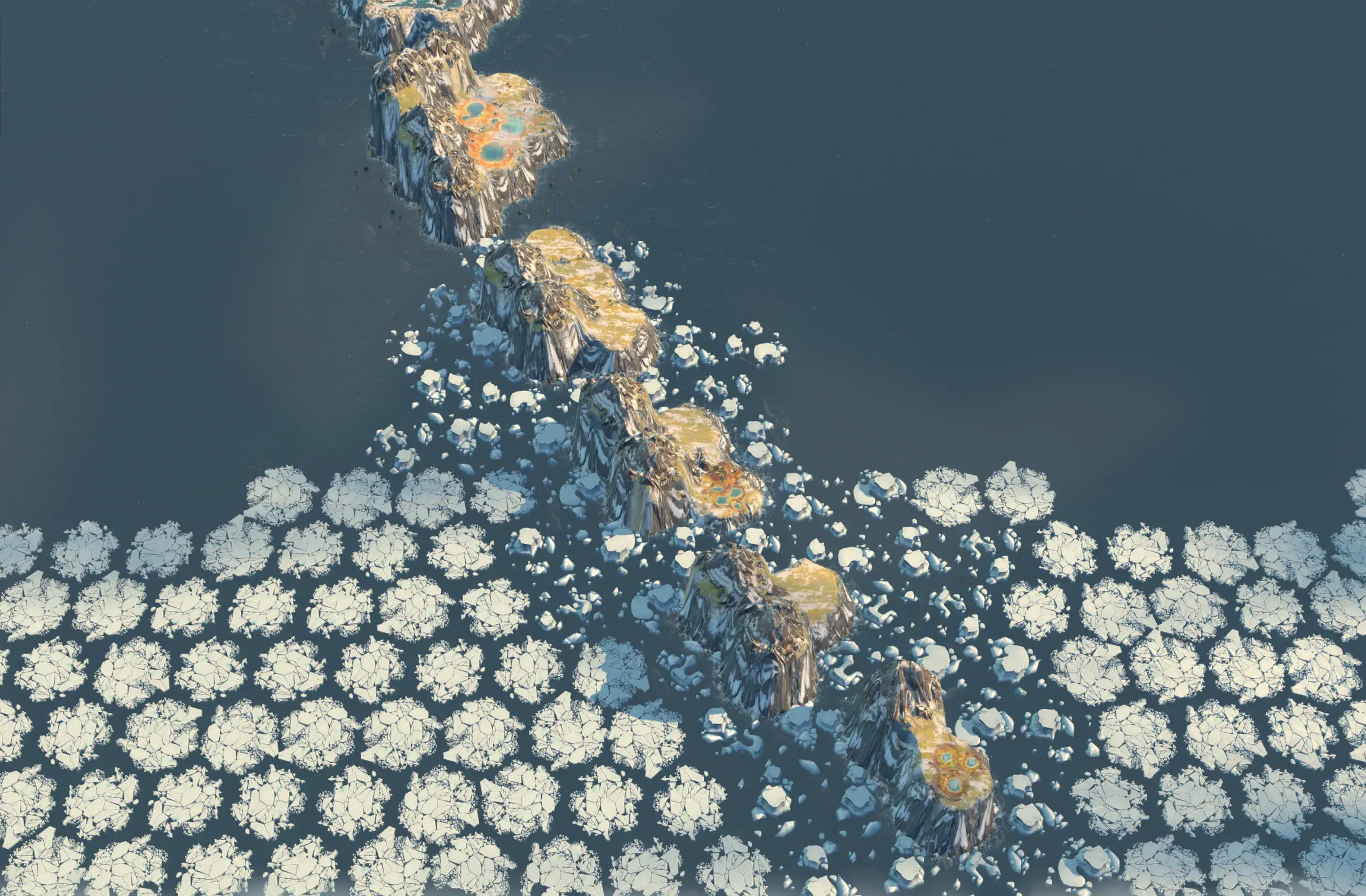
Valdesh Isles
Introduction: Valdesh, Realm of the Rifttorn Elements
Section titled “Introduction: Valdesh, Realm of the Rifttorn Elements”Far in the south-western reaches of Aradaea lies Valdesh: an island continent and scattered archipelago cut off from the political gravity of Ravena and the northern spheres of influence. Between Valdesh and its nearest continental neighbors stretch leagues of treacherous sea, fickle currents, and volatile storms born of elemental instability. Few ships brave the crossing. Fewer still return with more than fragments of rumor.
Valdesh is a land where the veil between the Mortal Plane and the Elemental Realms runs thin. The earth smolders beneath volcanic calderas. Desert winds howl with unnatural clarity. Rivers carve living paths that seem to shift with willful intent. Mountain peaks pierce the sky so sharply that only the lightest of step can reach them. In these lands, the elements are not distant abstractions — they are neighbors, teachers, adversaries, and kin.
Here dwell the Elemari, Aradaea’s elemental folk. Known elsewhere as distant cousins to Elementals, the Elemari are not merely touched by the elements; they are shaped by them. Generations spent within Valdesh’s volatile confluences have altered their biology, temperament, and culture. Fire-blooded Elemari Xeeko thrive in volcanic wastes and arid northwestern deserts. Wind-bound Elemari Azen make homes upon high mountain ridges unreachable by others. Water-woven clans follow river systems and coastal inlets. Stone-rooted earth kin settle among cliffs, within deep valleys, and throughout deep caverns where the bedrock hums with planar resonance.
The geography of Valdesh dictates its civilization. Many regions are inhospitable to one affinity yet nurturing to another. As a result, mixed settlements are rare; communities tend to cluster by elemental alignment. Yet these communities are seldom isolated from one another. Borders between affinities often lie close, and over centuries the Elemari have developed patterns of cooperation, exchange, and economic interdependence. What one element cannot sustain alone, another provides.
Yet this harmony has not always been so.
In Valdesh’s distant past, the Elemari existed as fiercely tribal and competitive societies. Elemental affinity was identity, allegiance, and weapon. Coalitions rose and fractured in cycles of suspicion and conflict. Entire regions bear the scars of those turbulent eras. Yet nearly three centuries have passed since the last great internecine war. From the ashes of that final conflict emerged a fragile but enduring equilibrium — a network of mutual reliance so woven into daily life that large-scale war now seems unthinkable.
Isolation shaped this transformation. With little consistent influence from Ravena or the broader world, the Elemari evolved within a microcosm of elemental reality. News from beyond the southern seas travels slowly and often carries little consequence. While foreign explorers and merchants occasionally make landfall, and the rare Elemari adventurer ventures outward, Valdesh remains culturally distinct — self-contained, deliberate, and deeply rooted in tradition.
Across all four elemental peoples, certain values endure. The Elemari are largely collectivist and communal. Individual ambition is tempered by responsibility to one’s clan and settlement. Leadership is rarely centralized in singular rulers; instead, councils of consensus guide communities — composed of druids, sages, shamans, and those whose wisdom reflects long communion with the planes. Innovation proceeds cautiously, for change risks imbalance. Stability, continuity, and reverence for elemental harmony define the rhythm of daily life.
Thus most Elemari live steady, predictable lives shaped by tradition and environment. Technology advances slowly. Cultural shifts unfold over generations. To outsiders, Valdesh may appear stagnant. To its people, it is enduring.
Yet beneath this equilibrium lies a land still torn at its seams. The elements whisper, surge, and strain against their boundaries. Confluences flare unexpectedly. Volcanoes rumble with more than tectonic unrest. Storms gather without warning. The Realm of the Rifttorn Elements remains what it has always been: beautiful, perilous, and alive.
And from this land, sometimes, an Elemari steps beyond the horizon, carrying within them the weight of four planes and a world that has never needed the north… until perhaps now.
Mythic History of Valdesh and the Elemari
Section titled “Mythic History of Valdesh and the Elemari”Like most peoples of Aradaea, the Elemari trace their distant ancestry to the primordial human diaspora. In the earliest eras of recorded theory, nomadic humans spread across the continents of Aradaea, long before permanent settlement and political consolidation reshaped the world. Though much of that era is lost to incomplete and contradictory records, scholars across Aradaea generally agree that most modern peoples share common human origins.
Valdesh’s story begins within that ancient migration.
During the last ice age, land bridges connected Akaria to the western territories that would later become Valdesh. Human tribes crossed into these lands and established scattered settlements among volcanic plains, wind-scoured highlands, and coastal river systems. When the ice age ended and sea levels rose, those land connections were submerged. Valdesh became an island continent, cut off from the broader developments unfolding elsewhere in Aradaea.
For many thousands of years, its inhabitants remained human in form and nature. Valdesh was always geologically volatile and more strongly influenced by elemental forces than most regions of Aradaea, but these influences were stable and cyclical. Volcanoes erupted, storms gathered, rivers flooded, yet the boundaries between the Mortal Plane and the Elemental Realms remained intact.
Over long stretches of time, subtle adaptation began. Communities living near calderas grew more tolerant of heat and ash. Mountain dwellers became sure-footed and resilient to thin air. River clans developed a cultural and physiological affinity for water and seasonal flow. Stonebound groups in the fault-lined south became broad-shouldered and enduring.
These changes were environmental and gradual. Elemental affinity at this stage reflected habitat and tradition rather than inherited metaphysical distinction.
This changed during the Arcane Era.
Beginning roughly 3400 years ago, the increased study and manipulation of Aethyr across Geminaea began to strain the unseen balances that separated planes of existence. As mortals drew more deeply upon arcane forces, the containment that held the primal energies of the Elemental Planes weakened. Valdesh, already situated upon both fault lines of stone and leylines of aethyr, proved particularly vulnerable to these pressures.
Elemari historians refer to this period not as the Arcane Ascendance, but as The Thinning.
Elemental manifestations intensified. Fumaroles burned hotter and longer. Storm systems formed without seasonal cause. Rivers shifted course unpredictably. Caverns opened into incandescent depths. Regions that had once supported mixed habitation became increasingly stratified by elemental influence.
When Ravena was created approximately 2400 years ago, the synchronized exertion of planetary Aethyr amplified this instability dramatically. The creation of the artificial moon altered not only celestial mechanics but also metaphysical pressures throughout Geminaea. In Valdesh, the Thinning escalated into what is remembered as The Rifttide.
Elemental fissures opened across the continent. In the northwestern deserts, firestorms burned with unnatural persistence. Along the southern volcanic spine, magma flows revealed rifts through which beings of living flame and stone crossed freely. Mountain peaks in the east resonated with sustained air distortions, rendering them inaccessible to those not already adapted. Coastal regions fractured into steam-laden wetlands as water and fire collided.
For nearly two centuries, Valdesh endured what later generations would call The Era of Elemental Dominion. Elemental entities traversed weakened barriers. Mortal settlements were destroyed or displaced. Entire valleys were abandoned. Survival required adaptation at a pace previously unknown.
It was during this era that the people of Valdesh became fully Elemari.
The biomorphic changes that had once unfolded gradually accelerated across generations. Prolonged exposure to elemental bleed reshaped physiology in heritable ways. Skin took on mineral or ember-like qualities. Breath carried warmth or chill. Eyes reflected flame, depth, wind, or stone. Bone density, metabolism, and lifespan shifted according to affinity. Elemental alignment became a defining inheritance rather than a mere environmental tendency.
The fourfold distinction crystallized into recognizable peoples.
Amid this instability arose the foundational narrative of Valdesh: The Rifttorn Covenant.
According to Elemari tradition, at the height of the Rifttide, four mortal sages entered the largest known rift beneath the southern volcanic spine. Though names vary across regional tellings, they are commonly remembered as representatives of emerging Fire, Water, Earth, and Air affinities.
Their intent was not to sever the planes completely. By that time such a severance was believed impossible. Instead, they sought accord.
Within the rift they encountered the primal intelligences of the Elemental Planes. These were not seen as deities in the northern Aradaean sense, but vast conscious systems of force and pattern. The four sages offered a reciprocal anchoring. The people of Valdesh would embody and contain elemental pressure within mortal form. In return, the uncontrolled expansion of the planes into Valdesh would recede.
This agreement, whether literal pact or symbolic articulation of adaptive equilibrium, marks the turning point of Elemari identity. Following the Covenant, large-scale rift expansion diminished. Open incursions of elemental entities became rare. The Era of Elemental Dominion gradually ended.
The planes did not withdraw entirely. Instead, they stabilized at a heightened but sustainable equilibrium. Valdesh remained far more volatile than in ancient pre-Arcane times, yet no longer faced imminent dissolution.
The War of the Moon, which concluded approximately 2400 years ago, further reduced planetary Aethyric strain. As the Lunar Guildpact curbed unrestrained arcane manipulation, the pressure on planar seams eased across Geminaea. In Valdesh, this brought additional stability, though never a return to pre-Thinning conditions. The landscape, biology, and society of the Elemari had been permanently altered.
Rifts remain. Confluence zones persist. The elements continue to exert influence. Yet the Covenant holds.
Among orthodox Elemari traditions, the Covenant recognizes only four primal elements. However, fragmentary and often suppressed texts reference a disputed fifth principle. It is variously named Aether, Ash, Void, or the Unbound Fifth. These accounts suggest that during the Covenant a fifth force sought anchoring and was refused. Whether this refers to raw Aethyr itself or to a hybridized elemental state remains debated and is often treated as heretical speculation.
Scattered ruins across Valdesh hint at unresolved mysteries. The Crucible Chasm beneath the southern spine is regarded as the site of the Fourfold Descent. The Ember Sea Caldera bears evidence of what was once a fully open Fire Gate. The Sky-Sunder Peaks show permanent distortions attributed to sustained air surges. Along certain coastal shelves lie submerged stoneworks believed to predate the Covenant.
Modern Elemari political philosophy derives legitimacy from adherence to Covenant principles. Community before self. Balance before dominance. Containment rather than conquest. The internal wars that ended nearly three centuries ago are often interpreted as failures to uphold these principles. The peace that followed is framed not only as practical necessity, but as sacred obligation.
Thus the Elemari understand themselves not as victims of catastrophe nor as creations of divine whim. They are the descendants of humans who endured planetary upheaval and entered into lasting equilibrium with forces far older than civilization. They are anchors between planes. Valdesh stands because they stand within it.
Further Lore Notes
Section titled “Further Lore Notes”Elemental Philosophy & Theology
Section titled “Elemental Philosophy & Theology”Core Religious Structure
- The Elemari do not worship anthropomorphic elemental gods.
- The Elemental Planes are understood as vast living systems of force and pattern.
- The Covenant reframed mortals as Anchors rather than supplicants.
- Priests are rare; instead, Confluence-Keepers, Rift-Wardens, and Plane-Speakers serve ritual roles.
Sacred Principles
- Balance between the Four is sacred, but not equality. Each region accepts local dominance with intentional counterbalance.
- Drawing too heavily on one element risks thinning the Veil again.
- Personal ambition is spiritually suspect because imbalance begins within the self.
The Confluences
- Sites where two elements meet are considered spiritually potent.
- Pilgrimages are often made to stable Confluence sites.
- Some Confluences are intentionally left untouched as acts of reverence.
Views on the Planes
- Fire: the Plane of Becoming.
- Water: the Plane of Continuance.
- Earth: the Plane of Memory.
- Air: the Plane of Possibility.
Reincarnation Belief
- Many traditions teach that souls cycle through different elemental affinities across lifetimes.
- This belief softens tribal divisions and reinforces communal responsibility.
Hybrids
- Steam, Magma, Storm, and Mud alignments exist but are rare.
- Hybrids are respected in theory but politically uncomfortable.
- They are sometimes viewed as signs of imbalance or as harbingers of change.
- Certain conservative councils discourage hybrid pairings.
Ravena’s Influence
- Some scholars argue that Ravena distorts elemental cycles by altering celestial pressures.
- Others view the Lunar Guildpact as the reason Valdesh did not collapse.
- Younger generations are more likely to question lunar interference openly.
The Modern Peace
Section titled “The Modern Peace”Name of the Accord
- The Fourfold Compact, signed 287 years ago.
- Ratified on the volcanic mount above the Convergence site of the Crucible Chasm, legendary site of the Fourfold Descent.
What Ended the Wars
- A Confluence Catastrophe known as the Ashfall Surge.
- Fire and Water factions escalated conflict in the southern spine.
- Their clash destabilized a Rift and nearly reopened the Era of Dominion.
- A coalition of Earth and Air Elemari intervened not as combatants but as stabilizers.
- All four suffered severe losses.
The Turning Point
- A conclave of Rift-Wardens demonstrated that continued conflict would rupture the Covenant itself.
- The war ended not from exhaustion alone, but from existential fear.
Structure of Peace
- Rotating Convergence Council composed of four regional delegates.
- No single element may dominate shared territories.
- Rift research is regulated and must be conducted by mixed-affinity teams.
Hidden Fractures
- Fire traditionalists resent restrictions on expansion into mineral-rich zones.
- Water factions advocate cautious trade beyond Valdesh.
- Air youth movements question council conservatism.
- Earth elders fear that innovation itself weakens balance.
Peace is stable because it is interdependent, but any disruption to trade, ritual cooperation, or Rift stability could unravel it.
External Relations
Section titled “External Relations”Contact with Ravena
- Rare but documented.
- Vikrin Academy scholars have studied Rift stabilization methods.
- Shelara Conclave mages have visited Confluence sites under supervision.
- Morglieb Syndicate smugglers occasionally attempt illicit mineral extraction.
Elemari Abroad
- A small number serve as Rift engineers and planar consultants.
- Some have acted as mediators in Aethyric research disputes.
- Mercenary service is culturally frowned upon but not unheard of.
Cultural View of the Outside World
- Ravena is seen as powerful but dangerously ambitious.
- The north is considered overdependent on Aethyr.
- Many Elemari view external politics as cyclical and unstable.
- Isolation is framed as wisdom, not ignorance.
Strategic Concern
- If Raveni industry expands southward, it could destabilize Valdesh’s Veil.
- Some fear that external mining of Aethyric nodes could reopen Rifttide conditions.
Elemental Biology
Section titled “Elemental Biology”General Traits
- Fire Elemari radiate warmth and may shed sparks when emotionally heightened.
- Water Elemari skin subtly shifts in moisture; under stress they cool rapidly.
- Earth Elemari skin hardens slightly with age, forming mineral flecks.
- Air Elemari breathe more efficiently at altitude and may feel lethargic at sea level.
Cross-Element Births
- Possible but uncommon.
- Often interpreted as a soul transitioning between affinities.
- Politically sensitive in conservative communities.
Mutations
- Rare Rift-touched births exhibit unstable traits.
- Such individuals may be watched closely by councils.
Coming-of-Age Rituals
- Adolescents undertake an Attunement Trial within a safe Confluence.
- The trial confirms or clarifies elemental alignment.
- Rarely, alignment shifts during the ritual.
Leaving Valdesh
- Prolonged absence gradually dulls elemental resonance.
- Some Elemari stabilize and become less volatile.
- Others experience dissonance, particularly if exposed to heavy Aethyric manipulation.
Unique Geographical Locations
Section titled “Unique Geographical Locations”Legendary Landmarks
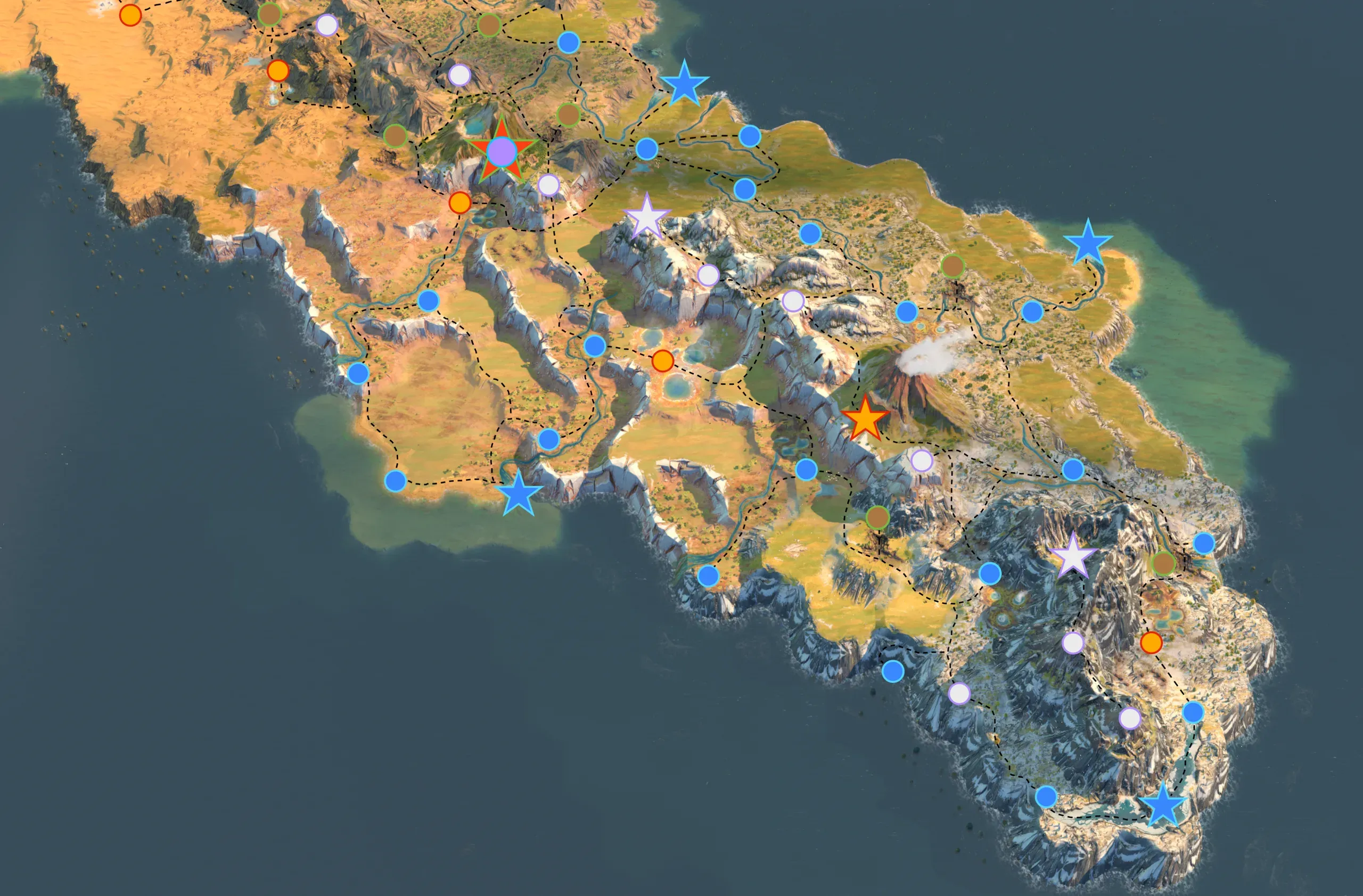
- The Crucible Chasm beneath the southern spine.
- The Ember Sea Caldera in the northwest.
- The Sky-Sunder Peaks in the southern archipelago range.
- The Stone Choir Fault, a resonant tectonic corridor running under the isle’s central range.
- The Sunken Confluence, a submerged ruin near the southern Isles.
Sacred Confluence Sites
- Ash and Tide Basin, site of the Fourfold Compact.
- The Spiral Winds Terrace, an Air-Water convergence at the southern-most point of Valdesh’s main isle.
- The Rooted Flame Cavern, Earth-Fire balance chamber in the southern range.
Forbidden Region
- The Veilscar Expanse in middle of the southern Isles.
- Persistent unstable micro-rifts.
- Officially restricted to Rift-Wardens.
Cultural Pressures
Section titled “Cultural Pressures”Emerging Movements
- Hybrid philosophers arguing that the Fourfold system is incomplete.
- Young Air thinkers advocating open exchange with Ravena.
- Fire revivalists claiming conflict strengthens balance.
- Water diplomats proposing controlled trade routes.
Scholarly Tension
- A Rift theorist faction believes widening certain barriers could safely increase stability.
- Earth elders strongly oppose experimentation.
Potential Destabilizers
- Raveni airship incursions.
- Industrial-scale Aethyr extraction near Valdesh.
- A measurable increase in Rift anomalies.
- Evidence of a Fifth Element manifestation.
Social Structure Details
Section titled “Social Structure Details”Child Rearing
- Communal upbringing within affinity clusters.
- Elemental discipline begins in early adolescence.
- Elders guide rather than command.
Marriage
- Cross-affinity unions are accepted but watched.
- Marriage is viewed as balance-building rather than romantic centrality.
Art
- Fire: glasswork, metal shaping, flame-dancing.
- Water: flowing calligraphy, tide-sculpted stone.
- Earth: resonant architecture, harmonic stone percussion.
- Air: wind instruments, aerial choreography.
Daily Life Snapshots
- Fire potter shaping volcanic glass at dawn.
- Air sky-harvester tending cliffside crops.
- Water current-tender guiding irrigation channels.
- Earth stonekeeper reinforcing fault lines with ritual geometry.
Economic Interdependence
Section titled “Economic Interdependence”Primary Exchanges
- Fire: metallurgy, glass, geothermal forging.
- Water: irrigation management, fish harvest, coastal transport.
- Earth: stone architecture, subterranean farming.
- Air: weather modulation, airborne transport, cliff agriculture.
Formal Systems
- Seasonal Confluence Markets rotate location.
- Mixed-affinity guild apprenticeships required for certain crafts.
- Rotating host councils oversee inter-element agreements.
Ritual Trade
- Certain exchanges must be conducted during elemental festivals.
- Some resources may only be transferred at Confluence sites.
The Elemental Planes in Geminaea
Section titled “The Elemental Planes in Geminaea”Nature of the Planes
- Semi-conscious systemic forces.
- Not aligned with moral axes.
- Responsive to pressure but not strategic.
Relationship to Valdesh
- Valdesh sits atop an Elemental Scar intensified during the Arcane Era.
- The Covenant stabilized but did not erase the Scar.
- The planes remain closer to Valdesh than elsewhere on Aradaea.
Interaction with the Rending
- The planetary split altered Aethyric flow.
- Valdesh’s instability partially echoes deeper cosmological fractures.
- Some theorize the Fifth Element relates to raw Aethyr exposed during the Rending.
Annotated Regional Maps
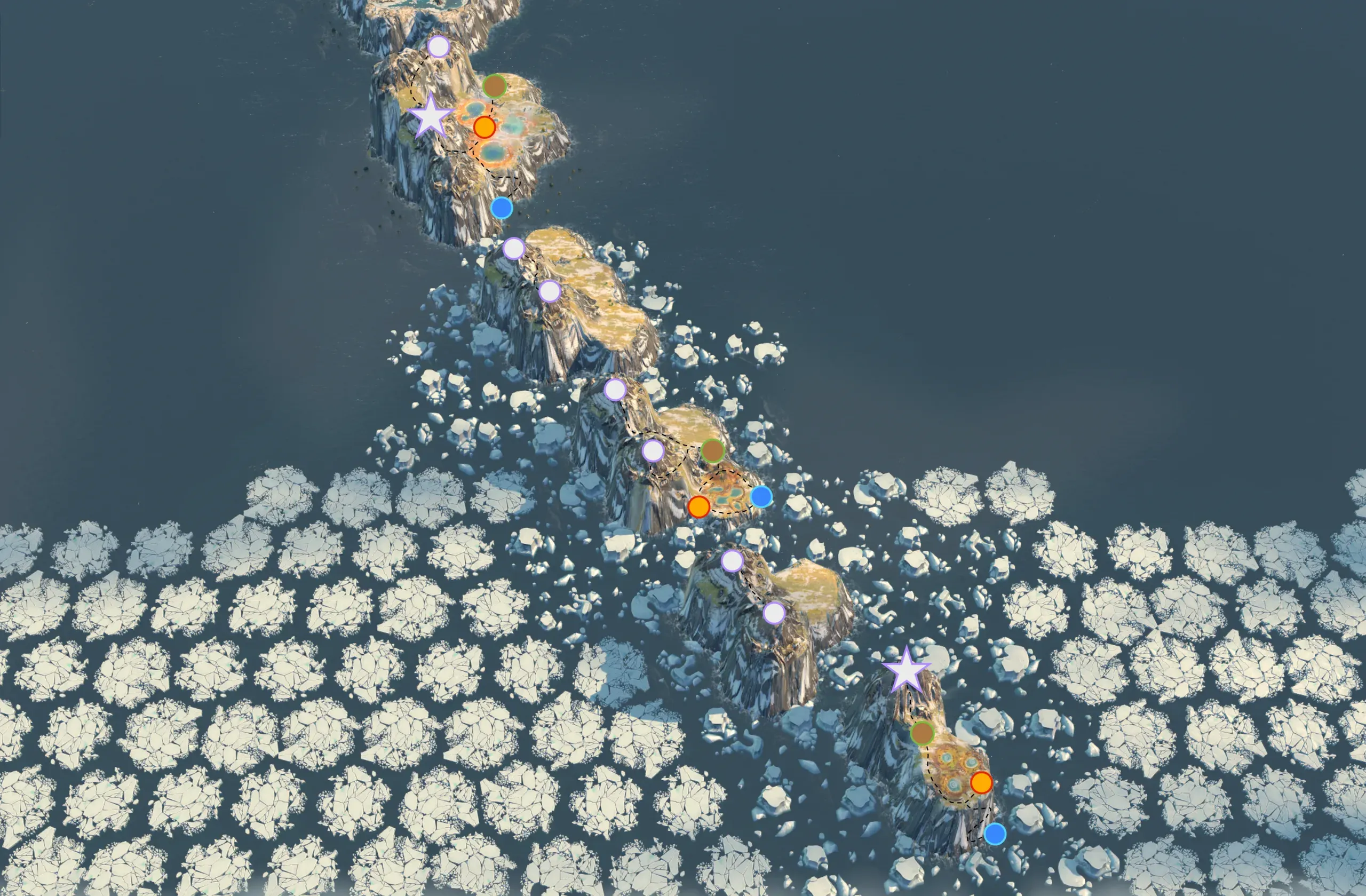
Section titled “Annotated Regional Maps”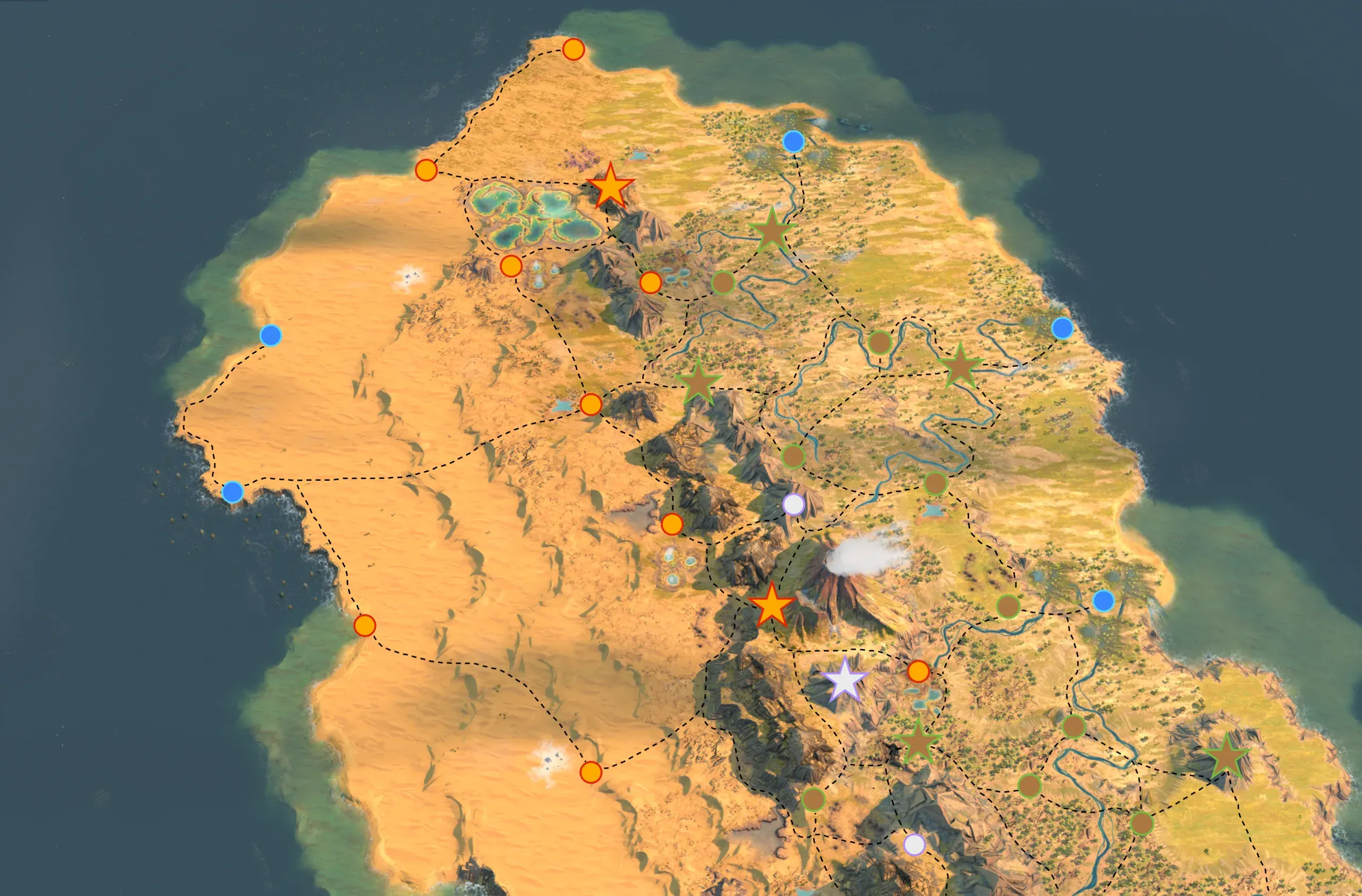
Kascanda: The Confluent City
Section titled “Kascanda: The Confluent City”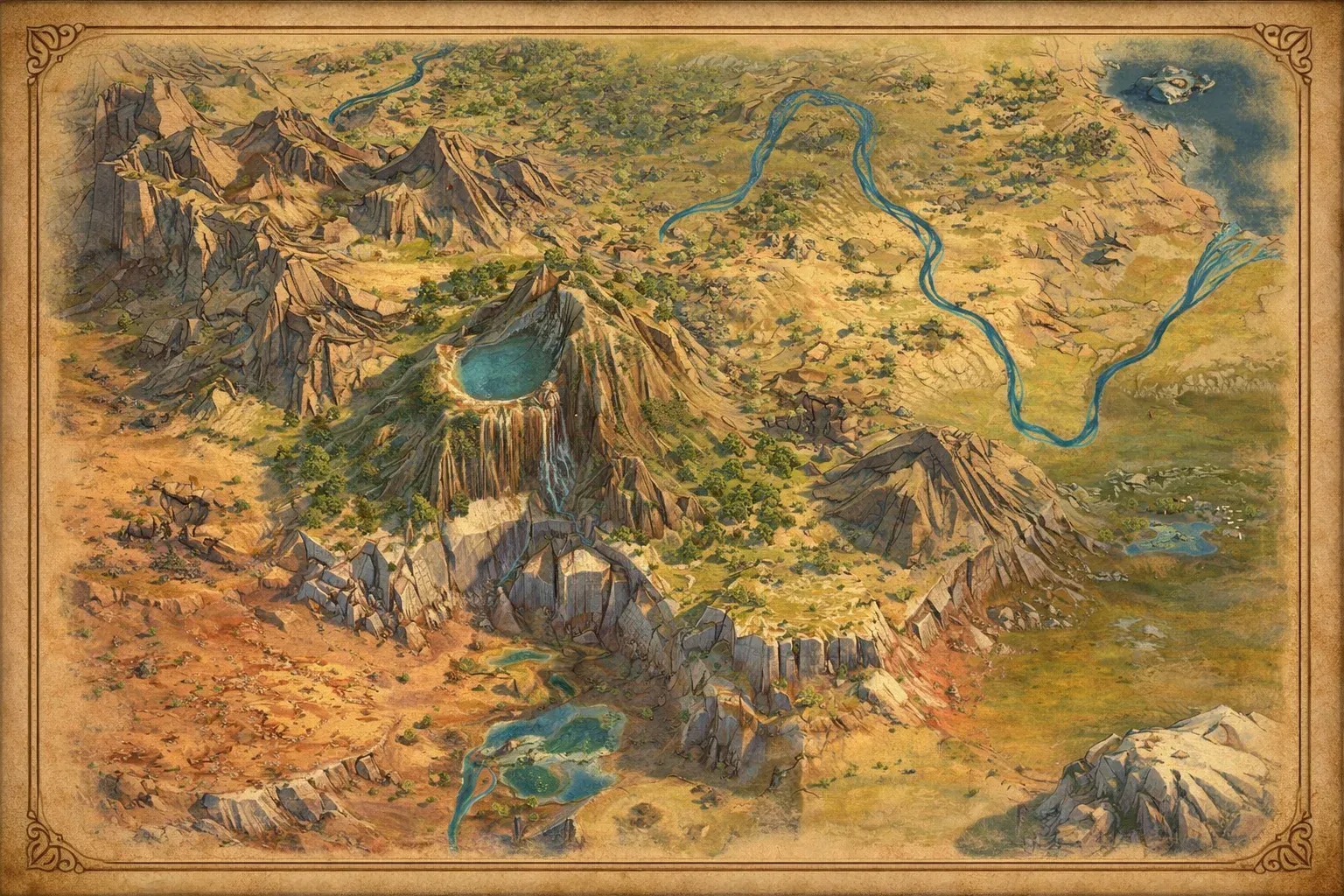
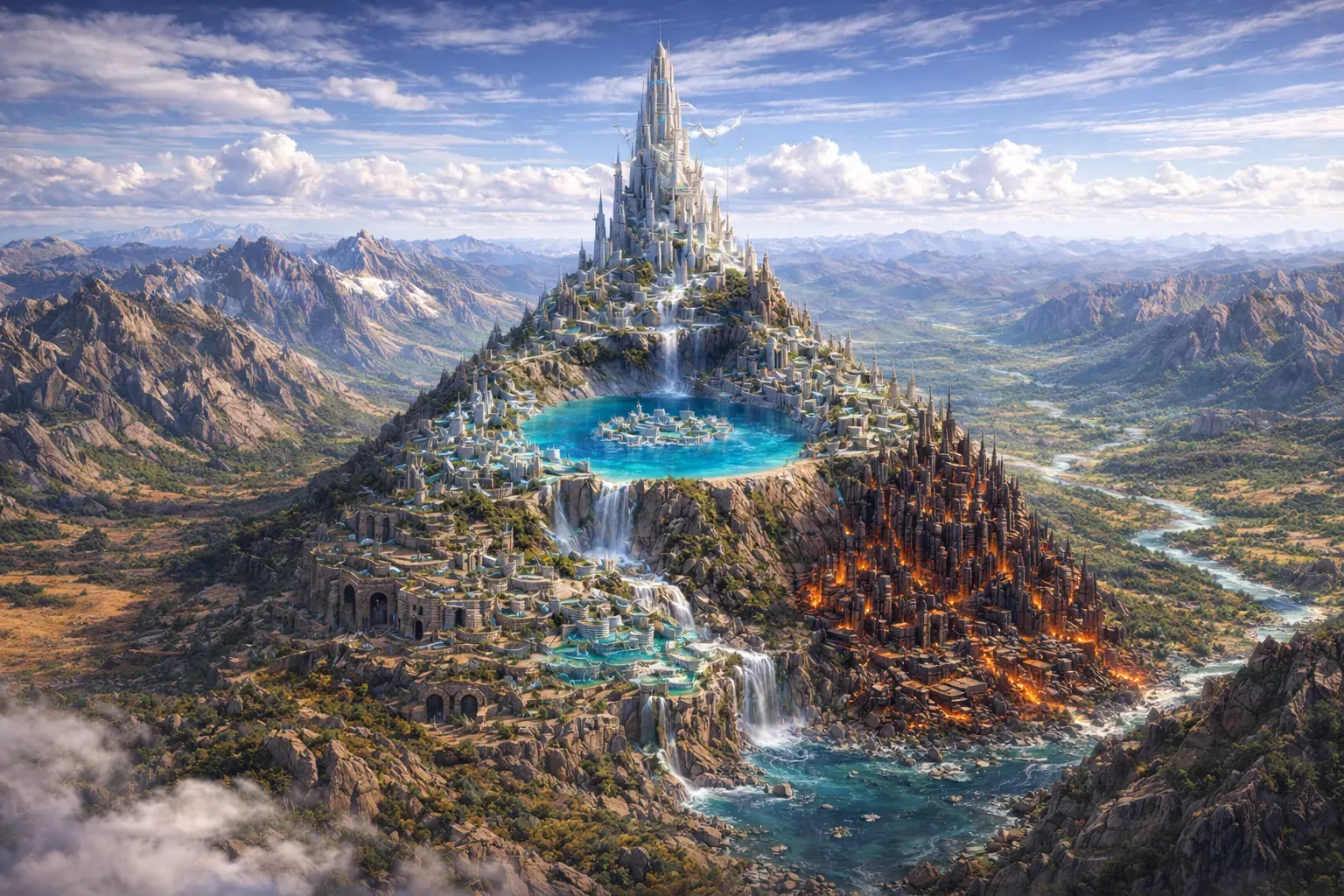
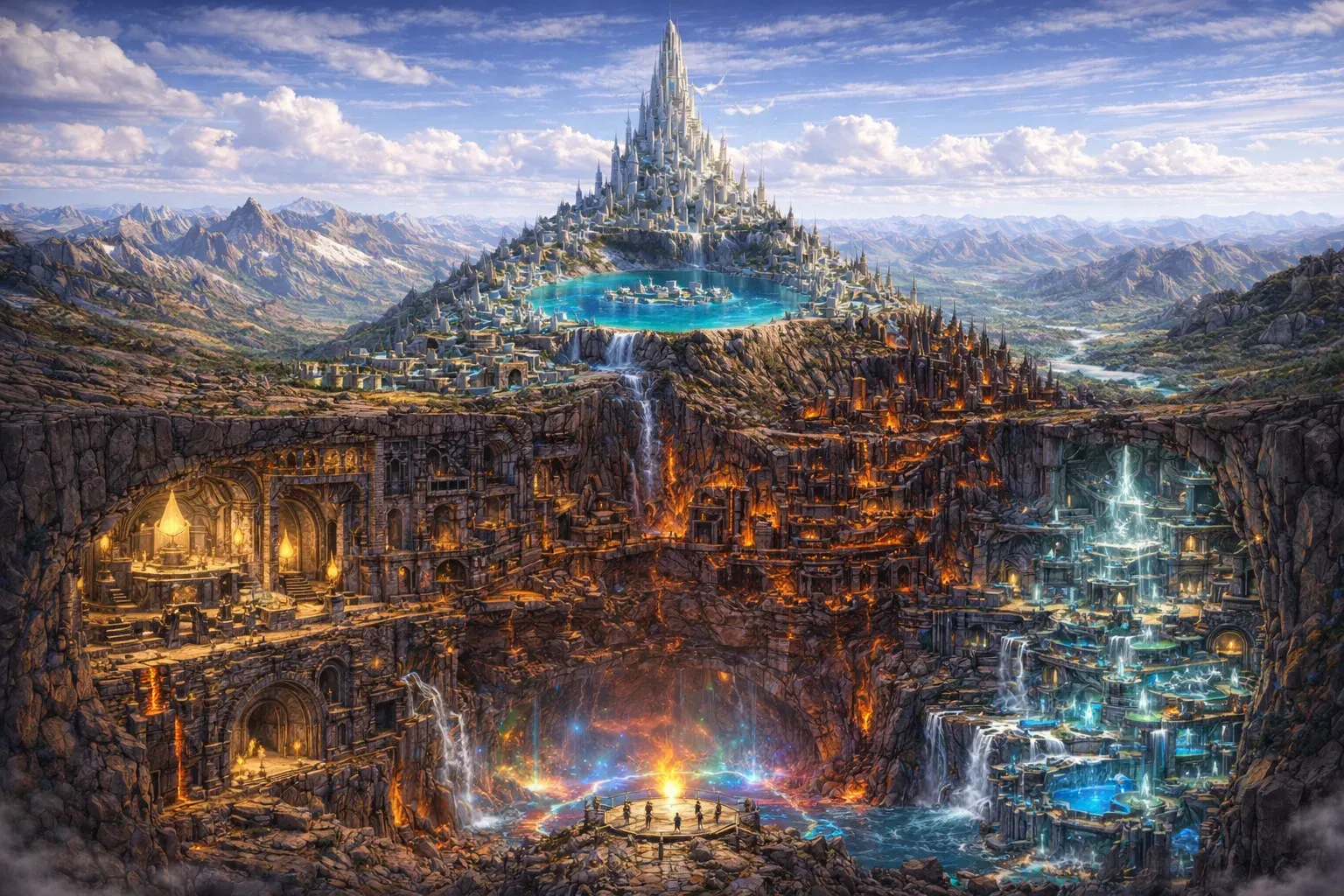
Rising from the southern spine of Valdesh, Kascanda stands where desert stone yields to river valley and where the Four first bound themselves to balance. The mountain upon which it is built is not merely a peak but a hinge in the land. To the west stretch the arid scarlands and volcanic flats of the Xeeko domains; to the east, the fertile riverlands shaped by Azen winds and current-tenders of the tides. Between them towers the Confluence Mountain, crowned by its luminous crater lake and pierced by the wind-carved spire that marks the political and spiritual heart of the Elemari.
Kascanda is the only true Fourfold city in Valdesh. Where most Elemari settlements form along singular affinities, here all four dwell in visible interdependence. The summit basin holds a vast cerulean lake whose mineral brightness recalls the ancient Thinning. Upon and within its waters rise the districts of the Water (Sotan) Elemari. Their architecture curves like poured glass and flowing current, aquamarine and translucent, some structures anchored to stone terraces, others semi-floating upon buoyant platforms grown from mineral-laced coralstone. Canals branch from the lake and descend in controlled cascades, feeding terraces and lower districts before spilling outward toward the eastern valleys.
Above the lake ascends the spire of the Air (Azen) Elemari. It rises in pale, luminous stone that seems less built than coaxed upward. Towers narrow as they climb, latticed with open channels, wind-harps, and suspended bridges. Banners and gauze-like tapestries stream constantly in the high currents. The architecture leaves deliberate emptiness between structures, framing sky as sacred space. From this height, the Confluence Range and the distant horizon are always in view. The Azen claim that governance must be conducted where the whole land can be seen.
Below the lake and along the terraced lower slopes lie the domains of Earth. Here the mountain has been carved rather than overlaid. Geometric halls, buttressed façades, and broad stairways descend in ordered spirals. Roads cut directly into the stone trace careful arcs around the cone, linking neighborhoods to cavern mouths that lead into the catacombs within. The Earth (Koga) Elemari maintain the structural integrity of the city, reinforcing strata and stabilizing faults, ensuring that the mountain’s heart remains contained. Their district is the quiet backbone of Kascanda.
To the western face, where geothermal veins and ancient lava dikes surface, the Fire (Xeeko) Elemari have shaped their quarter. Dark metal and basalt structures rise in clustered density, industrial and deliberate. Obsidian spires and ribbed foundries follow guided channels of magma that glow beneath reinforced bridges. Forge platforms cling to the slope, and the air hums with heat and labor. Though visually severe, this district is no less disciplined than the others. The Xeeko view transformation as service; their industry tempers stone, shapes glass, and produces the materials that bind the city together.
Beneath all, within the mountain’s core, lies the Crucible Chasm. Fissures spiral downward around a narrowed lava conduit that descends into a vast circular chamber. There, a stone-and-glass platform bridges a stabilized planar seam that emits faint auroras of red, blue, gold, and silver. It was across this platform that the Fourfold Compact was ratified nearly three centuries ago after the Ashfall Surge threatened to unmake the Covenant itself. The chamber remains active but restrained, guarded by mixed-affinity Rift-Wardens and used for council gatherings of highest consequence.
Kascanda is not ancient in the manner of forgotten ruins, nor pristine in the manner of newly raised capitals. It bears the weight of centuries of careful adaptation. Water shapes its terraces. Earth reinforces its bones. Fire tempers its tools. Air keeps its vision outward. Its roads spiral between climes that once warred and now cooperate by necessity and design.
Here the Elemari do not erase their differences. They display them in proximity.
From the lake’s blue brilliance to the dark glow of the forge-slope, from the carved terraces to the sky-piercing spire, Kascanda embodies the Covenant in stone and flame and wind and tide. It is not merely the political heart of Valdesh. It is the proof that balance can be maintained where forces once tore the world open.
Akazaea: The Frigid Frontier
Section titled “Akazaea: The Frigid Frontier”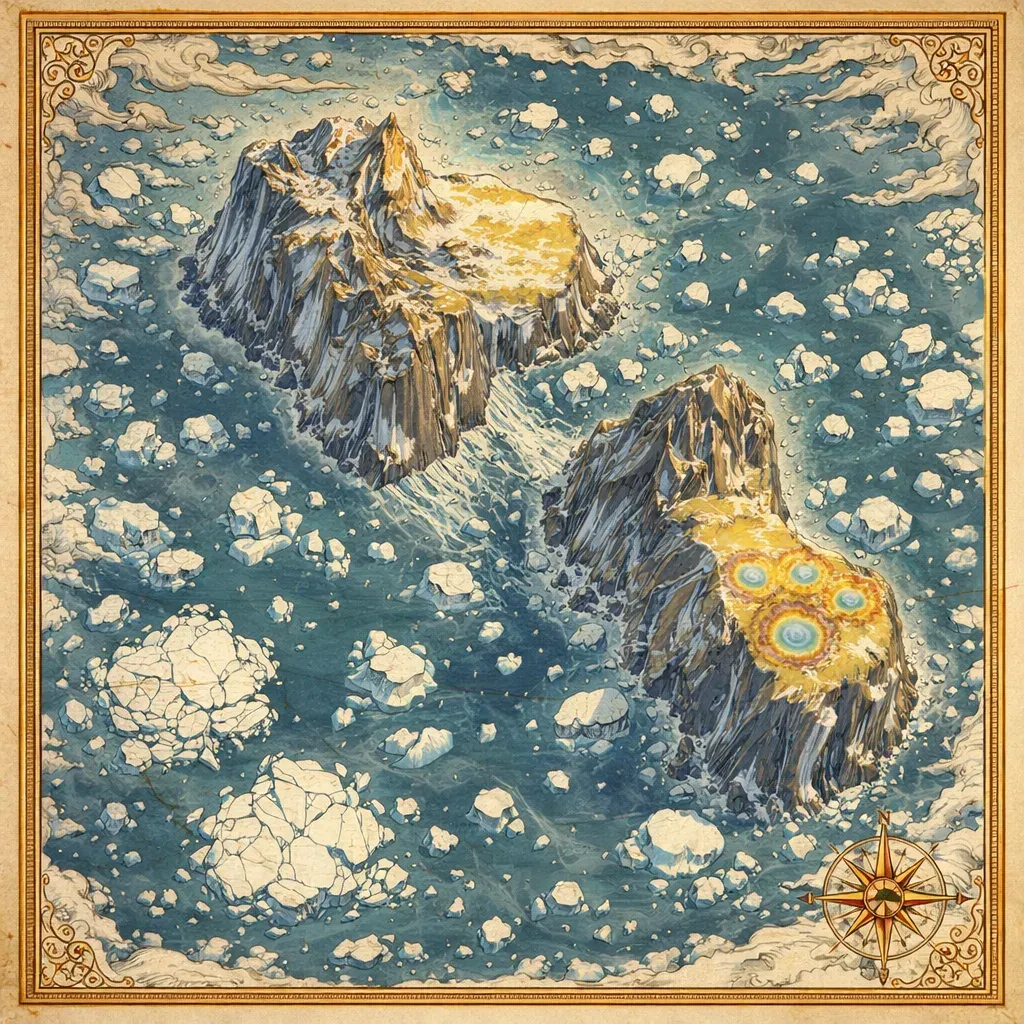
Akazaea lies upon the southernmost archipelago of Valdesh — a realm of sheer granite plateaus, glacier-crowned peaks, and seas choked with drifting ice. Here the elemental forces are not softened by cultivation or moderated by dense civilization. They are raw, volatile, and immediate. The wind scours, the sea freezes, the earth fractures, and fire must be mastered or perish.
Though Elemari of all four aspects dwell in Akazaea, this region is foremost the domain of the Azen, the Air-aligned Elemari. In this near-antarctic expanse, terrestrial routes are perilous and maritime passage unreliable. Only through sky-beasts, bound air elementals, and elementally-driven skycraft does Akazaea remain connected to the greater body of Valdesh. The other Elemari settlements depend heavily upon Azen transit for trade, communication, and survival.
The isles of Akazaea rise almost vertically from the ocean floor: vast masses of granite and quartz thrust upward into the clouds. Their cliffs descend sheer into frozen surf; their summits vanish into storm-laden skies.
Sotazaea — The Sotan Settlement
Section titled “Sotazaea — The Sotan Settlement”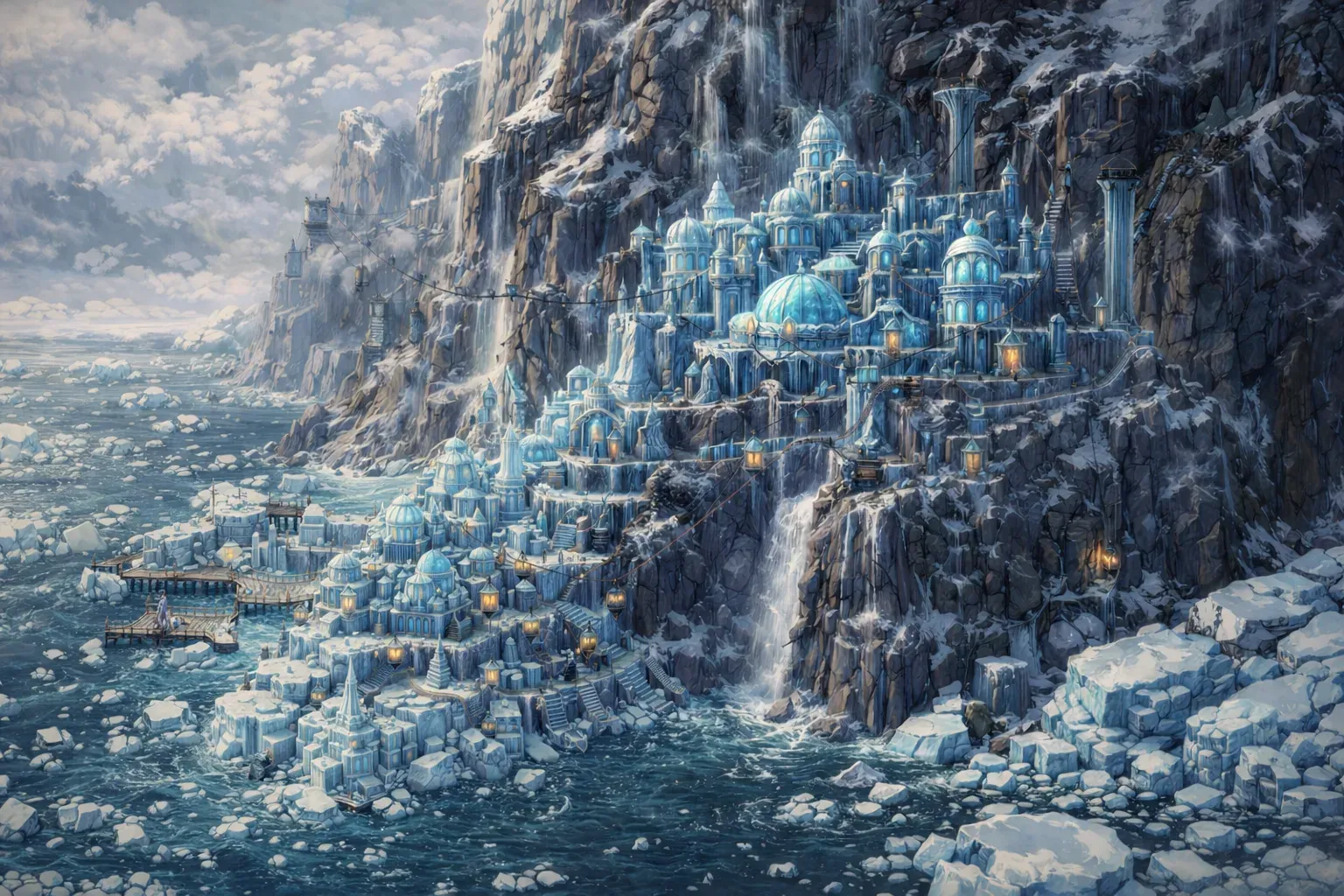
Where the icy sea meets the southernmost cliffs, the Sotan have carved their dominion from permafrost and iceberg.
Sotazaea clings to the transition between frozen ocean and vertical stone. Its architecture is hewn from deep blue permafrost masonry, reinforced and sculpted from captured icebergs. Structures rise in terraces from the ice fields into the cliff face itself, merging natural and shaped ice into seamless habitation.
From the settlement ascend the great switchback steps, ice-bound gondolas, and smoothed glacial slides that connect the sea-ports below to the plateau far above. These routes form the principal artery between sea and summit — a vital lifeline linking Sotan waters to the settlements of fire and earth.
Sotazaea is resilient, fluid, and adaptive — a city shaped by tide and frost alike.
Xeekozaea — The Geothermal Plateau
Section titled “Xeekozaea — The Geothermal Plateau”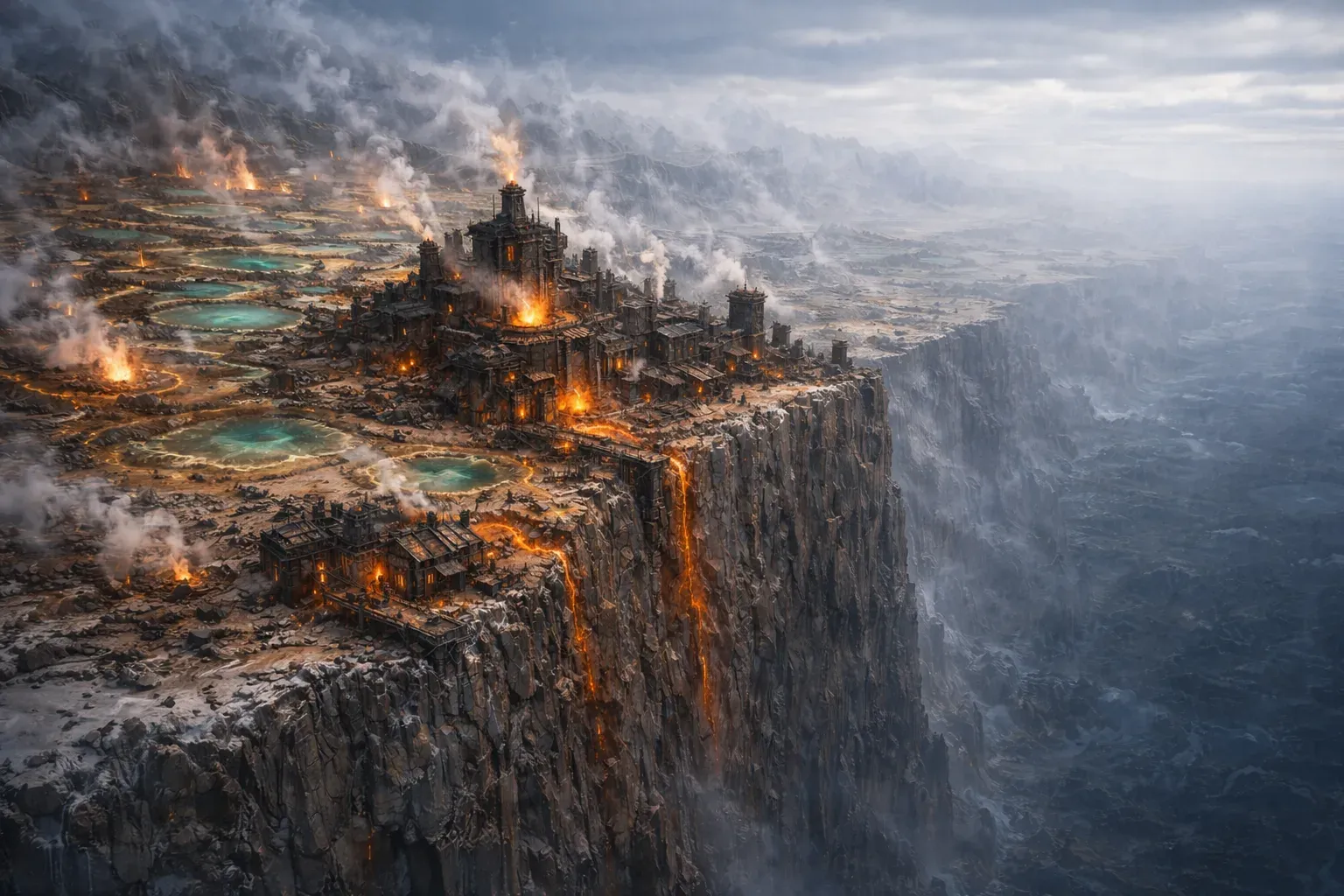
Above the ascent from Sotazaea lies a stark transformation.
The plateau summit is a windswept geothermal plain, punctuated by sulfurous lakes, steaming geysers, and fissures of glowing magma. Snow rims its edges, but its heart burns warm beneath blackened stone.
Here the Xeeko have established Xeekozaea, clustering their black-stone and iron-framed structures near the cliff’s edge overlooking the Sotan ports below. Buildings stand compact and vertical, designed to conserve heat against relentless polar winds. Furnaces glow day and night, fed by controlled lava channels drawn from natural magma vents.
Communal forges straddle molten fissures. Metal bridges span cracks of fire. Smoke rises in deliberate plumes, carried sideways by the wind.
Xeekozaea is industry made hearth — fire disciplined to defy the cold.
Kogazaea — The Foothill Terraces
Section titled “Kogazaea — The Foothill Terraces”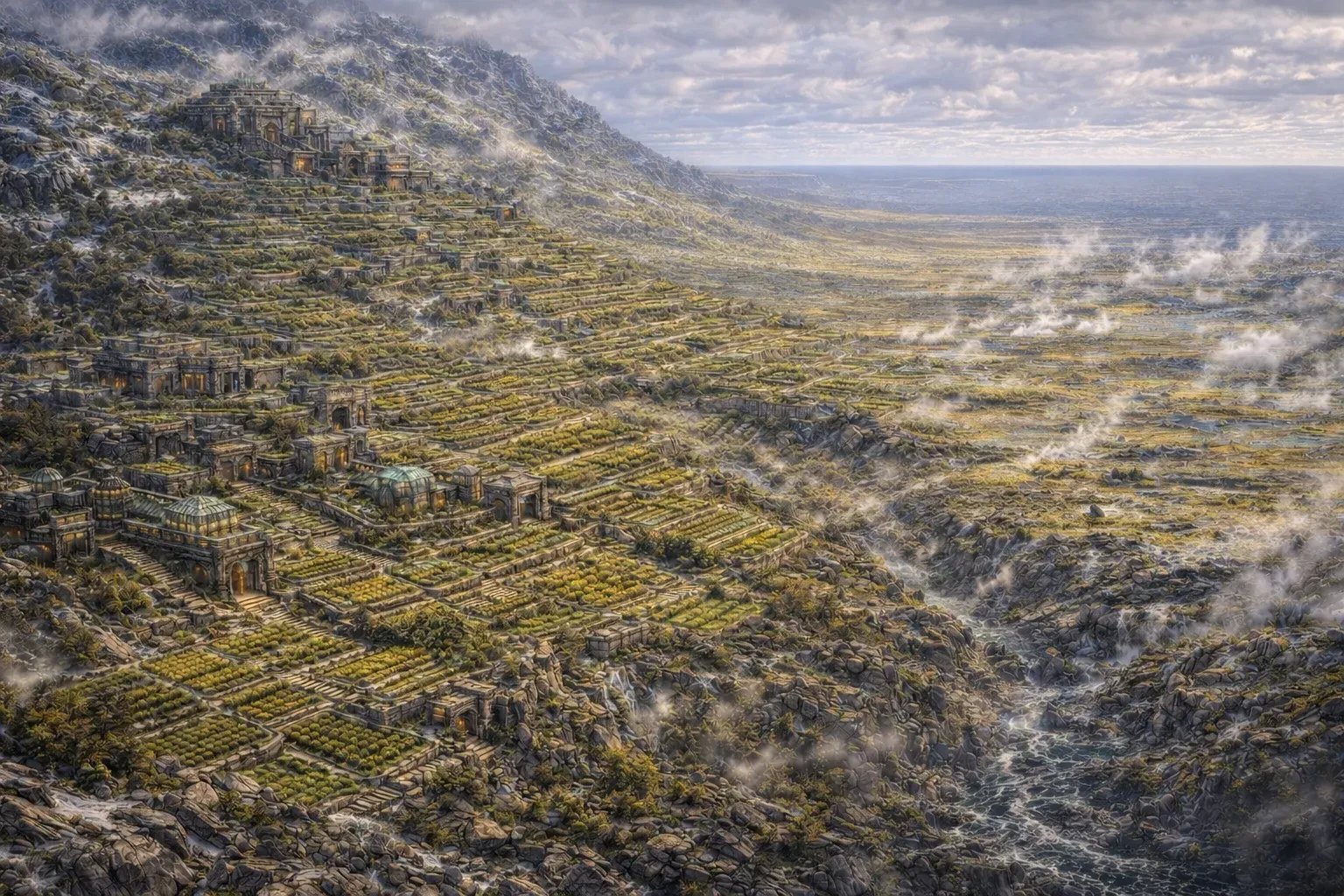
Encircling the geothermal plain runs a basalt roadway marked by roaring braziers, leading toward the rising foothills of Mount Akazaea.
There the Koga have embedded their settlement into the land itself.
Kogazaea spreads in monumental terraces carved from quartz-granite slopes: geometric dwellings, pillared halls, heavy buttresses, and broad stairways ascending in deliberate order. Beneath and between these tiers lie tunnelworks and catacombs etched into the mountain’s bones.
The proximity of glacier and geothermal heat produces rare fertility. Meltwater irrigation channels thread through carved beds of tundra crops and structured orchards. Reinforced greenhouses of stone and crystal shelter hardy cultivation zones warmed subtly by geothermal bleed-off.
Kogazaea embodies permanence — stability wrested from volatility.
Azenzaea — City Above the Storm
Section titled “Azenzaea — City Above the Storm”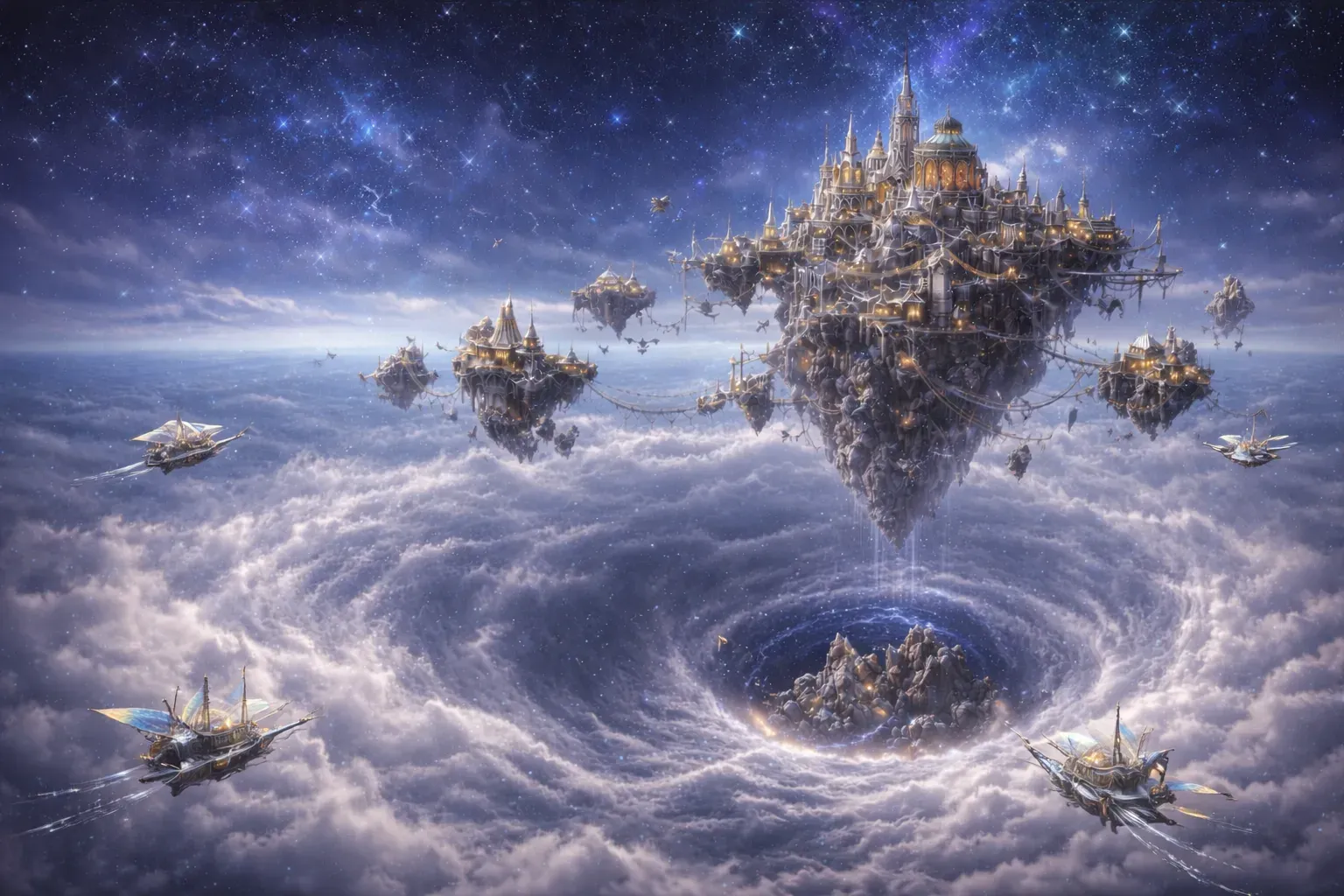
Where foothills give way to the steep granite rifts of Mount Akazaea, immense stone steps climb toward the storm-wracked summit.
Around the highest peak rages a perpetual tempest of ice, thunder, and lightning. The elemental violence is so profound that jagged sections of quartz and granite have fractured from the mountain and now float within the storm clouds like suspended asteroids.
Within and between these levitating fragments, the Azen have built the city of Azenzaea.
High-spired towers rise from drifting stone. Ribbon-roads and suspended bridges sway in powerful winds. Flowing tapestries stream endlessly from terraces that shift subtly as floating stones reposition within the storm’s circulation. Above the tempest’s eye, the skies clear — revealing the vast expanse of the Astral Sea beyond.
Azenzaea is motion and mastery intertwined. It does not resist the storm; it inhabits it.
From here the Azen orchestrate the skyways that bind the southern archipelago to the wider world.
The Northern Wayports
Section titled “The Northern Wayports”Beyond the storm-crowned peak lies a lesser-inhabited northern isle marked by twin mountain summits. Upon these heights the Azen maintain two primary skyports — fortified transit posts that anchor the aerial routes linking Akazaea to the northern isles and the greater landmass of Valdesh.
These wayports are not cities but vital nodes: clusters of Azen architecture clinging to stone, docking masts for skycraft, and bound air elementals maintaining the skyway currents.
Through them flows trade, diplomacy, and survival itself.