Heritages
| Haku-Vilda (Vilderbaldian Human) | Germanic Imperial Human | Vehicular Intuition, Traversal Connection, Diplomatic Ancestry, Cultural Adaptability | Aradaea | Vilderbald | Familial: Raised by mother(s), and/or father(s), and/or sibling(s) | Haku (Humans) | Haku-Aradae (True Humans) | 60,000 years | Balanced | Normal | Unlimited | 30 | Walking | Aethyrian Common, Vilderbaldian | 100 years | 20 years | 150 lbs | 5.75 ft | Medium | Light Skin Tones | Thick, Dark, Hairy, Curly, Bearded | Normal Humanoid | Region | Yes | No | |
| Haku-Enintha (Eninthalian Human) | French Feudalistic Human | Sentinel’s Intuition, Guardian’s Connection, Diplomatic Ancestry, Cultural Adaptability | Aradaea | Eninthal | Familial: Raised by mother(s), and/or father(s), and/or sibling(s) | Haku (Humans) | Haku-Aradae (True Humans) | 60,000 years | Balanced | Normal | Unlimited | 30 | Walking | Aethyrian Common, Eninthalian | 100 years | 20 years | 150 lbs | 5.75 ft | Medium | Medium-Light Skin Tones | Fine, Varied Color, Straight, Light Beards | Normal Humanoid | Region | Yes | No | |
| Haku-Noska (Noskan Human) | Nordic Tribal Human | Hunter’s Intuition, Seeker’s Connection, Diplomatic Ancestry, Cultural Adaptability | Aradaea | Noska | Communal: Raised by a village, order, or organization | Haku (Humans) | Haku-Aradae (True Humans) | 60,000 years | Strength, Constitution | Normal | Unlimited | 30 | Walking | Aethyrian Common, Noskan | 100 years | 20 years | 175 lbs | 6 ft | Medium | Light Skin Tones | Fine, Blonde/Light, Curly, Bearded | Normal Humanoid | Region | Yes | No | |
| Haku-Kaladan (Kaladar Human) | South-Asian/Middle-Eastern Technocracy Human | Technological Intuition, Aethyr Connection, Diplomatic Ancestry, Cultural Adaptability | Aradaea | Kaladar | Familial: Raised by mother(s), and/or father(s), and/or sibling(s) | Haku (Humans) | Haku-Aradae (True Humans) | 40,000 years | Intelligence, Charisma | Normal | Unlimited | 30 | Walking | Aethyrian Common, Kaladari | 100 years | 20 years | 150 lbs | 5.5 ft | Medium | Medium-Dark Skin Tones | Thick, Dark, Straight, Bearded | Normal Humanoid | Region | Yes | No | |
| Haku-Veda (Vedalken) | Humans with a high level of magical suffusion | Nothing is perfect. Vedalken not only believe this fact, they rejoice in it. Every imperfection is a chance for improvement, and progress is an endless march toward a state of perfection that can never be reached. This viewpoint leads vedalken to pursue their work with delighted enthusiasm, never deterred by setbacks and excited by every opportunity for improvement. Vedalken are tall and slender, standing almost a head taller than humans on average but weighing about the same. Their hairless skin comes in a range of shades of blue. Their eyes are darker shades of blue or violet. They lack external ears, their noses are broad and flat, and they are partially amphibious. 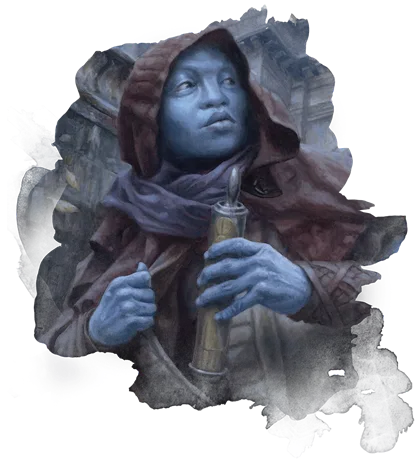 ## Cool Rationality Despite being talkative, vedalken keep their personal lives private, and they tend to engage more with ideas than with people. They form close friendships based on mutual interests or compelling disagreements, and their interactions dwell on their thoughts about those issues rather than their feelings about them. To members of other races, vedalken often seem cold, even emotionless. That assessment isn’t fair—they feel emotion every bit as intensely as other folk do, but they are skilled at not displaying it. Cool rationality guides their actions, they make and follow careful plans, and they are patient enough to do nothing when the ideal outcome relies on such inaction. ## Reasoning toward Perfection Their curious intellects and rational minds incline vedalken toward membership in the Azorius Senate, the Simic Combine, and (less often) the Izzet League. Whatever their guild affiliation, they put their intelligence to use in crafting and improving things, whether those things are laws, procedures, or magical sciences. Vedalken believe that the path toward the impossible goal of perfection is paved with bricks of education, careful deliberation, and controlled experimentation. Some vedalken direct their energy toward perfecting themselves, whether by means of Simic bioengineering or through extensive study, and others concentrate on perfecting society through the careful drafting and application of laws. ## Vedalken Names Vedalken are given names at birth, but usually choose new names for themselves as part of their transition into adulthood. They rarely use family names. Male Names: Aglar, Bellin, Dallid, Firellan, Kavin, Koplony, Lomar, Mathvan, Modar, Nebun, Nhillosh, Nitt, Otrovac, Ovlan, Pelener, Rill, Trivaz, Uldin, Yolov, Zataz Female Names: Azi, Barvisa, Brazia, Direll, Fainn, Griya, Hallia, Katrille, Kovel, Lilla, Mirela, Morai, Nedress, Ossya, Pierenn, Roya, Sestri, Triel, Uzana, Yaraghiya, Zlovol | Vedalken Dispassion, Tireless Precision, Partially Amphibious | Aradaea | Esken | Familial: Raised by mother(s), and/or father(s), and/or sibling(s) | Haku (Humans) | Haku-Aradae (True Humans) | 20,000 years | Intelligence, Wisdom | Normal | Unlimited | 30 | Walking | Aethyrian Common, Vedalken | 350 years | 50 years | 180 lbs | 6.25 ft | Medium | Blues, Purples, Reds | Hairless | Aethyr-touched | Magic | Yes | No |
| Haku-Tiefa (Tieflings) | Competitive tribes of humanoids with qualities of devils and demons due to ancestral connections to infernal and abyssal entities | > “But you do see the way people look at you, devil’s child.” > Those black eyes, cold as a winter storm, were staring right into her heart and the sudden seriousness in his voice jolted her. > “What is it they say?” he asked. “One’s a curiosity, two’s a conspiracy—” > “Three’s a curse,” she finished. “You think I haven’t heard that rubbish before?” > “I know you have.” When she glared at him, he added, “It’s not as if I’m plumbing the depths of your mind, dear girl. That is the burden of every tiefling. Some break under it, some make it the millstone around their neck, some revel in it.” He tilted his head again, scrutinizing her, with that wicked glint in his eyes. “You fight it, don’t you? Like a little wildcat, I wager. Every little jab and comment just sharpens your claws.” > — Erin M. Evans, Brimstone Angels To be greeted with stares and whispers, to suffer violence and insult on the street, to see mistrust and fear in every eye: this is the lot of the tiefling. And to twist the knife, tieflings know that this is because a pact struck generations ago infused the essence of Asmodeus—overlord of the Nine Hells—into their bloodline. Their appearance and their nature are not their fault but the result of an ancient sin, for which they and their children and their children’s children will always be held accountable. 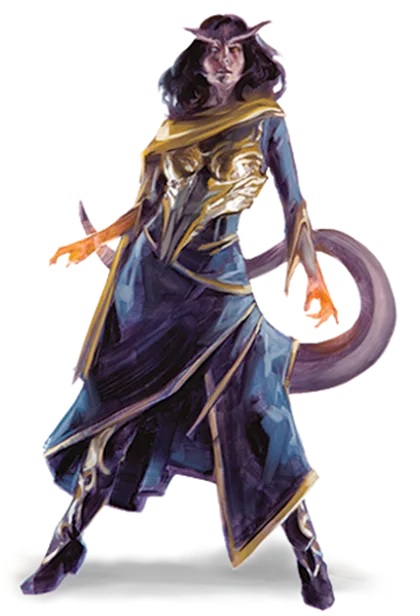 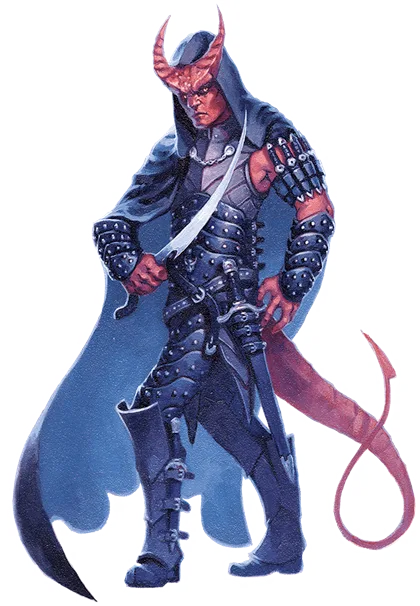 ## Infernal Bloodline Tieflings are derived from human bloodlines, and in the broadest possible sense, they still look human. However, their infernal heritage has left a clear imprint on their appearance. Tieflings have large horns that take any of a variety of shapes: some have curling horns like a ram, others have straight and tall horns like a gazelle’s, and some spiral upward like an antelopes’ horns. They have thick tails, four to five feet long, which lash or coil around their legs when they get upset or nervous. Their canine teeth are sharply pointed, and their eyes are solid colors—black, red, white, silver, or gold—with no visible sclera or pupil. Their skin tones cover the full range of human coloration, but also include various shades of red. Their hair, cascading down from behind their horns, is usually dark, from black or brown to dark red, blue, or purple. ## Self-Reliant and Suspicious Tieflings subsist in small minorities found mostly in human cities or towns, often in the roughest quarters of those places, where they grow up to be swindlers, thieves, or crime lords. Sometimes they live among other minority populations in enclaves where they are treated with more respect. Lacking a homeland, tieflings know that they have to make their own way in the world and that they have to be strong to survive. They are not quick to trust anyone who claims to be a friend, but when a tiefling’s companions demonstrate that they trust him or her, the tiefling learns to extend the same trust to them. And once a tiefling gives someone loyalty, the tiefling is a firm friend or ally for life. ## Tiefling Names Tiefling names fall into three broad categories. Tieflings born into another culture typically have names reflective of that culture. Some have names derived from the Infernal language, passed down through generations, that reflect their fiendish heritage. And some younger tieflings, striving to find a place in the world, adopt a name that signifies a virtue or other concept and then try to embody that concept. For some, the chosen name is a noble quest. For others, it’s a grim destiny. Male Infernal Names: Akmenos, Amnon, Barakas, Damakos, Ekemon, Iados, Kairon, Leucis, Melech, Mordai, Morthos, Pelaios, Skamos, Therai Female Infernal Names: Akta, Anakis, Bryseis, Criella, Damaia, Ea, Kallista, Lerissa, Makaria, Nemeia, Orianna, Phelaia, Rieta “Virtue” Names: Art, Carrion, Chant, Creed, Despair, Excellence, Fear, Glory, Hope, Ideal, Music, Nowhere, Open, Poetry, Quest, Random, Reverence, Sorrow, Temerity, Torment, Weary > MET WITH MISTRUST > Ignorant people tend to be suspicious of tieflings, assuming that their infernal heritage has left its mark on their personality and morality, not just their appearance. The reality is that a tiefling’s bloodline doesn’t affect their personality. They are gifted with magic from the infernal realms but chart their own course in life. ### Variant Feral Tiefling Since not all tieflings are of the blood of Asmodeus, some have traits that differ from those in the Player’s Handbook. The Dungeon Master may permit the following variants for your tiefling character, although Devil’s Tongue, Hellfire, and Winged are mutually exclusive. Feral. Your Intelligence score increases by 1, and your Dexterity score increases by 2. This trait replaces the Ability Score Increase trait. Appearance. Your tiefling might not look like other tieflings. Rather than having the physical characteristics described in the Player’s Handbook, choose 1d4 + 1 of the following features: small horns; fangs or sharp teeth; a forked tongue; catlike eyes; six fingers on each hand; goat-like legs; cloven hoofs; a forked tail; leathery or scaly skin; red or dark blue skin; cast no shadow or reflection; exude a smell of brimstone. | Hellish Resistance, Infernal Legacy | Aradaea | Scorchedlands | Communal: Raised by a village, order, or organization | Haku (Humans) | Haku-Aradae (True Humans) | 40,000 years | Charisma, Constituion | Low-light Vision | Unlimited | 30 | Walking | Aethyrian Common, Infernal | 100 years | 20 years | 175 lbs | 6 ft | Medium | Blues, Purples, Reds, Blacks, Greens, Yellows, | Thick, Dark, Straight, Beardless | Infernal features (horns, tails, hooves) | Magic | Yes | No |
| Elden-Eladen (Eladrin Elf) | Elves of the four seasons of the Fey Wild | Eladrin are elves of the Feywild, a realm of perilous beauty and boundless magic. Using that magic, eladrin can step from one place to another in the blink of an eye, and each eladrin resonates with emotions captured in the Feywild in the form of seasons—affinities that affect the eladrin’s mood and appearance. An eladrin’s season can change, though some remain in one season forever. Choose your season or roll on the Eladrin Seasons table. Your Trance trait lets you change your season. Like other elves, eladrin can live to be over 750 years old. 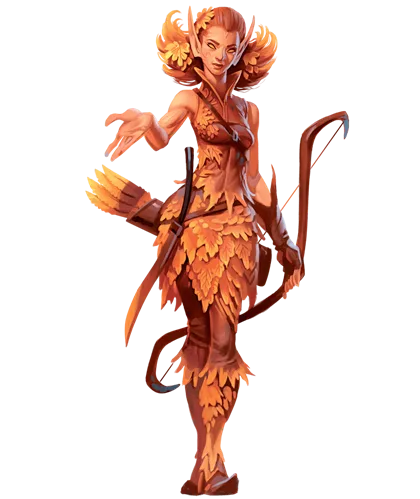 Eladrin Seasons | d4 | Season | | --- | --- | | 1 | Autumn: peace and goodwill, when summer’s harvest is shared with all | | 2 | Winter: contemplation and dolor, when the vibrant energy of the world slumbers | | 3 | Spring: cheerfulness and celebration, marked by merriment and hope as winter’s sorrow passes | | 4 | Summer: boldness and aggression, a time of unfettered energy and calls to action | | Fey Ancestry, Fey Step, Keen Senses, Trance | Aradaea | Sylvaria | Communal: Raised by a village, order, or organization | Elden (Elves) | Haku-Elda (Proto-Elves) | 100,000 years | Dexterity, Charisma | Low-light Vision | Unlimited | 35 | Walking | Aethyrian Common, Sylvan, Elvish | 500 years | 100 years | 100 lbs | 6 ft | Medium | Seasonal Colors | Fine, Varied Color, Straight, Beardless | Lithe, Average Height, Slightly Pointed Ears, Large Eyes, Seasonal Attributes, Plant-like hair | Region, Magic | Yes | No |
| Elden-Haea (High Elf) | Aristocratic Elves of Arcane Magic | > “I have never imagined such beauty existed,” Goldmoon said softly. The day’s march had been difficult, but the reward at the end was beyond their dreams. The companions stood on a high cliff over the fabled city of Qualinost. > Four slender spires rose from the city’s corners like glistening spindles, their brilliant white stone marbled with shining silver. Graceful arches, swooping from spire to spire, soared through the air. Crafted by ancient dwarven metalsmiths, they were strong enough to hold the weight of an army, yet they appeared so delicate that a bird lighting on them might overthrow the balance. These glistening arches were the city’s only boundaries; there was no wall around Qualinost. The elven city opened its arms lovingly to the wilderness. > — Margaret Weis & Tracy Hickman, Dragons of Autumn Twilight 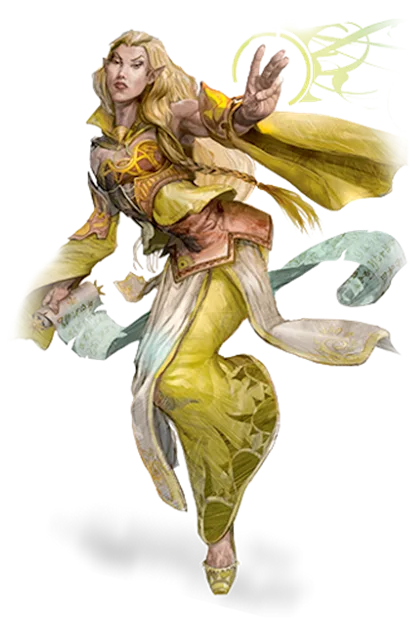 Elves are a magical people of otherworldly grace, living in the world but not entirely part of it. They live in places of ethereal beauty, in the midst of ancient forests or in silvery spires glittering with faerie light, where soft music drifts through the air and gentle fragrances waft on the breeze. Elves love nature and magic, art and artistry, music and poetry, and the good things of the world. ## Slender and Graceful With their unearthly grace and fine features, elves appear hauntingly beautiful to humans and members of many other races. They are slightly shorter than humans on average, ranging from well under 5 feet tall to just over 6 feet. They are more slender than humans, weighing only 100 to 145 pounds. Males and females are about the same height, and males are only marginally heavier than females. Elves’ coloration encompasses the normal human range and also includes skin in shades of copper, bronze, and almost bluish-white, hair of green or blue, and eyes like pools of liquid gold or silver. Elves have no facial and little body hair. They favor elegant clothing in bright colors, and they enjoy simple yet lovely jewelry. ## A Timeless Perspective Elves can live well over 700 years, giving them a broad perspective on events that might trouble the shorter-lived races more deeply. They are more often amused than excited, and more likely to be curious than greedy. They tend to remain aloof and unfazed by petty happenstance. When pursuing a goal, however, whether adventuring on a mission or learning a new skill or art, elves can be focused and relentless. They are slow to make friends and enemies, and even slower to forget them. They reply to petty insults with disdain and to serious insults with vengeance. Like the branches of a young tree, elves are flexible in the face of danger. They trust in diplomacy and compromise to resolve differences before they escalate to violence. They have been known to retreat from intrusions into their woodland homes, confident that they can simply wait the invaders out. But when the need arises, elves reveal a stern martial side, demonstrating skill with sword, bow, and strategy. ## Hidden Woodland Realms Most elves dwell in small forest villages hidden among the trees. Elves hunt game, gather food, and grow vegetables, and their skill and magic allow them to support themselves without the need for clearing and plowing land. They are talented artisans, crafting finely worked clothes and art objects. Their contact with outsiders is usually limited, though a few elves make a good living by trading crafted items for metals (which they have no interest in mining). Elves encountered outside their own lands are commonly traveling minstrels, artists, or sages. Human nobles compete for the services of elf instructors to teach swordplay or magic to their children. ## Exploration and Adventure Elves take up adventuring out of wanderlust. Since they are so long-lived, they can enjoy centuries of exploration and discovery. They dislike the pace of human society, which is regimented from day to day but constantly changing over decades, so they find careers that let them travel freely and set their own pace. Elves also enjoy exercising their martial prowess or gaining greater magical power, and adventuring allows them to do so. Some might join with rebels fighting against oppression, and others might become champions of moral causes. > HAUGHTY BUT GRACIOUS > Although they can be haughty, elves are generally gracious even to those who fall short of their high expectations—which is most non-elves. Still, they can find good in just about anyone. > Dwarves. “Dwarves are dull, clumsy oafs. But what they lack in humor, sophistication, and manners, they make up in valor. And I must admit, their best smiths produce art that approaches elven quality.” > Halflings. “Halflings are people of simple pleasures, and that is not a quality to scorn. They’re good folk, they care for each other and tend their gardens, and they have proven themselves tougher than they seem when the need arises.” > Humans. “All that haste, their ambition and drive to accomplish something before their brief lives pass away—human endeavors seem so futile sometimes. But then you look at what they have accomplished, and you have to appreciate their achievements. If only they could slow down and learn some refinement.” ## Elf Names Elves are considered children until they declare themselves adults, some time after the hundredth birthday, and before this period they are called by child names. On declaring adulthood, an elf selects an adult name, although those who knew him or her as a youngster might continue to use the child name. Each elf’s adult name is a unique creation, though it might reflect the names of respected individuals or other family members. Little distinction exists between male names and female names; the groupings here reflect only general tendencies. In addition, every elf bears a family name, typically a combination of other Elvish words. Some elves traveling among humans translate their family names into Common, but others retain the Elvish version. Child Names: Ara, Bryn, Del, Eryn, Faen, Innil, Lael, Mella, Naill, Naeris, Phann, Rael, Rinn, Sai, Syllin, Thia, Vall Male Adult Names: Adran, Aelar, Aramil, Arannis, Aust, Beiro, Berrian, Carric, Enialis, Erdan, Erevan, Galinndan, Hadarai, Heian, Himo, Immeral, Ivellios, Laucian, Mindartis, Paelias, Peren, Quarion, Riardon, Rolen, Soveliss, Thamior, Tharivol, Theren, Varis Female Adult Names: Adrie, Althaea, Anastrianna, Andraste, Antinua, Bethrynna, Birel, Caelynn, Drusilia, Enna, Felosial, Ielenia, Jelenneth, Keyleth, Leshanna, Lia, Meriele, Mialee, Naivara, Quelenna, Quillathe, Sariel, Shanairra, Shava, Silaqui, Theirastra, Thia, Vadania, Valanthe, Xanaphia Family Names (Common Translations): Amakiir (Gemflower), Amastacia (Starflower), Galanodel (Moonwhisper), Holimion (Diamonddew), Ilphelkiir (Gemblossom), Liadon (Silverfrond), Meliamne (Oakenheel), Naïlo (Nightbreeze), Siannodel (Moonbrook), Xiloscient (Goldpetal) ### High Elf As a high elf, you have a keen mind and a mastery of at least the basics of magic. In many of the worlds of D&D, there are two kinds of high elves. One type (which includes the gray elves and valley elves of Greyhawk, the Silvanesti of Dragonlance, and the sun elves of the Forgotten Realms) is haughty and reclusive, believing themselves to be superior to non-elves and even other elves. The other type (including the high elves of Greyhawk, the Qualinesti of Dragonlance, and the moon elves of the Forgotten Realms) are more common and more friendly, and often encountered among humans and other races. The sun elves of Faerûn (also called gold elves or sunrise elves) have bronze skin and hair of copper, black, or golden blond. Their eyes are golden, silver, or black. Moon elves (also called silver elves or gray elves) are much paler, with alabaster skin sometimes tinged with blue. They often have hair of silver-white, black, or blue, but various shades of blond, brown, and red are not uncommon. Their eyes are blue or green and flecked with gold. | Keen Senses, Fey Ancestry, Trance, Elf Weapon Training, Cantrip, Extra Language | Aradaea | Ultara | Familial: Raised by mother(s), and/or father(s), and/or sibling(s) | Elden (Elves) | Elden-Eladen (Eladrin Elf) | 60,000 years | Dexterity, Intelligence | Low-light Vision | Unlimited | 30 | Walking | Aethyrian Common, Elvish | 500 years | 100 years | 100 lbs | 6.5 ft | Medium | Light Skin Tones | Fine, Varied Color, Straight, Beardless | Lithe, Tall, High Pointed Ears, Vibrant, Color-Shifting Eyes | Region, Magic | Yes | No |
| Elden-Draku (Wood Elf) | Tribal Elves of Druid Magic | > “I have never imagined such beauty existed,” Goldmoon said softly. The day’s march had been difficult, but the reward at the end was beyond their dreams. The companions stood on a high cliff over the fabled city of Qualinost. > Four slender spires rose from the city’s corners like glistening spindles, their brilliant white stone marbled with shining silver. Graceful arches, swooping from spire to spire, soared through the air. Crafted by ancient dwarven metalsmiths, they were strong enough to hold the weight of an army, yet they appeared so delicate that a bird lighting on them might overthrow the balance. These glistening arches were the city’s only boundaries; there was no wall around Qualinost. The elven city opened its arms lovingly to the wilderness. > — Margaret Weis & Tracy Hickman, Dragons of Autumn Twilight Elves are a magical people of otherworldly grace, living in the world but not entirely part of it. They live in places of ethereal beauty, in the midst of ancient forests or in silvery spires glittering with faerie light, where soft music drifts through the air and gentle fragrances waft on the breeze. Elves love nature and magic, art and artistry, music and poetry, and the good things of the world. ## Slender and Graceful With their unearthly grace and fine features, elves appear hauntingly beautiful to humans and members of many other races. They are slightly shorter than humans on average, ranging from well under 5 feet tall to just over 6 feet. They are more slender than humans, weighing only 100 to 145 pounds. Males and females are about the same height, and males are only marginally heavier than females. Elves’ coloration encompasses the normal human range and also includes skin in shades of copper, bronze, and almost bluish-white, hair of green or blue, and eyes like pools of liquid gold or silver. Elves have no facial and little body hair. They favor elegant clothing in bright colors, and they enjoy simple yet lovely jewelry. ## A Timeless Perspective Elves can live well over 700 years, giving them a broad perspective on events that might trouble the shorter-lived races more deeply. They are more often amused than excited, and more likely to be curious than greedy. They tend to remain aloof and unfazed by petty happenstance. When pursuing a goal, however, whether adventuring on a mission or learning a new skill or art, elves can be focused and relentless. They are slow to make friends and enemies, and even slower to forget them. They reply to petty insults with disdain and to serious insults with vengeance. Like the branches of a young tree, elves are flexible in the face of danger. They trust in diplomacy and compromise to resolve differences before they escalate to violence. They have been known to retreat from intrusions into their woodland homes, confident that they can simply wait the invaders out. But when the need arises, elves reveal a stern martial side, demonstrating skill with sword, bow, and strategy. ## Hidden Woodland Realms Most elves dwell in small forest villages hidden among the trees. Elves hunt game, gather food, and grow vegetables, and their skill and magic allow them to support themselves without the need for clearing and plowing land. They are talented artisans, crafting finely worked clothes and art objects. Their contact with outsiders is usually limited, though a few elves make a good living by trading crafted items for metals (which they have no interest in mining). Elves encountered outside their own lands are commonly traveling minstrels, artists, or sages. Human nobles compete for the services of elf instructors to teach swordplay or magic to their children. ## Exploration and Adventure Elves take up adventuring out of wanderlust. Since they are so long-lived, they can enjoy centuries of exploration and discovery. They dislike the pace of human society, which is regimented from day to day but constantly changing over decades, so they find careers that let them travel freely and set their own pace. Elves also enjoy exercising their martial prowess or gaining greater magical power, and adventuring allows them to do so. Some might join with rebels fighting against oppression, and others might become champions of moral causes. > HAUGHTY BUT GRACIOUS > Although they can be haughty, elves are generally gracious even to those who fall short of their high expectations—which is most non-elves. Still, they can find good in just about anyone. > Dwarves. “Dwarves are dull, clumsy oafs. But what they lack in humor, sophistication, and manners, they make up in valor. And I must admit, their best smiths produce art that approaches elven quality.” > Halflings. “Halflings are people of simple pleasures, and that is not a quality to scorn. They’re good folk, they care for each other and tend their gardens, and they have proven themselves tougher than they seem when the need arises.” > Humans. “All that haste, their ambition and drive to accomplish something before their brief lives pass away—human endeavors seem so futile sometimes. But then you look at what they have accomplished, and you have to appreciate their achievements. If only they could slow down and learn some refinement.” ## Elf Names Elves are considered children until they declare themselves adults, some time after the hundredth birthday, and before this period they are called by child names. On declaring adulthood, an elf selects an adult name, although those who knew him or her as a youngster might continue to use the child name. Each elf’s adult name is a unique creation, though it might reflect the names of respected individuals or other family members. Little distinction exists between male names and female names; the groupings here reflect only general tendencies. In addition, every elf bears a family name, typically a combination of other Elvish words. Some elves traveling among humans translate their family names into Common, but others retain the Elvish version. Child Names: Ara, Bryn, Del, Eryn, Faen, Innil, Lael, Mella, Naill, Naeris, Phann, Rael, Rinn, Sai, Syllin, Thia, Vall Male Adult Names: Adran, Aelar, Aramil, Arannis, Aust, Beiro, Berrian, Carric, Enialis, Erdan, Erevan, Galinndan, Hadarai, Heian, Himo, Immeral, Ivellios, Laucian, Mindartis, Paelias, Peren, Quarion, Riardon, Rolen, Soveliss, Thamior, Tharivol, Theren, Varis Female Adult Names: Adrie, Althaea, Anastrianna, Andraste, Antinua, Bethrynna, Birel, Caelynn, Drusilia, Enna, Felosial, Ielenia, Jelenneth, Keyleth, Leshanna, Lia, Meriele, Mialee, Naivara, Quelenna, Quillathe, Sariel, Shanairra, Shava, Silaqui, Theirastra, Thia, Vadania, Valanthe, Xanaphia Family Names (Common Translations): Amakiir (Gemflower), Amastacia (Starflower), Galanodel (Moonwhisper), Holimion (Diamonddew), Ilphelkiir (Gemblossom), Liadon (Silverfrond), Meliamne (Oakenheel), Naïlo (Nightbreeze), Siannodel (Moonbrook), Xiloscient (Goldpetal) ### Wood Elf As a wood elf, you have keen senses and intuition, and your fleet feet carry you quickly and stealthily through your native forests. This category includes the wild elves (grugach) of Greyhawk and the Kagonesti of Dragonlance, as well as the races called wood elves in Greyhawk and the Forgotten Realms. In Faerûn, wood elves (also called wild elves, green elves, or forest elves) are reclusive and distrusting of non-elves. Wood elves’ skin tends to be copperish in hue, sometimes with traces of green. Their hair tends toward browns and blacks, but it is occasionally blond or copper-colored. Their eyes are green, brown, or hazel. | Keen Senses, Fey Ancestry, Trance, Elf Weapon Training, Mask of the Wild | Aradaea | Aetha’Lora | Communal: Raised by a village, order, or organization | Elden (Elves) | Elden-Eladen (Eladrin Elf) | 60,000 years | Dexterity, Wisdom | Low-light Vision | Unlimited | 40 | Climbing | Aethyrian Common, Sylvan, Elvish | 500 years | 100 years | 100 lbs | 5.5 ft | Medium | Medium-Dark Skin Tones | Fine, Varied Color, Straight, Beardless | Wiry, Lanky, Very Tall, Wide Pointed Ears, Large Eyes | Region, Magic | Yes | No |
| Elden-Droki (Dark Elf) | Matriarchal Elves of the Underdark | > “I have never imagined such beauty existed,” Goldmoon said softly. The day’s march had been difficult, but the reward at the end was beyond their dreams. The companions stood on a high cliff over the fabled city of Qualinost. > Four slender spires rose from the city’s corners like glistening spindles, their brilliant white stone marbled with shining silver. Graceful arches, swooping from spire to spire, soared through the air. Crafted by ancient dwarven metalsmiths, they were strong enough to hold the weight of an army, yet they appeared so delicate that a bird lighting on them might overthrow the balance. These glistening arches were the city’s only boundaries; there was no wall around Qualinost. The elven city opened its arms lovingly to the wilderness. > — Margaret Weis & Tracy Hickman, Dragons of Autumn Twilight Elves are a magical people of otherworldly grace, living in the world but not entirely part of it. They live in places of ethereal beauty, in the midst of ancient forests or in silvery spires glittering with faerie light, where soft music drifts through the air and gentle fragrances waft on the breeze. Elves love nature and magic, art and artistry, music and poetry, and the good things of the world. ## Slender and Graceful With their unearthly grace and fine features, elves appear hauntingly beautiful to humans and members of many other races. They are slightly shorter than humans on average, ranging from well under 5 feet tall to just over 6 feet. They are more slender than humans, weighing only 100 to 145 pounds. Males and females are about the same height, and males are only marginally heavier than females. Elves’ coloration encompasses the normal human range and also includes skin in shades of copper, bronze, and almost bluish-white, hair of green or blue, and eyes like pools of liquid gold or silver. Elves have no facial and little body hair. They favor elegant clothing in bright colors, and they enjoy simple yet lovely jewelry. ## A Timeless Perspective Elves can live well over 700 years, giving them a broad perspective on events that might trouble the shorter-lived races more deeply. They are more often amused than excited, and more likely to be curious than greedy. They tend to remain aloof and unfazed by petty happenstance. When pursuing a goal, however, whether adventuring on a mission or learning a new skill or art, elves can be focused and relentless. They are slow to make friends and enemies, and even slower to forget them. They reply to petty insults with disdain and to serious insults with vengeance. Like the branches of a young tree, elves are flexible in the face of danger. They trust in diplomacy and compromise to resolve differences before they escalate to violence. They have been known to retreat from intrusions into their woodland homes, confident that they can simply wait the invaders out. But when the need arises, elves reveal a stern martial side, demonstrating skill with sword, bow, and strategy. ## Hidden Woodland Realms Most elves dwell in small forest villages hidden among the trees. Elves hunt game, gather food, and grow vegetables, and their skill and magic allow them to support themselves without the need for clearing and plowing land. They are talented artisans, crafting finely worked clothes and art objects. Their contact with outsiders is usually limited, though a few elves make a good living by trading crafted items for metals (which they have no interest in mining). Elves encountered outside their own lands are commonly traveling minstrels, artists, or sages. Human nobles compete for the services of elf instructors to teach swordplay or magic to their children. ## Exploration and Adventure Elves take up adventuring out of wanderlust. Since they are so long-lived, they can enjoy centuries of exploration and discovery. They dislike the pace of human society, which is regimented from day to day but constantly changing over decades, so they find careers that let them travel freely and set their own pace. Elves also enjoy exercising their martial prowess or gaining greater magical power, and adventuring allows them to do so. Some might join with rebels fighting against oppression, and others might become champions of moral causes. > HAUGHTY BUT GRACIOUS > Although they can be haughty, elves are generally gracious even to those who fall short of their high expectations—which is most non-elves. Still, they can find good in just about anyone. > Dwarves. “Dwarves are dull, clumsy oafs. But what they lack in humor, sophistication, and manners, they make up in valor. And I must admit, their best smiths produce art that approaches elven quality.” > Halflings. “Halflings are people of simple pleasures, and that is not a quality to scorn. They’re good folk, they care for each other and tend their gardens, and they have proven themselves tougher than they seem when the need arises.” > Humans. “All that haste, their ambition and drive to accomplish something before their brief lives pass away—human endeavors seem so futile sometimes. But then you look at what they have accomplished, and you have to appreciate their achievements. If only they could slow down and learn some refinement.” ## Elf Names Elves are considered children until they declare themselves adults, some time after the hundredth birthday, and before this period they are called by child names. On declaring adulthood, an elf selects an adult name, although those who knew him or her as a youngster might continue to use the child name. Each elf’s adult name is a unique creation, though it might reflect the names of respected individuals or other family members. Little distinction exists between male names and female names; the groupings here reflect only general tendencies. In addition, every elf bears a family name, typically a combination of other Elvish words. Some elves traveling among humans translate their family names into Common, but others retain the Elvish version. Child Names: Ara, Bryn, Del, Eryn, Faen, Innil, Lael, Mella, Naill, Naeris, Phann, Rael, Rinn, Sai, Syllin, Thia, Vall Male Adult Names: Adran, Aelar, Aramil, Arannis, Aust, Beiro, Berrian, Carric, Enialis, Erdan, Erevan, Galinndan, Hadarai, Heian, Himo, Immeral, Ivellios, Laucian, Mindartis, Paelias, Peren, Quarion, Riardon, Rolen, Soveliss, Thamior, Tharivol, Theren, Varis Female Adult Names: Adrie, Althaea, Anastrianna, Andraste, Antinua, Bethrynna, Birel, Caelynn, Drusilia, Enna, Felosial, Ielenia, Jelenneth, Keyleth, Leshanna, Lia, Meriele, Mialee, Naivara, Quelenna, Quillathe, Sariel, Shanairra, Shava, Silaqui, Theirastra, Thia, Vadania, Valanthe, Xanaphia Family Names (Common Translations): Amakiir (Gemflower), Amastacia (Starflower), Galanodel (Moonwhisper), Holimion (Diamonddew), Ilphelkiir (Gemblossom), Liadon (Silverfrond), Meliamne (Oakenheel), Naïlo (Nightbreeze), Siannodel (Moonbrook), Xiloscient (Goldpetal) ### Dark Elf (Drow) As a drow, you are infused with the magic of the Underdark, an underground realm of wonders and horrors rarely seen on the surface above. You are at home in shadows and, thanks to your innate magic, learn to conjure forth both light and darkness. Your kin tend to have stark white hair and grayish skin of many hues. The cult of the god Lolth, Queen of Spiders, has corrupted some of the oldest drow cities, especially in the worlds of Oerth and Toril. Eberron, Krynn, and other realms have escaped the cult’s influence—for now. Wherever the cult lurks, drow heroes stand on the front lines in the war against it, seeking to sunder Lolth’s web. | Keen Senses, Fey Ancestry, Trance, Drow Magic, Drow Weapon Training | Aradaea | Erel’hei | Familial: Raised by mother(s), and/or father(s), and/or sibling(s) | Elden (Elves) | Elden-Eladen (Eladrin Elf) | 10,000 years | Dexterity, Constitution | Darkvision | 60 ft | 30 | Walking | Aethyrian Common, Undercommon, Elvish | 500 years | 100 years | 100 lbs | 5.5 ft | Medium | Blacks, Purples, Blues | Fine, White, Straight, Beardless | Lithe, Pointed Ears, Large, Glowing Eyes | Diet, Region, Magic | Yes | No |
| Elden-Saea (Sea Elf) | Small hidden communities of underwater elves | > “I have never imagined such beauty existed,” Goldmoon said softly. The day’s march had been difficult, but the reward at the end was beyond their dreams. The companions stood on a high cliff over the fabled city of Qualinost. > Four slender spires rose from the city’s corners like glistening spindles, their brilliant white stone marbled with shining silver. Graceful arches, swooping from spire to spire, soared through the air. Crafted by ancient dwarven metalsmiths, they were strong enough to hold the weight of an army, yet they appeared so delicate that a bird lighting on them might overthrow the balance. These glistening arches were the city’s only boundaries; there was no wall around Qualinost. The elven city opened its arms lovingly to the wilderness. > — Margaret Weis & Tracy Hickman, Dragons of Autumn Twilight Elves are a magical people of otherworldly grace, living in the world but not entirely part of it. They live in places of ethereal beauty, in the midst of ancient forests or in silvery spires glittering with faerie light, where soft music drifts through the air and gentle fragrances waft on the breeze. Elves love nature and magic, art and artistry, music and poetry, and the good things of the world. ## Slender and Graceful With their unearthly grace and fine features, elves appear hauntingly beautiful to humans and members of many other races. They are slightly shorter than humans on average, ranging from well under 5 feet tall to just over 6 feet. They are more slender than humans, weighing only 100 to 145 pounds. Males and females are about the same height, and males are only marginally heavier than females. Elves’ coloration encompasses the normal human range and also includes skin in shades of copper, bronze, and almost bluish-white, hair of green or blue, and eyes like pools of liquid gold or silver. Elves have no facial and little body hair. They favor elegant clothing in bright colors, and they enjoy simple yet lovely jewelry. ## A Timeless Perspective Elves can live well over 700 years, giving them a broad perspective on events that might trouble the shorter-lived races more deeply. They are more often amused than excited, and more likely to be curious than greedy. They tend to remain aloof and unfazed by petty happenstance. When pursuing a goal, however, whether adventuring on a mission or learning a new skill or art, elves can be focused and relentless. They are slow to make friends and enemies, and even slower to forget them. They reply to petty insults with disdain and to serious insults with vengeance. Like the branches of a young tree, elves are flexible in the face of danger. They trust in diplomacy and compromise to resolve differences before they escalate to violence. They have been known to retreat from intrusions into their woodland homes, confident that they can simply wait the invaders out. But when the need arises, elves reveal a stern martial side, demonstrating skill with sword, bow, and strategy. ## Hidden Woodland Realms Most elves dwell in small forest villages hidden among the trees. Elves hunt game, gather food, and grow vegetables, and their skill and magic allow them to support themselves without the need for clearing and plowing land. They are talented artisans, crafting finely worked clothes and art objects. Their contact with outsiders is usually limited, though a few elves make a good living by trading crafted items for metals (which they have no interest in mining). Elves encountered outside their own lands are commonly traveling minstrels, artists, or sages. Human nobles compete for the services of elf instructors to teach swordplay or magic to their children. ## Exploration and Adventure Elves take up adventuring out of wanderlust. Since they are so long-lived, they can enjoy centuries of exploration and discovery. They dislike the pace of human society, which is regimented from day to day but constantly changing over decades, so they find careers that let them travel freely and set their own pace. Elves also enjoy exercising their martial prowess or gaining greater magical power, and adventuring allows them to do so. Some might join with rebels fighting against oppression, and others might become champions of moral causes. > HAUGHTY BUT GRACIOUS > Although they can be haughty, elves are generally gracious even to those who fall short of their high expectations—which is most non-elves. Still, they can find good in just about anyone. > Dwarves. “Dwarves are dull, clumsy oafs. But what they lack in humor, sophistication, and manners, they make up in valor. And I must admit, their best smiths produce art that approaches elven quality.” > Halflings. “Halflings are people of simple pleasures, and that is not a quality to scorn. They’re good folk, they care for each other and tend their gardens, and they have proven themselves tougher than they seem when the need arises.” > Humans. “All that haste, their ambition and drive to accomplish something before their brief lives pass away—human endeavors seem so futile sometimes. But then you look at what they have accomplished, and you have to appreciate their achievements. If only they could slow down and learn some refinement.” ## Elf Names Elves are considered children until they declare themselves adults, some time after the hundredth birthday, and before this period they are called by child names. On declaring adulthood, an elf selects an adult name, although those who knew him or her as a youngster might continue to use the child name. Each elf’s adult name is a unique creation, though it might reflect the names of respected individuals or other family members. Little distinction exists between male names and female names; the groupings here reflect only general tendencies. In addition, every elf bears a family name, typically a combination of other Elvish words. Some elves traveling among humans translate their family names into Common, but others retain the Elvish version. Child Names: Ara, Bryn, Del, Eryn, Faen, Innil, Lael, Mella, Naill, Naeris, Phann, Rael, Rinn, Sai, Syllin, Thia, Vall Male Adult Names: Adran, Aelar, Aramil, Arannis, Aust, Beiro, Berrian, Carric, Enialis, Erdan, Erevan, Galinndan, Hadarai, Heian, Himo, Immeral, Ivellios, Laucian, Mindartis, Paelias, Peren, Quarion, Riardon, Rolen, Soveliss, Thamior, Tharivol, Theren, Varis Female Adult Names: Adrie, Althaea, Anastrianna, Andraste, Antinua, Bethrynna, Birel, Caelynn, Drusilia, Enna, Felosial, Ielenia, Jelenneth, Keyleth, Leshanna, Lia, Meriele, Mialee, Naivara, Quelenna, Quillathe, Sariel, Shanairra, Shava, Silaqui, Theirastra, Thia, Vadania, Valanthe, Xanaphia Family Names (Common Translations): Amakiir (Gemflower), Amastacia (Starflower), Galanodel (Moonwhisper), Holimion (Diamonddew), Ilphelkiir (Gemblossom), Liadon (Silverfrond), Meliamne (Oakenheel), Naïlo (Nightbreeze), Siannodel (Moonbrook), Xiloscient (Goldpetal) ### Sea Elf Legacy Sea elves fell in love with the wild beauty of the ocean in the earliest days of the multiverse. While other elves traveled from realm to realm, the sea elves navigated the deepest currents and explored the waters across a hundred worlds. Today, they live in small, hidden communities in the ocean shallows and on the Elemental Plane of Water. | Keen Senses, Fey Ancestry, Trance, Underwater Weapon Training, Child of the Sea, Friend of the Sea | Aradaea | Greymist Isle | Communal: Raised by a village, order, or organization | Elden (Elves) | Elden-Eladen (Eladrin Elf) | 30,000 years | Dexterity, Constitution | Darkvision | 60 ft | 30 | Swimming, Walking | Aethyrian Common, Aquan, Elvish | 500 years | 100 years | 100 lbs | 5.5 ft | Medium | Blues, Purples, Greens | Fine, Greens/Blues, Straight, Beardless | Lithe, Pointed Ears, Large, Glowing Eyes | Diet, Region, Magic | Yes | No |
| Elden-Haku (Half Elf) | Mixed ethnicity of Elf (of any type) and Human (of any type) | > Flint squinted into the setting sun. He thought he saw the figure of a man striding up the path. Standing, Flint drew back into the shadow of a tall pine to see better. The man’s walk was marked by an easy grace—an elvish grace, Flint would have said; yet the man’s body had the thickness and tight muscles of a human, while the facial hair was definitely humankind’s. All the dwarf could see of the man’s face beneath a green hood was tan skin and a brownish-red beard. A longbow was slung over one shoulder and a sword hung at his left side. He was dressed in soft leather, carefully tooled in the intricate designs the elves loved. But no elf in the world of Krynn could grow a beard . . . no elf, but . . . > “Tanis?” said Flint hesitantly as the man neared. > “The same.” The newcomer’s bearded face split in a wide grin. He held open his arms and, before the dwarf could stop him, engulfed Flint in a hug that lifted him off the ground. The dwarf clasped his old friend close for a brief instant, then, remembering his dignity, squirmed and freed himself from the half-elf’s embrace. > — Margaret Weis and Tracy Hickman, Dragons of Autumn Twilight 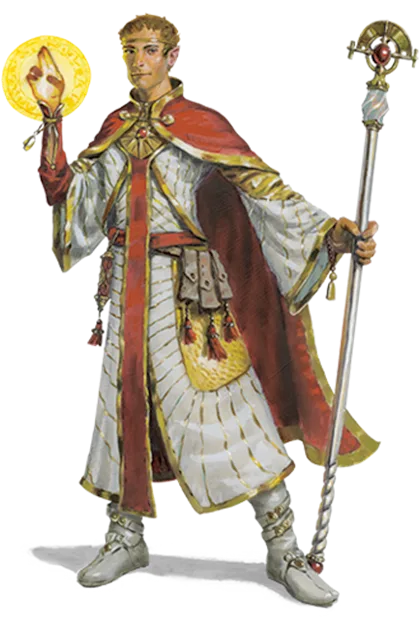 Walking in two worlds but truly belonging to neither, half-elves combine what some say are the best qualities of their elf and human parents: human curiosity, inventiveness, and ambition tempered by the refined senses, love of nature, and artistic tastes of the elves. Some half-elves live among humans, set apart by their emotional and physical differences, watching friends and loved ones age while time barely touches them. Others live with the elves, growing restless as they reach adulthood in the timeless elven realms, while their peers continue to live as children. Many half-elves, unable to fit into either society, choose lives of solitary wandering or join with other misfits and outcasts in the adventuring life. ## Of Two Worlds To humans, half-elves look like elves, and to elves, they look human. In height, they’re on par with both parents, though they’re neither as slender as elves nor as broad as humans. They range from under 5 feet to about 6 feet tall, and from 100 to 180 pounds, with men only slightly taller and heavier than women. Half-elf men do have facial hair, and sometimes grow beards to mask their elven ancestry. Half-elven coloration and features lie somewhere between their human and elf parents, and thus show a variety even more pronounced than that found among either race. They tend to have the eyes of their elven parents. ## Diplomats or Wanderers Half-elves have no lands of their own, though they are welcome in human cities and somewhat less welcome in elven forests. In large cities in regions where elves and humans interact often, half-elves are sometimes numerous enough to form small communities of their own. They enjoy the company of other half-elves, the only people who truly understand what it is to live between these two worlds. In most parts of the world, though, half-elves are uncommon enough that one might live for years without meeting another. Some half-elves prefer to avoid company altogether, wandering the wilds as trappers, foresters, hunters, or adventurers and visiting civilization only rarely. Like elves, they are driven by the wanderlust that comes of their longevity. Others, in contrast, throw themselves into the thick of society, putting their charisma and social skills to great use in diplomatic roles or as swindlers. ## Half-Elf Names Half-elves use either human or elven naming conventions. As if to emphasize that they don’t really fit in to either society, half-elves raised among humans are often given elven names, and those raised among elves often take human names. > EXCELLENT AMBASSADORS > Many half-elves learn at an early age to get along with everyone, defusing hostility and finding common ground. As a race, they have elven grace without elven aloofness and human energy without human boorishness. They often make excellent ambassadors and go-betweens (except between elves and humans, since each side suspects the half-elf of favoring the other). ## Half-Elf Variants Some half-elves in Faerûn have a racial trait in place of the Skill Versatility trait. If your DM allows it, your half-elf character can forgo Skill Versatility and instead take the elf trait Keen Senses or a trait based on your elf parentage: | Fey Ancestry, Skill Versatility, Extra Language, Elven Lineage | Aradaea | Familial: Raised by mother(s), and/or father(s), and/or sibling(s) | Elden (Elves) | Elden-Haea (High Elf), Elden-Draku (Wood Elf), Elden-Droki (Dark Elf), Elden-Saea (Sea Elf) | 5,000 years | Balanced | Low-light Vision | Unlimited | 30 | Walking | Aethyrian Common, Elvish | 150 years | 20 years | 125 lbs | 5.5 ft | Medium | Natural Melanin Range (plus tones from other half) | Varies | Normal Humanoid, Light elven features (mixed with other half) | Mixed Heritage | Yes | No | |
| Grek’Garn (Orcs) | Warlike Tribes with Ancestral Traditions | Orcs trace their creation to the one-eyed god Gruumsh, an unstoppable warrior and powerful leader. The divine qualities of Gruumsh resonate within orcs, granting them a reflection of his toughness and tenacity that can’t be matched, and the god equipped his children to be able to live above or below ground. On some worlds, such as Eberron, orcs were among the first defenders of the natural order from the encroachments of Fiends and other extraplanar threats. Gruumsh’s blessings have made orcs tireless guardians and mighty allies wherever they are found, even when they turn their devotion to other gods. 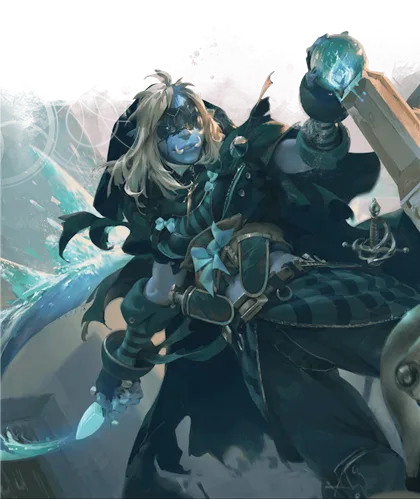 | Adrenaline Rush, Powerful Build, Relentless Endurance | Aradaea | Enthak | Communal: Raised by a village, order, or organization | Grekkin (Greenskins) | Haku-Greka (Proto-Orcs) | 40,000 years | Strength, Constitution | Tremorsense | 20 ft | 30 | Walking | Aethyrian Common, Orc | 50 years | 10 years | 250 lbs | 7 ft | Medium | Browns, Greens, Blacks | Thick, Wooly, Curly, Bearded | Tusks | Diet | Yes | No |
| Grek’Gobu (Goblins) | Highly competitive and cunning tribes with short average lifespans | > Ahh, the Sly Fox. Soft beds, warm turnip pie — such pleasant memories. Alas, the tavern’s no more. Goblinoids plundered her stores and burnt her to the ground. Those heathens have no appreciation for the finer things! > — Volo Goblins occupy an uneasy place in a dangerous world, and they react by lashing out at any creatures they believe they can bully. Cunning in battle and cruel in victory, goblins are fawning and servile in defeat, just as in their own society lower castes must scrape before those of greater status and as goblin tribes bow before other goblinoids. 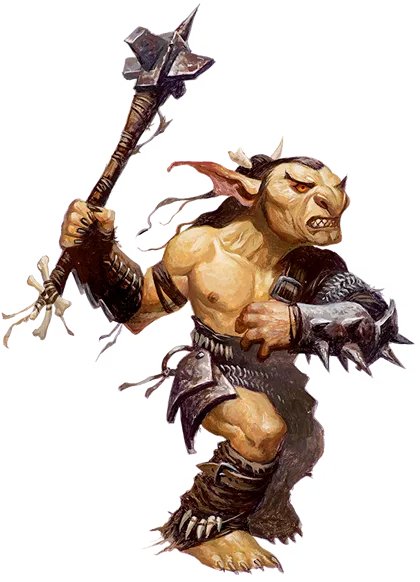 ## Beast Masters and Slave Drivers Goblins know they are a weak, unsophisticated race that can be easily dominated by bigger, smarter, more organized, more ferocious, or more magical creatures. Their god was conquered by Maglubiyet, after all, and now when the Mighty One calls for it, even their souls are forfeit. It is this realization that drives them to dominate other creatures whenever they can — for goblins, life is short. Goblins seek to trap and enslave any creatures they encounter, but they flee from opposition that seems too daunting. For miles around their lair, they employ pit traps, snares, and nets to catch the unwary, and when their hunting patrols encounter other beings, they always look for ways to capture their foes instead of killing them. Goblins that run up against the fringes of a society first test its defenses by stealing objects, and if these crimes go unpunished, they begin stealing people. Enslaved creatures receive the worst treatment the goblins can dish out while still getting decent performance out of the slaves. But humanoids and monsters that are especially capable or that provide unusual services find themselves treated like favored (though occasionally abused) pets. Virtually any kind of creature that can be browbeaten into service might be found with a goblin tribe, but rats and wolves are nearly always present. Both have lived in concert with goblins for at least as long as humans have worked with dogs and horses, and in goblin society those two animals serve similar purposes. ## Family Matters A goblin tribe is organized in a four-tiered caste system made up of lashers, hunters, gatherers, and pariahs. The status of every family in the tribe is based on its importance to the tribe’s survival. Families that belong to the higher-ranking castes keep their status by not sharing their knowledge and skills with other families, while those in the lower castes have little hope of escaping their plight. Outsiders who don’t understand the goblins’ social system are sometimes surprised by how different castes interact with them. A single human warrior might frighten away a dozen gatherers, only to be shocked when two hunters viciously attack. A captured group of invaders might hang in a net while dozens of goblins pass by and pay them no heed until a group of gatherers shows up. Lashers. The closest thing a goblin tribe has to nobility is the caste of lashers — families of goblins trained in the ways of battle, and also possessed of key skills such as strategy, trap-building, beast taming, mining, smelting, forging, and religion. If the tribe has any spellcasters, this caste includes them. Lashers follow the lead of the tribe’s boss, and enforce their will on other goblins with whips. Hunters. The families of goblins that are skilled in the use of weapons but not privy to any other special knowledge have the second highest status in the tribe. Hunters are often the best wolf riders and know the most about the territory farthest from the tribe’s lair. These individuals hunt game in peaceful times, and in combat they serve as scouts, foot soldiers, and cavalry. Gatherers. Families in the second lowest caste are responsible for getting food from the surrounding area, taking what’s naturally available or stealing whatever they can. Gatherers also do the little amount of farming of which goblins are capable and are charged with checking traps for captured people or beasts. Gatherers aren’t usually armed with weapons more deadly than a sling or a knife, but they frequently carry nets, caltrops, lassos, and nooses on poles for controlling captured creatures. These goblins cook for the tribe, and in times of war they are also responsible for making poison. Gatherers, and the pariahs beneath them, greatly fear for their lives in battle, believing that the lashers and the hunters have special knowledge of how to survive. It is the members of the lower castes that give goblins their reputation for cowardice. Pariahs. Some goblin families are the lowest of the low, composed of the most dimwitted, least educated, and weakest goblins. They get the worst jobs: mucking out animal pens, cleaning up after other goblins, and doing any hard labor such as digging mines. If the goblin tribe has slaves to do some of this work, the pariah families enjoy the opportunity to supervise and dominate such creatures, which have no status at all. > WHO'S THE BOSS? > Goblins pattern the rule of their tribes after the whip-cracking rule of their god, Khurgorbaeyag, and thus each group has one leader that exerts autocratic control. But as with many tyrannies, the passing of a leader often results in a chaotic transition to the next. Sometimes a goblin boss has the foresight to declare a successor, often a child or other family member the boss has been able to trust. But such a declaration doesn’t always prevent a mad scramble for influence and allies, or secret backstabbing and outright fights over the title. Most often, the victor in such a struggle comes from another family of the lasher caste, and any allies of the previous boss count themselves lucky if their only punishment is demotion to the pariah caste. Sometimes another creature assumes control of a goblin tribe, by killing or subjugating the current boss and cowing most of the rest of the tribe. If the creature is dimwitted, like a troll or ogre, the lower-class goblins give it obeisance, but before long the upper-class goblins begin to think that whoever can bend the ear of the new leader can act as the real boss. If the creature brushes aside such manipulation, the tribe falls into line behind the new tyrant—better to abide the new rule than conspire against it and be called out as a traitor. ## Status Symbols Goblins love symbols of authority, and thus the tribe’s boss often has such trappings wherever he or she goes. Such a symbol can take a typical form, perhaps a crown or a throne, but also can be a more distinctive objects like a high-backed wolf saddle or colorful boots. The castes in a tribe also adopt symbols to indicate membership or kinship, but the symbols used are rarely the same between different tribes and often make little sense to other creatures. Some possible status symbols are given in the Status Symbols table. A caste or a boss might display more than one of these items. ### Status Symbols Table 3 | d20 | Status Symbol | | --- | --- | | 1 | Earrings and notches in an ear | | 2 | Rib bones tied into hair | | 3 | A belt made from raccoon pelts | | 4 | A gnome’s boot used as a hat | | 5 | A pouch of toenail clippings from an allied ogre | | 6 | A frog kept in a jar | | 7 | Fragile helmets made from axebeak eggs | | 8 | Nose rings | | 9 | Painted or stained hands | | 10 | Bugs kept in a bag for snacking | | 11 | War cry tattooed on chest | | 12 | Shields made from ankheg chitin | | 13 | Bracelet made of pieces of goblins turned to stone | | 14 | Special breed of rat kept as pet | | 15 | Teeth pulled out in certain places | | 16 | Owlbear-feather cloaks | | 17 | Scars from lashings | | 18 | Orc-tusk lip piercings | | 19 | Umbrellas made from dead darkmantles | | 20 | Cloaks made of scraps from an elven tapestry | ## Booyahgs Spellcasters of any sort among the goblins are rare. Goblins typically lack the intelligence and patience needed to learn and practice wizardry, and they fare poorly even when given access to the necessary training and knowledge. Sorcerers are less prevalent among them than in many other races, and Khurgorbaeyag seems to dislike sharing his divine power with his followers. And although many goblins would readily offer anything to have the abilities of a warlock, the patrons that grant such power know a goblin is unlikely to be able to uphold its end of any bargain. Even when a goblin is born with the ability to become a spellcaster, the knowledge and talent necessary to carry on the tradition rarely persists for more than a couple of generations. Because they have so little experience with magic, goblins make no distinction between its forms. To them all magic is “booyahg,” and the word is part of the name they give to any of its practitioners. A goblin with access to booyahg becomes a member of the lashers and can often rise to the role of boss. > “Booyahg” means “magic” in the Goblin tongue. Should ye happen upon goblins chanting “booyahg booyahg booyahg,” be warned! There might be a powerful sorcerer lurking in their midst. > — Elminster Booyahg Caster. This goblin served under a hobgoblin wizard, stole a look at its master’s spellbook, and learned a little wizardry by aping the gestures and words it remembered. The goblin can cast a randomly determined 1st-level wizard spell once per day. Intelligence is its spellcasting ability. Booyahg Wielder. This goblin found a magic item (a necklace of fireballs, a circlet of blasting, or the like) and learned how to use it. Booyahg Whip. Khurgorbaeyag saw fit to gift this goblin with powers that enable it to dominate others. The goblin has 1d3 other goblins that slavishly obey its orders. Booyahg Slave. This goblin warlock serves a patron who can extract payment in flesh if the goblin doesn’t do as promised. Often this patron is a coven of hags serving as the tribe’s boss, a fiend that has made its way into the world, or an undying lord such as a lich or a vampire. (For more information on undying lord patrons, see the Sword Coast Adventurer’s Guide.) Use one of the warlock stat blocks in appendix B to represent this goblin, adding darkvision and the Nimble Escape traits common to all goblins. Booyahg Booyahg Booyahg. This goblin is a sorcerer with the wild magic origin whose every casting, including cantrips, is accompanied by a wild magic surge. Use the mage stat block in the Monster Manual to represent this goblin, adding darkvision and the Nimble Escape traits common to all goblins. Each time the goblin casts a spell, there is an accompanying surge of wild magic; roll on the Wild Magic Surge table in the Player’s Handbook to determine the wild magic effect. | Fury of the Small, Nimble Escape | Aradaea | Enthak | Communal: Raised by a village, order, or organization | Grekkin (Greenskins) | Grek’Garn (Orcs) | 20,000 years | Dexterity, Intelligence | Tremorsense | 20 ft | 25 | Walking | Aethyrian Common, Goblin, Orc | 50 years | 10 years | 50 lbs | 3 ft | Small | Browns, Greens, Blacks | Fine, Dark, Straight, Often Hairless | Tusks | Magic | Yes | No |
| Grek’Haku (Half-Orcs) | Mixed ethnicity of Orc and Human (of any type) | > The warchief Mhurren roused himself from his sleeping-furs and his women and pulled a short hauberk of heavy steel rings over his thick, well-muscled torso. He usually rose before most of his warriors, since he had a strong streak of human blood in him, and he found the daylight less bothersome than most of his tribe did. Among the Bloody Skulls, a warrior was judged by his strength, his fierceness, and his wits. Human ancestry was no blemish against a warrior—provided he was every bit as strong, enduring, and bloodthirsty as his full-blooded kin. Half-orcs who were weaker than their orc comrades didn’t last long among the Bloody Skulls or any other orc tribe for that matter. But it was often true that a bit of human blood gave a warrior just the right mix of cunning, ambition, and self-discipline to go far indeed, as Mhurren had. He was master of a tribe that could muster two thousand spears, and the strongest chief in Thar. > — Richard Baker, Swordmage 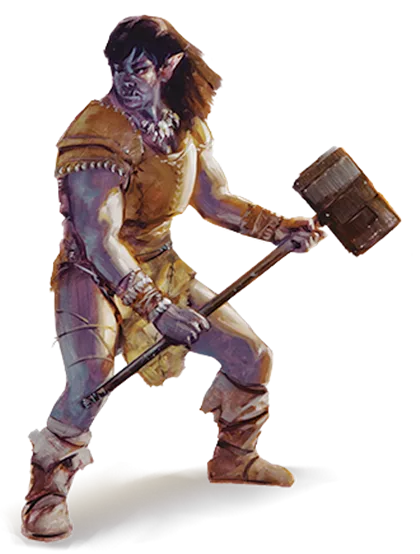 Whether united under the leadership of a mighty warlock or having fought to a standstill after years of conflict, orc and human communities, sometimes form alliances. When these alliances are sealed by marriages, half-orcs are born. Some half-orcs rise to become proud leaders of orc communities. Some venture into the world to prove their worth. Many of these become adventurers, achieving greatness for their mighty deeds. ## Scarred and Strong Half-orcs exhibit a blend of orcish and human characteristics, and their appearance varies widely. Grayish skin tones and prominent teeth are the most common shared elements among these folk. Orcs regard battle scars as tokens of pride and ornamental scars as things of beauty. Other scars, though, mark an orc or half-orc as a former prisoner or a disgraced exile. Any half-orc who has lived among or near orcs has scars, whether they are marks of humiliation or of pride, recounting their past exploits and injuries. ## The Mark of Gruumsh The one-eyed god Gruumsh—lord of war and fury—created the first orcs, and even those orcs who turn away from his worship carry his blessings of might and endurance. The same is true of half-orcs. Some half-orcs hear the whispers of Gruumsh in their dreams, calling them to unleash the rage that simmers within them. Others feel Gruumsh’s exultation when they join in melee combat — and either exult along with him or shiver with fear and loathing. Beyond the rage of Gruumsh, half-orcs feel emotion powerfully. Rage doesn’t just quicken their pulse, it makes their bodies burn. An insult stings like acid, and sadness saps their strength. But they laugh loudly and heartily, and simple pleasures — feasting, drinking, wrestling, drumming, and wild dancing — fill their hearts with joy. They tend to be short-tempered and sometimes sullen, more inclined to action than contemplation and to fighting than arguing. And when their hearts swell with love, they leap to perform acts of great kindness and compassion. ## Half-Orc Names Half-orcs usually have names appropriate to the culture in which they were raised. A half-orc who wants to fit in among humans might trade an orc name for a human name. Some half-orcs with human names decide to adopt a guttural orc name because they think it makes them more intimidating. Male Orc Names: Dench, Feng, Gell, Henk, Holg, Imsh, Keth, Krusk, Mhurren, Ront, Shump, Thokk Female Orc Names: Baggi, Emen, Engong, Kansif, Myev, Neega, Ovak, Ownka, Shautha, Sutha, Vola, Volen, Yevelda | Menacing, Relentless Endurance, Savage Attacks | Aradaea | Familial: Raised by mother(s), and/or father(s), and/or sibling(s) | Grekkin (Greenskins) | Grek’Garn (Orcs) | 10,000 years | Strength, Charisma | Tremorsense | 20 ft | 30 | Walking | Aethyrian Common, Orc | 75 years | 10 years | 200 lbs | 6.5 ft | Medium | Browns, Greens, Blacks (plus tones from other half) | Varies | Normal Humanoid, Light orcish features (mixed with other half) | Mixed Heritage | Yes | No | |
| Dwek-Maka (Mountain Dwarves) | Highly structured caste society of underground city-states | > “Yer late, elf!” came the rough edge of a familiar voice. Bruenor Battlehammer walked up the back of his dead foe, disregarding the fact that the heavy monster lay on top of his elven friend. In spite of the added discomfort, the dwarf’s long, pointed, often-broken nose and gray-streaked though still-fiery red beard came as a welcome sight to Drizzt. “Knew I’d find ye in trouble if I came out an’ looked for ye!” > — R. A. Salvatore, The Crystal Shard Kingdoms rich in ancient grandeur, halls carved into the roots of mountains, the echoing of picks and hammers in deep mines and blazing forges, a commitment to clan and tradition, and a burning hatred of goblins and orcs—these common threads unite all dwarves. 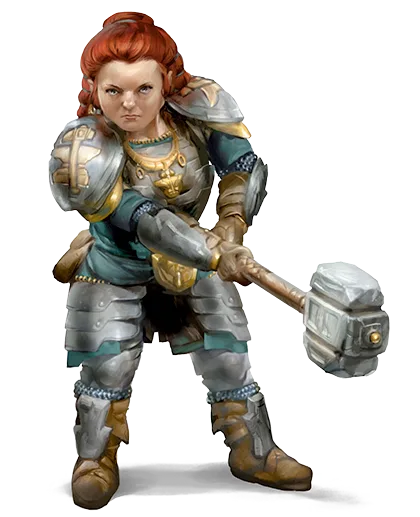 ## Short and Stout Bold and hardy, dwarves are known as skilled warriors, miners, and workers of stone and metal. Though they stand well under 5 feet tall, dwarves are so broad and compact that they can weigh as much as a human standing nearly two feet taller. Their courage and endurance are also easily a match for any of the larger folk. Dwarven skin ranges from deep brown to a paler hue tinged with red, but the most common shades are light brown or deep tan, like certain tones of earth. Their hair, worn long but in simple styles, is usually black, gray, or brown, though paler dwarves often have red hair. Male dwarves value their beards highly and groom them carefully. ## Long Memory, Long Grudges Dwarves can live to be more than 400 years old, so the oldest living dwarves often remember a very different world. For example, some of the oldest dwarves living in Citadel Felbarr (in the world of the Forgotten Realms) can recall the day, more than three centuries ago, when orcs conquered the fortress and drove them into an exile that lasted over 250 years. This longevity grants them a perspective on the world that shorter-lived races such as humans and halflings lack. Dwarves are solid and enduring like the mountains they love, weathering the passage of centuries with stoic endurance and little change. They respect the traditions of their clans, tracing their ancestry back to the founding of their most ancient strongholds in the youth of the world, and don’t abandon those traditions lightly. Part of those traditions is devotion to the gods of the dwarves, who uphold the dwarven ideals of industrious labor, skill in battle, and devotion to the forge. Individual dwarves are determined and loyal, true to their word and decisive in action, sometimes to the point of stubbornness. Many dwarves have a strong sense of justice, and they are slow to forget wrongs they have suffered. A wrong done to one dwarf is a wrong done to the dwarf’s entire clan, so what begins as one dwarf’s hunt for vengeance can become a full-blown clan feud. ## Clans and Kingdoms Dwarven kingdoms stretch deep beneath the mountains where the dwarves mine gems and precious metals and forge items of wonder. They love the beauty and artistry of precious metals and fine jewelry, and in some dwarves this love festers into avarice. Whatever wealth they can’t find in their mountains, they gain through trade. They dislike boats, so enterprising humans and halflings frequently handle trade in dwarven goods along water routes. Trustworthy members of other races are welcome in dwarf settlements, though some areas are off limits even to them. The chief unit of dwarven society is the clan, and dwarves highly value social standing. Even dwarves who live far from their own kingdoms cherish their clan identities and affiliations, recognize related dwarves, and invoke their ancestors’ names in oaths and curses. To be clanless is the worst fate that can befall a dwarf. Dwarves in other lands are typically artisans, especially weaponsmiths, armorers, and jewelers. Some become mercenaries or bodyguards, highly sought after for their courage and loyalty. ## Gods, Gold, and Clan Dwarves who take up the adventuring life might be motivated by a desire for treasure—for its own sake, for a specific purpose, or even out of an altruistic desire to help others. Other dwarves are driven by the command or inspiration of a deity, a direct calling or simply a desire to bring glory to one of the dwarf gods. Clan and ancestry are also important motivators. A dwarf might seek to restore a clan’s lost honor, avenge an ancient wrong the clan suffered, or earn a new place within the clan after having been exiled. Or a dwarf might search for the axe wielded by a mighty ancestor, lost on the field of battle centuries ago. > SLOW TO TRUST > Dwarves get along passably well with most other races. “The difference between an acquaintance and a friend is about a hundred years,” is a dwarf saying that might be hyperbole, but certainly points to how difficult it can be for a member of a short-lived race like humans to earn a dwarf’s trust. > Elves. “It’s not wise to depend on the elves. No telling what an elf will do next; when the hammer meets the orc’s head, they’re as apt to start singing as to pull out a sword. They’re flighty and frivolous. Two things to be said for them, though: They don’t have many smiths, but the ones they have do very fine work. And when orcs or goblins come streaming down out of the mountains, an elf’s good to have at your back. Not as good as a dwarf, maybe, but no doubt they hate the orcs as much as we do.” > Halflings. “Sure, they’re pleasant folk. But show me a halfling hero. An empire, a triumphant army. Even a treasure for the ages made by halfling hands. Nothing. How can you take them seriously?” > Humans. “You take the time to get to know a human, and by then the human’s on her deathbed. If you’re lucky, she’s got kin—a daughter or granddaughter, maybe—who’s got hands and heart as good as hers. That’s when you can make a human friend. And watch them go! They set their hearts on something, they’ll get it, whether it’s a dragon’s hoard or an empire’s throne. You have to admire that kind of dedication, even if it gets them in trouble more often than not.” ## Dwarf Names A dwarf’s name is granted by a clan elder, in accordance with tradition. Every proper dwarven name has been used and reused down through the generations. A dwarf’s name belongs to the clan, not to the individual. A dwarf who misuses or brings shame to a clan name is stripped of the name and forbidden by law to use any dwarven name in its place. Male Names: Adrik, Alberich, Baern, Barendd, Brottor, Bruenor, Dain, Darrak, Delg, Eberk, Einkil, Fargrim, Flint, Gardain, Harbek, Kildrak, Morgran, Orsik, Oskar, Rangrim, Rurik, Taklinn, Thoradin, Thorin, Tordek, Traubon, Travok, Ulfgar, Veit, Vondal Female Names: Amber, Artin, Audhild, Bardryn, Dagnal, Diesa, Eldeth, Falkrunn, Finellen, Gunnloda, Gurdis, Helja, Hlin, Kathra, Kristryd, Ilde, Liftrasa, Mardred, Riswynn, Sannl, Torbera, Torgga, Vistra Clan Names: Balderk, Battlehammer, Brawnanvil, Dankil, Fireforge, Frostbeard, Gorunn, Holderhek, Ironfist, Loderr, Lutgehr, Rumnaheim, Strakeln, Torunn, Ungart ### Mountain Dwarf As a mountain dwarf, you’re strong and hardy, accustomed to a difficult life in rugged terrain. You’re probably on the tall side (for a dwarf), and tend toward lighter coloration. The shield dwarves of northern Faerûn, as well as the ruling Hylar clan and the noble Daewar clan of Dragonlance, are mountain dwarves. | Dwarven Resilience, Dwarven Combat Training, Dwarven Tool Proficiency, Stonecunning, Dwarven Armor Training | Aradaea | Grodraken | Communal: Raised by a village, order, or organization | Dwek (Dwarves) | Haku-Dweka (Proto-Dwarves) | 80,000 years | Wisdom, Constitution | Tremorsense | 20 ft | 25 | Walking | Aethyrian Common, Dwarvish | 250 years | 50 years | 150 lbs | 4 ft | Medium | Natural Melanin Range | Thick, Varied Color, Curly, Bearded | Stout | Region | Yes | No |
| Dwek-Haku (Hill Dwarves) | Ancestral tribes with proud ancient traditions | > “Yer late, elf!” came the rough edge of a familiar voice. Bruenor Battlehammer walked up the back of his dead foe, disregarding the fact that the heavy monster lay on top of his elven friend. In spite of the added discomfort, the dwarf’s long, pointed, often-broken nose and gray-streaked though still-fiery red beard came as a welcome sight to Drizzt. “Knew I’d find ye in trouble if I came out an’ looked for ye!” > — R. A. Salvatore, The Crystal Shard Kingdoms rich in ancient grandeur, halls carved into the roots of mountains, the echoing of picks and hammers in deep mines and blazing forges, a commitment to clan and tradition, and a burning hatred of goblins and orcs—these common threads unite all dwarves. ## Short and Stout Bold and hardy, dwarves are known as skilled warriors, miners, and workers of stone and metal. Though they stand well under 5 feet tall, dwarves are so broad and compact that they can weigh as much as a human standing nearly two feet taller. Their courage and endurance are also easily a match for any of the larger folk. Dwarven skin ranges from deep brown to a paler hue tinged with red, but the most common shades are light brown or deep tan, like certain tones of earth. Their hair, worn long but in simple styles, is usually black, gray, or brown, though paler dwarves often have red hair. Male dwarves value their beards highly and groom them carefully. ## Long Memory, Long Grudges Dwarves can live to be more than 400 years old, so the oldest living dwarves often remember a very different world. For example, some of the oldest dwarves living in Citadel Felbarr (in the world of the Forgotten Realms) can recall the day, more than three centuries ago, when orcs conquered the fortress and drove them into an exile that lasted over 250 years. This longevity grants them a perspective on the world that shorter-lived races such as humans and halflings lack. Dwarves are solid and enduring like the mountains they love, weathering the passage of centuries with stoic endurance and little change. They respect the traditions of their clans, tracing their ancestry back to the founding of their most ancient strongholds in the youth of the world, and don’t abandon those traditions lightly. Part of those traditions is devotion to the gods of the dwarves, who uphold the dwarven ideals of industrious labor, skill in battle, and devotion to the forge. Individual dwarves are determined and loyal, true to their word and decisive in action, sometimes to the point of stubbornness. Many dwarves have a strong sense of justice, and they are slow to forget wrongs they have suffered. A wrong done to one dwarf is a wrong done to the dwarf’s entire clan, so what begins as one dwarf’s hunt for vengeance can become a full-blown clan feud. ## Clans and Kingdoms Dwarven kingdoms stretch deep beneath the mountains where the dwarves mine gems and precious metals and forge items of wonder. They love the beauty and artistry of precious metals and fine jewelry, and in some dwarves this love festers into avarice. Whatever wealth they can’t find in their mountains, they gain through trade. They dislike boats, so enterprising humans and halflings frequently handle trade in dwarven goods along water routes. Trustworthy members of other races are welcome in dwarf settlements, though some areas are off limits even to them. The chief unit of dwarven society is the clan, and dwarves highly value social standing. Even dwarves who live far from their own kingdoms cherish their clan identities and affiliations, recognize related dwarves, and invoke their ancestors’ names in oaths and curses. To be clanless is the worst fate that can befall a dwarf. Dwarves in other lands are typically artisans, especially weaponsmiths, armorers, and jewelers. Some become mercenaries or bodyguards, highly sought after for their courage and loyalty. ## Gods, Gold, and Clan Dwarves who take up the adventuring life might be motivated by a desire for treasure—for its own sake, for a specific purpose, or even out of an altruistic desire to help others. Other dwarves are driven by the command or inspiration of a deity, a direct calling or simply a desire to bring glory to one of the dwarf gods. Clan and ancestry are also important motivators. A dwarf might seek to restore a clan’s lost honor, avenge an ancient wrong the clan suffered, or earn a new place within the clan after having been exiled. Or a dwarf might search for the axe wielded by a mighty ancestor, lost on the field of battle centuries ago. > SLOW TO TRUST > Dwarves get along passably well with most other races. “The difference between an acquaintance and a friend is about a hundred years,” is a dwarf saying that might be hyperbole, but certainly points to how difficult it can be for a member of a short-lived race like humans to earn a dwarf’s trust. > Elves. “It’s not wise to depend on the elves. No telling what an elf will do next; when the hammer meets the orc’s head, they’re as apt to start singing as to pull out a sword. They’re flighty and frivolous. Two things to be said for them, though: They don’t have many smiths, but the ones they have do very fine work. And when orcs or goblins come streaming down out of the mountains, an elf’s good to have at your back. Not as good as a dwarf, maybe, but no doubt they hate the orcs as much as we do.” > Halflings. “Sure, they’re pleasant folk. But show me a halfling hero. An empire, a triumphant army. Even a treasure for the ages made by halfling hands. Nothing. How can you take them seriously?” > Humans. “You take the time to get to know a human, and by then the human’s on her deathbed. If you’re lucky, she’s got kin—a daughter or granddaughter, maybe—who’s got hands and heart as good as hers. That’s when you can make a human friend. And watch them go! They set their hearts on something, they’ll get it, whether it’s a dragon’s hoard or an empire’s throne. You have to admire that kind of dedication, even if it gets them in trouble more often than not.” ## Dwarf Names A dwarf’s name is granted by a clan elder, in accordance with tradition. Every proper dwarven name has been used and reused down through the generations. A dwarf’s name belongs to the clan, not to the individual. A dwarf who misuses or brings shame to a clan name is stripped of the name and forbidden by law to use any dwarven name in its place. Male Names: Adrik, Alberich, Baern, Barendd, Brottor, Bruenor, Dain, Darrak, Delg, Eberk, Einkil, Fargrim, Flint, Gardain, Harbek, Kildrak, Morgran, Orsik, Oskar, Rangrim, Rurik, Taklinn, Thoradin, Thorin, Tordek, Traubon, Travok, Ulfgar, Veit, Vondal Female Names: Amber, Artin, Audhild, Bardryn, Dagnal, Diesa, Eldeth, Falkrunn, Finellen, Gunnloda, Gurdis, Helja, Hlin, Kathra, Kristryd, Ilde, Liftrasa, Mardred, Riswynn, Sannl, Torbera, Torgga, Vistra Clan Names: Balderk, Battlehammer, Brawnanvil, Dankil, Fireforge, Frostbeard, Gorunn, Holderhek, Ironfist, Loderr, Lutgehr, Rumnaheim, Strakeln, Torunn, Ungart ### Hill Dwarf As a hill dwarf, you have keen senses, deep intuition, and remarkable resilience. The gold dwarves of Faerûn in their mighty southern kingdom are hill dwarves, as are the exiled Neidar and the debased Klar of Krynn in the Dragonlance setting. | Dwarven Resilience, Dwarven Combat Training, Dwarven Tool Proficiency, Stonecunning, Dwarven Toughness | Aradaea | Kolgaren | Familial: Raised by mother(s), and/or father(s), and/or sibling(s) | Dwek (Dwarves) | Haku-Dweka (Proto-Dwarves) | 100,000 years | Charisma, Constitution | Tremorsense | 20 ft | 25 | Walking | Aethyrian Common, Dwarvish | 250 years | 50 years | 150 lbs | 4.5 ft | Medium | Natural Melanin Range | Thick, Varied Color, Curly, Bearded | Stout | Region | Yes | No |
| Dwek-Droki (Dark Dwarves) | Strict authoritarian communist kingdoms of the Underdark with bitter rivalries and long-held grudges | > “Yer late, elf!” came the rough edge of a familiar voice. Bruenor Battlehammer walked up the back of his dead foe, disregarding the fact that the heavy monster lay on top of his elven friend. In spite of the added discomfort, the dwarf’s long, pointed, often-broken nose and gray-streaked though still-fiery red beard came as a welcome sight to Drizzt. “Knew I’d find ye in trouble if I came out an’ looked for ye!” > — R. A. Salvatore, The Crystal Shard Kingdoms rich in ancient grandeur, halls carved into the roots of mountains, the echoing of picks and hammers in deep mines and blazing forges, a commitment to clan and tradition, and a burning hatred of goblins and orcs—these common threads unite all dwarves. ## Short and Stout Bold and hardy, dwarves are known as skilled warriors, miners, and workers of stone and metal. Though they stand well under 5 feet tall, dwarves are so broad and compact that they can weigh as much as a human standing nearly two feet taller. Their courage and endurance are also easily a match for any of the larger folk. Dwarven skin ranges from deep brown to a paler hue tinged with red, but the most common shades are light brown or deep tan, like certain tones of earth. Their hair, worn long but in simple styles, is usually black, gray, or brown, though paler dwarves often have red hair. Male dwarves value their beards highly and groom them carefully. ## Long Memory, Long Grudges Dwarves can live to be more than 400 years old, so the oldest living dwarves often remember a very different world. For example, some of the oldest dwarves living in Citadel Felbarr (in the world of the Forgotten Realms) can recall the day, more than three centuries ago, when orcs conquered the fortress and drove them into an exile that lasted over 250 years. This longevity grants them a perspective on the world that shorter-lived races such as humans and halflings lack. Dwarves are solid and enduring like the mountains they love, weathering the passage of centuries with stoic endurance and little change. They respect the traditions of their clans, tracing their ancestry back to the founding of their most ancient strongholds in the youth of the world, and don’t abandon those traditions lightly. Part of those traditions is devotion to the gods of the dwarves, who uphold the dwarven ideals of industrious labor, skill in battle, and devotion to the forge. Individual dwarves are determined and loyal, true to their word and decisive in action, sometimes to the point of stubbornness. Many dwarves have a strong sense of justice, and they are slow to forget wrongs they have suffered. A wrong done to one dwarf is a wrong done to the dwarf’s entire clan, so what begins as one dwarf’s hunt for vengeance can become a full-blown clan feud. ## Clans and Kingdoms Dwarven kingdoms stretch deep beneath the mountains where the dwarves mine gems and precious metals and forge items of wonder. They love the beauty and artistry of precious metals and fine jewelry, and in some dwarves this love festers into avarice. Whatever wealth they can’t find in their mountains, they gain through trade. They dislike boats, so enterprising humans and halflings frequently handle trade in dwarven goods along water routes. Trustworthy members of other races are welcome in dwarf settlements, though some areas are off limits even to them. The chief unit of dwarven society is the clan, and dwarves highly value social standing. Even dwarves who live far from their own kingdoms cherish their clan identities and affiliations, recognize related dwarves, and invoke their ancestors’ names in oaths and curses. To be clanless is the worst fate that can befall a dwarf. Dwarves in other lands are typically artisans, especially weaponsmiths, armorers, and jewelers. Some become mercenaries or bodyguards, highly sought after for their courage and loyalty. ## Gods, Gold, and Clan Dwarves who take up the adventuring life might be motivated by a desire for treasure—for its own sake, for a specific purpose, or even out of an altruistic desire to help others. Other dwarves are driven by the command or inspiration of a deity, a direct calling or simply a desire to bring glory to one of the dwarf gods. Clan and ancestry are also important motivators. A dwarf might seek to restore a clan’s lost honor, avenge an ancient wrong the clan suffered, or earn a new place within the clan after having been exiled. Or a dwarf might search for the axe wielded by a mighty ancestor, lost on the field of battle centuries ago. > SLOW TO TRUST > Dwarves get along passably well with most other races. “The difference between an acquaintance and a friend is about a hundred years,” is a dwarf saying that might be hyperbole, but certainly points to how difficult it can be for a member of a short-lived race like humans to earn a dwarf’s trust. > Elves. “It’s not wise to depend on the elves. No telling what an elf will do next; when the hammer meets the orc’s head, they’re as apt to start singing as to pull out a sword. They’re flighty and frivolous. Two things to be said for them, though: They don’t have many smiths, but the ones they have do very fine work. And when orcs or goblins come streaming down out of the mountains, an elf’s good to have at your back. Not as good as a dwarf, maybe, but no doubt they hate the orcs as much as we do.” > Halflings. “Sure, they’re pleasant folk. But show me a halfling hero. An empire, a triumphant army. Even a treasure for the ages made by halfling hands. Nothing. How can you take them seriously?” > Humans. “You take the time to get to know a human, and by then the human’s on her deathbed. If you’re lucky, she’s got kin—a daughter or granddaughter, maybe—who’s got hands and heart as good as hers. That’s when you can make a human friend. And watch them go! They set their hearts on something, they’ll get it, whether it’s a dragon’s hoard or an empire’s throne. You have to admire that kind of dedication, even if it gets them in trouble more often than not.” ## Dwarf Names A dwarf’s name is granted by a clan elder, in accordance with tradition. Every proper dwarven name has been used and reused down through the generations. A dwarf’s name belongs to the clan, not to the individual. A dwarf who misuses or brings shame to a clan name is stripped of the name and forbidden by law to use any dwarven name in its place. Male Names: Adrik, Alberich, Baern, Barendd, Brottor, Bruenor, Dain, Darrak, Delg, Eberk, Einkil, Fargrim, Flint, Gardain, Harbek, Kildrak, Morgran, Orsik, Oskar, Rangrim, Rurik, Taklinn, Thoradin, Thorin, Tordek, Traubon, Travok, Ulfgar, Veit, Vondal Female Names: Amber, Artin, Audhild, Bardryn, Dagnal, Diesa, Eldeth, Falkrunn, Finellen, Gunnloda, Gurdis, Helja, Hlin, Kathra, Kristryd, Ilde, Liftrasa, Mardred, Riswynn, Sannl, Torbera, Torgga, Vistra Clan Names: Balderk, Battlehammer, Brawnanvil, Dankil, Fireforge, Frostbeard, Gorunn, Holderhek, Ironfist, Loderr, Lutgehr, Rumnaheim, Strakeln, Torunn, Ungart ### Gray Dwarf (Duergar) The gray dwarves, or duergar, live deep in the Underdark. After delving deeper than any other dwarves, they were enslaved by mind flayers for eons. Although they eventually won their freedom, these grim, ashen-skinned dwarves now take slaves of their own and are as tyrannical as their former masters. Physically similar to other dwarves in some ways, duergar are wiry and lean, with black eyes and bald heads, with the males growing long, unkempt, gray beards. Duergar value toil above all else. Showing emotions other than grim determination or wrath is frowned on in their culture, but they can sometimes seem joyful when at work. They have the typical dwarven appreciation for order, tradition, and impeccable craftsmanship, but their goods are purely utilitarian, disdaining aesthetic or artistic value. Few duergar become adventurers, fewer still on the surface world, because they are a hidebound and suspicious race. Those who leave their subterranean cities are usually exiles. Check with your Dungeon Master to see if you can play a gray dwarf character. Duergar see themselves as the true manifestation of dwarven ideals, clever enough not to be taken in by the treacherous deceptions of Moradin and his false promises. Their period of enslavement and the revolt against the mind flayers led by their god, Laduguer, purged the influence of the other dwarven gods from their souls and thus made them into the superior race. Duergar have no appreciation for beauty, that ability having been erased from their minds by the mind flayers long ago and any thought of recapturing it obliterated by Moradin’s betrayal. The duergar lead bleak, grim lives devoid of happiness or satisfaction, but they see that as their defining strength — the root of duergar pride, as it were — rather than a drawback to be corrected. | Dwarven Resilience, Dwarven Combat Training, Dwarven Tool Proficiency, Stonecunning, Duergar Resilience, Duergar Magic | Aradaea | Umbradaken | Familial: Raised by mother(s), and/or father(s), and/or sibling(s) | Dwek (Dwarves) | Dwek-Maka (Mountain Dwarves) | 40,000 years | Strength, Constitution | Tremorsense | 20 ft | 25 | Walking | Aethyrian Common, Dwarvish, Undercommon | 250 years | 50 years | 150 lbs | 4 ft | Medium | Blacks, Purples, Blues | Thick, Varied Color, Curly, Bearded | Stout | Region, Diet | Yes | No |
| Smek-Azura (Gnome) | Bureaucratic Consortium of Free States run by a meritocracy with a high value placed on magical and technological discovery | > Skinny and flaxen-haired, his skin walnut brown and his eyes a startling turquoise, Burgell stood half as tall as Aeron and had to climb up on a stool to look out the peephole. Like most habitations in Oeble, that particular tenement had been built for humans, and smaller residents coped with the resulting awkwardness as best they could. > But at least the relative largeness of the apartment gave Burgell room to pack in all his gnome-sized gear. The front room was his workshop, and it contained a bewildering miscellany of tools: hammers, chisels, saws, lockpicks, tinted lenses, jeweler’s loupes, and jars of powdered and shredded ingredients for casting spells. A fat gray cat, the mage’s familiar, lay curled atop a grimoire. It opened its eyes, gave Aeron a disdainful yellow stare, then appeared to go back to sleep. > — Richard Lee Byers, The Black Bouquet 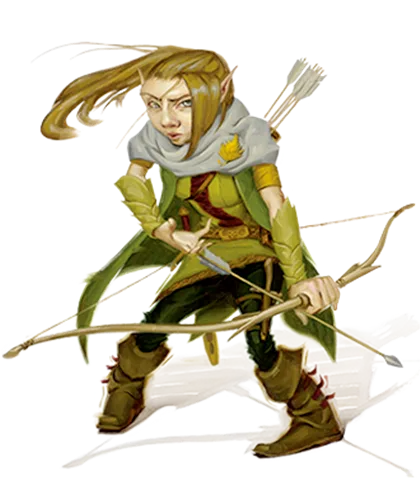 A constant hum of busy activity pervades the warrens and neighborhoods where gnomes form their close-knit communities. Louder sounds punctuate the hum: a crunch of grinding gears here, a minor explosion there, a yelp of surprise or triumph, and especially bursts of laughter. Gnomes take delight in life, enjoying every moment of invention, exploration, investigation, creation, and play. ## Vibrant Expression A gnome’s energy and enthusiasm for living shines through every inch of his or her tiny body. Gnomes average slightly over 3 feet tall and weigh 40 to 45 pounds. Their tan or brown faces are usually adorned with broad smiles (beneath their prodigious noses), and their bright eyes shine with excitement. Their fair hair has a tendency to stick out in every direction, as if expressing the gnome’s insatiable interest in everything around. A gnome’s personality is writ large in his or her appearance. A male gnome’s beard, in contrast to his wild hair, is kept carefully trimmed but often styled into curious forks or neat points. A gnome’s clothing, though usually made in modest earth tones, is elaborately decorated with embroidery, embossing, or gleaming jewels. ## Delighted Dedication As far as gnomes are concerned, being alive is a wonderful thing, and they squeeze every ounce of enjoyment out of their three to five centuries of life. Humans might wonder about getting bored over the course of such a long life, and elves take plenty of time to savor the beauties of the world in their long years, but gnomes seem to worry that even with all that time, they can’t get in enough of the things they want to do and see. Gnomes speak as if they can’t get the thoughts out of their heads fast enough. Even as they offer ideas and opinions on a range of subjects, they still manage to listen carefully to others, adding the appropriate exclamations of surprise and appreciation along the way. Though gnomes love jokes of all kinds, particularly puns and pranks, they’re just as dedicated to the more serious tasks they undertake. Many gnomes are skilled engineers, alchemists, tinkers, and inventors. They’re willing to make mistakes and laugh at themselves in the process of perfecting what they do, taking bold (sometimes foolhardy) risks and dreaming large. ## Bright Burrows Gnomes make their homes in hilly, wooded lands. They live underground but get more fresh air than dwarves do, enjoying the natural, living world on the surface whenever they can. Their homes are well hidden by both clever construction and simple illusions. Welcome visitors are quickly ushered into the bright, warm burrows. Those who are not welcome are unlikely to find the burrows in the first place. Gnomes who settle in human lands are commonly gemcutters, engineers, sages, or tinkers. Some human families retain gnome tutors, ensuring that their pupils enjoy a mix of serious learning and delighted enjoyment. A gnome might tutor several generations of a single human family over the course of his or her long life. ## Gnome Names Gnomes love names, and most have half a dozen or so. A gnome’s mother, father, clan elder, aunts, and uncles each give the gnome a name, and various nicknames from just about everyone else might or might not stick over time. Gnome names are typically variants on the names of ancestors or distant relatives, though some are purely new inventions. When dealing with humans and others who are “stuffy” about names, a gnome learns to use no more than three names: a personal name, a clan name, and a nickname, choosing the one in each category that’s the most fun to say. Male Names: Alston, Alvyn, Boddynock, Brocc, Burgell, Dimble, Eldon, Erky, Fonkin, Frug, Gerbo, Gimble, Glim, Jebeddo, Kellen, Namfoodle, Orryn, Roondar, Seebo, Sindri, Warryn, Wrenn, Zook Female Names: Bimpnottin, Breena, Caramip, Carlin, Donella, Duvamil, Ella, Ellyjobell, Ellywick, Lilli, Loopmottin, Lorilla, Mardnab, Nissa, Nyx, Oda, Orla, Roywyn, Shamil, Tana, Waywocket, Zanna Clan Names: Beren, Daergel, Folkor, Garrick, Nackle, Murnig, Ningel, Raulnor, Scheppen, Timbers, Turen Nicknames: Aleslosh, Ashhearth, Badger, Cloak, Doublelock, Filchbatter, Fnipper, Ku, Nim, Oneshoe, Pock, Sparklegem, Stumbleduck ## Seeing the World Curious and impulsive, gnomes might take up adventuring as a way to see the world or for the love of exploring. As lovers of gems and other fine items, some gnomes take to adventuring as a quick, if dangerous, path to wealth. Regardless of what spurs them to adventure, gnomes who adopt this way of life eke as much enjoyment out of it as they do out of any other activity they undertake, sometimes to the great annoyance of their adventuring companions. > ALWAYS APPRECIATIVE > It’s rare for a gnome to be hostile or malicious unless he or she has suffered a grievous injury. Gnomes know that most races don’t share their sense of humor, but they enjoy anyone’s company just as they enjoy everything else they set out to do. ### Rock Gnome As a rock gnome, you have a natural inventiveness and hardiness beyond that of other gnomes. Most gnomes in the worlds of D&D are rock gnomes, including the tinker gnomes of the Dragonlance setting. | Gnome Cunning, Artificer’s Lore, Tinker | Aradaea | Azura | Familial: Raised by mother(s), and/or father(s), and/or sibling(s) | Smek (Smallfolk) | Dwek-Maka (Mountain Dwarves) | 40,000 years | Intelligence, Dexterity | Tremorsense | 20 ft | 25 | Walking | Aethyrian Common, Azuran (Gnomish) | 250 years | 50 years | 50 lbs | 2.5 ft | Small | Blues, Greys, Purples | Fine, Straight, Varied Color, Often Hairless | Large Eyes, Floppy Ears, Diminutive | Region, Diet | Yes | No |
| Smek-Haku (Halfling) | Scattered settlements of cooperative farmers and craftspeople with a high value placed on family tradition and racial kinship. | > Regis the halfling, the only one of his kind for hundreds of miles in any direction, locked his fingers behind his head and leaned back against the mossy blanket of the tree trunk. Regis was short, even by the standards of his diminutive race, with the fluff of his curly brown locks barely cresting the three-foot mark, but his belly was amply thickened by his love of a good meal, or several, as the opportunities presented themselves. The crooked stick that served as his fishing pole rose up above him, clenched between two of his toes, and hung out over the quiet lake, mirrored perfectly in the glassy surface of Maer Dualdon. > — R.A. Salvatore, The Crystal Shard 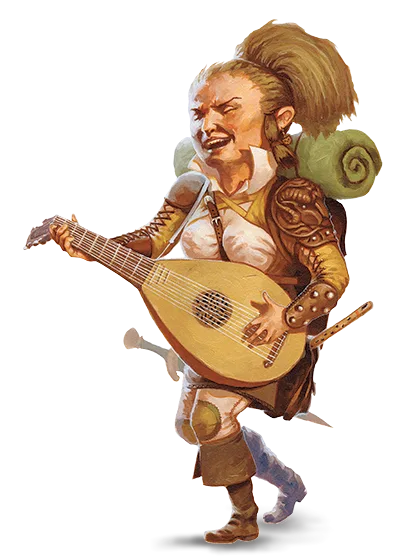 The comforts of home are the goals of most halflings’ lives: a place to settle in peace and quiet, far from marauding monsters and clashing armies; a blazing fire and a generous meal; fine drink and fine conversation. Though some halflings live out their days in remote agricultural communities, others form nomadic bands that travel constantly, lured by the open road and the wide horizon to discover the wonders of new lands and peoples. But even these wanderers love peace, food, hearth, and home, though home might be a wagon jostling along a dirt road or a raft floating downriver. ## Small and Practical The diminutive halflings survive in a world full of larger creatures by avoiding notice or, barring that, avoiding offense. Standing about 3 feet tall, they appear relatively harmless and so have managed to survive for centuries in the shadow of empires and on the edges of wars and political strife. They are inclined to be stout, weighing between 40 and 45 pounds. Halflings’ skin ranges from tan to pale with a ruddy cast, and their hair is usually brown or sandy brown and wavy. They have brown or hazel eyes. Halfling men often sport long sideburns, but beards are rare among them and mustaches even more so. They like to wear simple, comfortable, and practical clothes, favoring bright colors. Halfling practicality extends beyond their clothing. They’re concerned with basic needs and simple pleasures and have little use for ostentation. Even the wealthiest of halflings keep their treasures locked in a cellar rather than on display for all to see. They have a knack for finding the most straightforward solution to a problem, and have little patience for dithering. ## Kind and Curious Halflings are an affable and cheerful people. They cherish the bonds of family and friendship as well as the comforts of hearth and home, harboring few dreams of gold or glory. Even adventurers among them usually venture into the world for reasons of community, friendship, wanderlust, or curiosity. They love discovering new things, even simple things, such as an exotic food or an unfamiliar style of clothing. Halflings are easily moved to pity and hate to see any living thing suffer. They are generous, happily sharing what they have even in lean times. ## Blend into the Crowd Halflings are adept at fitting into a community of humans, dwarves, or elves, making themselves valuable and welcome. The combination of their inherent stealth and their unassuming nature helps halflings to avoid unwanted attention. Halflings work readily with others, and they are loyal to their friends, whether halfling or otherwise. They can display remarkable ferocity when their friends, families, or communities are threatened. ## Pastoral Pleasantries Most halflings live in small, peaceful communities with large farms and well-kept groves. They rarely build kingdoms of their own or even hold much land beyond their quiet shires. They typically don’t recognize any sort of halfling nobility or royalty, instead looking to family elders to guide them. Families preserve their traditional ways despite the rise and fall of empires. Many halflings live among other races, where the halflings’ hard work and loyal outlook offer them abundant rewards and creature comforts. Some halfling communities travel as a way of life, driving wagons or guiding boats from place to place and maintaining no permanent home. > AFFABLE AND POSITIVE > Halflings try to get along with everyone else and are loath to make sweeping generalizations—especially negative ones. > Dwarves. “Dwarves make loyal friends, and you can count on them to keep their word. But would it hurt them to smile once in a while?” > Elves. “They’re so beautiful! Their faces, their music, their grace and all. It’s like they stepped out of a wonderful dream. But there’s no telling what’s going on behind their smiling faces—surely more than they ever let on.” > Humans. “Humans are a lot like us, really. At least some of them are. Step out of the castles and keeps, go talk to the farmers and herders and you’ll find good, solid folk. Not that there’s anything wrong with the barons and soldiers—you have to admire their conviction. And by protecting their own lands, they protect us as well.” ## Exploring Opportunities Halflings usually set out on the adventurer’s path to defend their communities, support their friends, or explore a wide and wonder-filled world. For them, adventuring is less a career than an opportunity or sometimes a necessity. ## Halfling Names A halfling has a given name, a family name, and possibly a nickname. Family names are often nicknames that stuck so tenaciously they have been passed down through the generations. Male Names: Alton, Ander, Cade, Corrin, Eldon, Errich, Finnan, Garret, Lindal, Lyle, Merric, Milo, Osborn, Perrin, Reed, Roscoe, Wellby Female Names: Andry, Bree, Callie, Cora, Euphemia, Jillian, Kithri, Lavinia, Lidda, Merla, Nedda, Paela, Portia, Seraphina, Shaena, Trym, Vani, Verna Family Names: Brushgather, Goodbarrel, Greenbottle, High-hill, Hilltopple, Leagallow, Tealeaf, Thorngage, Tosscobble, Underbough | Aradaea | Ashton | Familial: Raised by mother(s), and/or father(s), and/or sibling(s) | Smek (Smallfolk) | Haku-Aradae (True Humans) | 40,000 years | Wisdom, Dexterity | Normal | Unlimited | 25 | Walking | Aethyrian Common, Halfling | 100 years | 20 years | 75 lbs | 3.5 ft | Small | Natural Melanin Range | Fine, Varied Color, Curly, Lightly Bearded | Large Hairy Feet, Diminutive | Region, Diet | Yes | No | |
| Smek-Smirfna (Deep Gnome) | Cult-like communities living in small enclaves within the Underdark lead by spiritual leaders with a strong connection to the occult. | > Skinny and flaxen-haired, his skin walnut brown and his eyes a startling turquoise, Burgell stood half as tall as Aeron and had to climb up on a stool to look out the peephole. Like most habitations in Oeble, that particular tenement had been built for humans, and smaller residents coped with the resulting awkwardness as best they could. > But at least the relative largeness of the apartment gave Burgell room to pack in all his gnome-sized gear. The front room was his workshop, and it contained a bewildering miscellany of tools: hammers, chisels, saws, lockpicks, tinted lenses, jeweler’s loupes, and jars of powdered and shredded ingredients for casting spells. A fat gray cat, the mage’s familiar, lay curled atop a grimoire. It opened its eyes, gave Aeron a disdainful yellow stare, then appeared to go back to sleep. > — Richard Lee Byers, The Black Bouquet A constant hum of busy activity pervades the warrens and neighborhoods where gnomes form their close-knit communities. Louder sounds punctuate the hum: a crunch of grinding gears here, a minor explosion there, a yelp of surprise or triumph, and especially bursts of laughter. Gnomes take delight in life, enjoying every moment of invention, exploration, investigation, creation, and play. ## Vibrant Expression A gnome’s energy and enthusiasm for living shines through every inch of his or her tiny body. Gnomes average slightly over 3 feet tall and weigh 40 to 45 pounds. Their tan or brown faces are usually adorned with broad smiles (beneath their prodigious noses), and their bright eyes shine with excitement. Their fair hair has a tendency to stick out in every direction, as if expressing the gnome’s insatiable interest in everything around. A gnome’s personality is writ large in his or her appearance. A male gnome’s beard, in contrast to his wild hair, is kept carefully trimmed but often styled into curious forks or neat points. A gnome’s clothing, though usually made in modest earth tones, is elaborately decorated with embroidery, embossing, or gleaming jewels. ## Delighted Dedication As far as gnomes are concerned, being alive is a wonderful thing, and they squeeze every ounce of enjoyment out of their three to five centuries of life. Humans might wonder about getting bored over the course of such a long life, and elves take plenty of time to savor the beauties of the world in their long years, but gnomes seem to worry that even with all that time, they can’t get in enough of the things they want to do and see. Gnomes speak as if they can’t get the thoughts out of their heads fast enough. Even as they offer ideas and opinions on a range of subjects, they still manage to listen carefully to others, adding the appropriate exclamations of surprise and appreciation along the way. Though gnomes love jokes of all kinds, particularly puns and pranks, they’re just as dedicated to the more serious tasks they undertake. Many gnomes are skilled engineers, alchemists, tinkers, and inventors. They’re willing to make mistakes and laugh at themselves in the process of perfecting what they do, taking bold (sometimes foolhardy) risks and dreaming large. ## Bright Burrows Gnomes make their homes in hilly, wooded lands. They live underground but get more fresh air than dwarves do, enjoying the natural, living world on the surface whenever they can. Their homes are well hidden by both clever construction and simple illusions. Welcome visitors are quickly ushered into the bright, warm burrows. Those who are not welcome are unlikely to find the burrows in the first place. Gnomes who settle in human lands are commonly gemcutters, engineers, sages, or tinkers. Some human families retain gnome tutors, ensuring that their pupils enjoy a mix of serious learning and delighted enjoyment. A gnome might tutor several generations of a single human family over the course of his or her long life. ## Gnome Names Gnomes love names, and most have half a dozen or so. A gnome’s mother, father, clan elder, aunts, and uncles each give the gnome a name, and various nicknames from just about everyone else might or might not stick over time. Gnome names are typically variants on the names of ancestors or distant relatives, though some are purely new inventions. When dealing with humans and others who are “stuffy” about names, a gnome learns to use no more than three names: a personal name, a clan name, and a nickname, choosing the one in each category that’s the most fun to say. Male Names: Alston, Alvyn, Boddynock, Brocc, Burgell, Dimble, Eldon, Erky, Fonkin, Frug, Gerbo, Gimble, Glim, Jebeddo, Kellen, Namfoodle, Orryn, Roondar, Seebo, Sindri, Warryn, Wrenn, Zook Female Names: Bimpnottin, Breena, Caramip, Carlin, Donella, Duvamil, Ella, Ellyjobell, Ellywick, Lilli, Loopmottin, Lorilla, Mardnab, Nissa, Nyx, Oda, Orla, Roywyn, Shamil, Tana, Waywocket, Zanna Clan Names: Beren, Daergel, Folkor, Garrick, Nackle, Murnig, Ningel, Raulnor, Scheppen, Timbers, Turen Nicknames: Aleslosh, Ashhearth, Badger, Cloak, Doublelock, Filchbatter, Fnipper, Ku, Nim, Oneshoe, Pock, Sparklegem, Stumbleduck ## Seeing the World Curious and impulsive, gnomes might take up adventuring as a way to see the world or for the love of exploring. As lovers of gems and other fine items, some gnomes take to adventuring as a quick, if dangerous, path to wealth. Regardless of what spurs them to adventure, gnomes who adopt this way of life eke as much enjoyment out of it as they do out of any other activity they undertake, sometimes to the great annoyance of their adventuring companions. > ALWAYS APPRECIATIVE > It’s rare for a gnome to be hostile or malicious unless he or she has suffered a grievous injury. Gnomes know that most races don’t share their sense of humor, but they enjoy anyone’s company just as they enjoy everything else they set out to do. Forest gnomes and rock gnomes are the gnomes most commonly encountered in the lands of the surface world. There is another subrace of gnomes rarely seen by any surface-dweller: deep gnomes, also known as svirfneblin. Guarded, and suspicious of outsiders, svirfneblin are cunning and taciturn, but can be just as kind-hearted, loyal, and compassionate as their surface cousins. | Gnome Cunning, Stone Camouflage, Artificer’s Lore | Aradaea | Umbradaken | Familial: Raised by mother(s), and/or father(s), and/or sibling(s) | Smek (Smallfolk) | Smek-Azura (Gnome) | 20,000 years | Charisma, Dexterity | Tremorsense | 20 ft | 25 | Walking | Aethyrian Common, Undercommon, Azuran (Gnomish) | 250 years | 50 years | 50 lbs | 2.5 ft | Small | Blacks, Purples, Blues | Fine, Straight, Varied Color, Often Hairless | Large Eyes, Floppy Ears, Diminutive | Region, Diet | Yes | No |
| Gran-Elda (Firbolg) | Scattered, hermit-like families of mixed-heritage Elves and Giantkin which a deep respect for nature. | > We spent three months tracking the green dragon before locating the forest in which it sought refuge. On our second day in that place, we woke to find the dragon’s head placed in the center of our camp. Soveliss told me that firbolgs must have claimed the forest, and they wanted to show us we had no further business there. If we lingered, he assured me, our heads would be next. > — Gimble, Notes from a Treasure Hunter 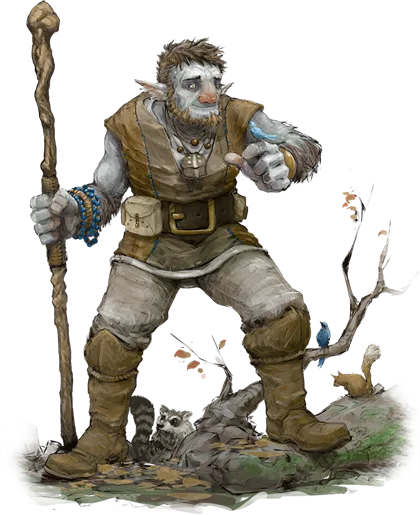 Firbolg tribes cloister in remote forest strongholds, preferring to spend their days in quiet harmony with the woods. When provoked, firbolgs demonstrate formidable skills with weapons and druidic magic. ## Humble Guardians Firbolgs love nothing more than a peaceful day spent among the trees of an old forest. They see forests as sacred places, representing the heart of the world and monuments to the durability of life. In their role as caretakers, firbolgs live off the land while striving to remain in balance with nature. Their methods reflect common sense and remarkable resourcefulness. During a bountiful summer, they store away excess nuts, fruit, and berries. When winter arrives, they scatter everything they can spare to ensure the animals of the wood survive until springtime. In a firbolg’s eyes, there is no greater fault than greed. The firbolgs believe that the world remains healthiest when each creature takes only what it needs. Material goods, especially precious gems and gold, have little appeal to them. What use are such things when winter lingers and food runs short? ## Natural Druids Firbolgs have a talent for druidic magic. Their cultural reverence for nature, combined with their strong and insightful minds, makes learning such magic an instinctive part of their development. Almost every firbolg learns a few spells, typically those used to mask their presence, and many go on to master nature magic. Firbolgs who become druids serve as stronghold leaders. With every action the tribe takes, the druids weigh not only the group’s needs, but the effect each action will have on the forest and the rest of the natural world. Firbolg tribes would rather go hungry than strain the land during a famine. ## Hidden Shepherds As caretakers of the land, firbolgs prefer to remain out of sight and out of mind. They don’t try to dominate nature, but rather seek to ensure that it prospers and survives according to its own laws. Firbolgs use their magic to keep their presence in a forest secret. This approach allows them to avoid the politics and struggles of elves, humans, and orcs. Such events concern the firbolgs only when the events affect the forest. Even in the face of an intrusion, firbolgs prefer a subtle, gentle approach to prevent damage to their territory. They employ their magic to make the forest an unappealing place to explore by temporarily diverting springs, driving away game, stealing critical tools, and altering trails to leave hunting or lumber parties hopelessly lost. The firbolgs’ presence is marked by an absence of animals and a strange quiet, as if the forest wishes to avoid attracting attention to itself. The faster travelers decide to move on, the better. If these tactics fail, the firbolgs take more direct action. Their observations of a settlement determine what happens next. If the outsiders seem peaceful, the firbolgs approach and gently ask them to leave, even offering food and other supplies to aid their departure. If those who insist on remaining respect nature, take only what they need, and live in harmony with the wood, firbolgs explore the possibility of friendship with them, as long as the outsiders vow to safeguard the forest. If the settlers clearly display evil intentions, however, the firbolgs martial their strength and magic for a single overwhelming attack. ## Outcast Adventurers As guardians of the wood, few firbolgs would dream of leaving their homes or attempting to fit into human society. An exiled firbolg, or one whose clan has been destroyed, might not have a choice in the matter. Most adventuring firbolgs fall into this latter category. Outcast firbolgs can never return home. They committed some unforgivable deed, usually something that put their homeland at risk, such as starting a forest fire or killing a rare or beautiful wild creature. These firbolgs are loners who wander the world in hope of finding a new place to call home. Orphaned firbolgs are those whose clans or homelands have been destroyed. They become crusaders for nature, seeking to avenge their loss and prevent the further destruction of the natural world. A few rare firbolgs are entrusted by their clan with an important mission that takes them beyond their homes. These firbolgs feel like pilgrims in a strange land, and usually they wish only to complete their quests and return home as quickly as possible. The Firbolg Adventurers table can serve as inspiration for determining why a firbolg character leaves home. Firbolg Adventurers | d8 | Reason for Adventuring | | --- | --- | | 1 | Outcast for murder | | 2 | Outcast for severely damaging home territory | | 3 | Clan slain by invading humanoids | | 4 | Clan slain by a dragon or demon | | 5 | Separated from the tribe and lost | | 6 | Homeland destroyed by natural disaster | | 7 | Personal quest ordained by omens | | 8 | Dispatched on a quest by tribe leaders | ## Firbolg Names Firbolg adopt elven names when they must deal with outsiders, although the concept of names strikes them as strange. They know the animals and plants of the forest without formal names, and instead identify the forest’s children by their deeds, habits, and other actions. By the same token, their tribe names merely refer to their homes. When dealing with other races, firbolgs refer to their lands by whatever name the surrounding folk use, as a matter of tact and hospitality, but among their own kind they simply call it “home.” Sometimes firbolgs adopt the nicknames or titles outsiders give them under the assumption that those who need names can call them whatever they wish. | Firbolg Magic, Hidden Step, Powerful Build, Speech of Beast and Leaf | Aradaea | Sylvaria | Communal: Raised by a village, order, or organization | Gran (Giantfolk) | Gran-Stona (Stone Giants), Haku-Elda (Proto-Elves) | 60,000 years | Wisdom, Strength | Tremorsense | 20 ft | 30 | Walking | Aethyrian Common, Giant, Sylvan, Elvish | 750 years | 150 years | 300 lbs | 7.5 ft | Medium | Natural Melanin Range | Thick, Wooly, Curly | Enlarged, Light elven features | Mixed Heritage | Yes | No |
| Gran-Gola (Goliath) | Nomadic bands of mixed heritage Humans and Giantkin with a high value placed on strength and a reputation for pillaging settled-folk | At the highest mountain peaks — far above the slopes where trees grow and where the air is thin and the frigid winds howl — dwell the reclusive goliaths. Few folk can claim to have seen a goliath, and fewer still can claim friendship with them. Goliaths wander a bleak realm of rock, wind, and cold. Their bodies look as if they are carved from mountain stone and give them great physical power. Their spirits take after the wandering wind, making them nomads who wander from peak to peak. Their hearts are infused with the cold regard of their frigid realm, leaving each goliath with the responsibility to earn a place in the tribe or die trying. 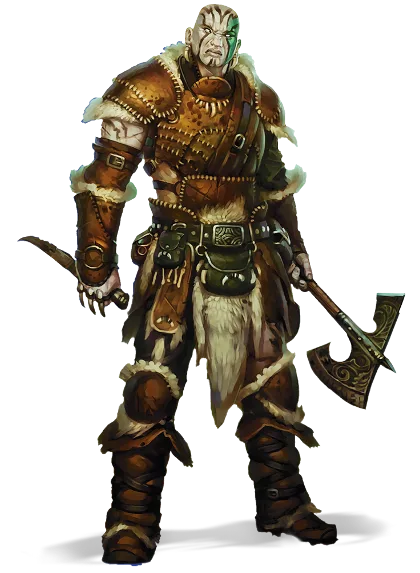 ## Driven Competitors Every day brings a new challenge to a goliath. Food, water, and shelter are rare in the uppermost mountain reaches. A single mistake can bring doom to an entire tribe, while an individual’s heroic effort can ensure the entire group’s survival. Goliaths thus place a premium on self-sufficiency and individual skill. They have a compulsion to keep score, counting their deeds and tallying their accomplishments to compare to others. Goliaths love to win, but they see defeat as a prod to improve their skills. This dedication to competition has a dark side. Goliaths are ferocious competitors, but above all else they are driven to outdo their past efforts. If a goliath slays a dragon, he or she might seek out a larger, more powerful wyrm to battle. Few goliath adventurers reach old age, as most die attempting to surpass their past accomplishments. ## Fair Play For goliaths, competition exists only when it is supported by a level playing field. Competition measures talent, dedication, and effort. Those factors determine survival in their home territory, not reliance on magic items, money, or other elements that can tip the balance one way or the other. Goliaths happily rely on such benefits, but they are careful to remember that such an advantage can always be lost. A goliath who relies too much on them can grow complacent, a recipe for disaster in the mountains. This trait manifests most strongly when goliaths interact with other folk. The relationship between peasants and nobles puzzles goliaths. If a king lacks the intelligence or leadership to lead, then clearly the most talented person in the kingdom should take his place. Goliaths rarely keep such opinions to themselves, and mock folk who rely on society’s structures or rules to maintain power. ## Survival of the Fittest Among goliaths, any adult who can’t contribute to the tribe is expelled. A lone goliath has little chance of survival, especially an older or weaker one. Goliaths have little pity for adults who can’t take care of themselves, though a sick or injured individual is treated, as a result of the goliath concept of fair play. A permanently injured goliath is still expected to pull his or her weight in the tribe. Typically, such a goliath dies attempting to keep up, or the goliath slips away in the night to seek the cold will of fate. In some ways, the goliath drive to outdo themselves feeds into the grim inevitability of their decline and death. A goliath would much rather die in battle, at the peak of strength and skill, than endure the slow decay of old age. Few folk have ever meet an elderly goliath, and even those goliaths who have left their people grapple with the urge to give up their lives as their physical skills decay. Because of their risk-taking, goliath tribes suffer from a chronic lack of the experience offered by long- term leaders. They hope for innate wisdom in their leadership, for they can rarely count on a wisdom grown with age. ## Goliath Names Every goliath has three names: a birth name assigned by the newborn’s mother and father, a nickname assigned by the tribal chief, and a family or clan name. A birth name is up to three syllables long. Clan names are five syllables or more and end in a vowel. Birth names are rarely linked to gender. Goliaths see females and males as equal in all things, and they find societies with roles divided by gender to be puzzling or worthy of mockery. To a goliath, the person who is best at a job should be the one tasked with doing it. A goliath’s nickname is a description that can change on the whim of a chieftain or tribal elder. It refers to a notable deed, either a success or failure, committed by the goliath. Goliaths assign and use nicknames with their friends of other races, and change them to refer to an individual’s notable deeds. Goliaths present all three names when identifying themselves, in the order of birth name, nickname, and clan name. In casual conversation, they use their nickname. Birth Names: Aukan, Eglath, Gae-Al, Gauthak, Ilikan, Keothi, Kuori, Lo-Kag, Manneo, Maveith, Nalla, Orilo, Paavu, Pethani, Thalai, Thotham, Uthal, Vaunea, Vimak Nicknames: Bearkiller, Dawncaller, Fearless, Flintfinder, Horncarver, Keeneye, Lonehunter, Longleaper, Rootsmasher, Skywatcher, Steadyhand, Threadtwister, Twice-Orphaned, Twistedlimb, Wordpainter Clan Names: Anakalathai, Elanithino, Gathakanathi, Kalagiano, Katho-Olavi, Kolae-Gileana, Ogolakanu, Thuliaga, Thunukalathi, Vaimei-Laga | Natural Athlete, Stone’s Endurance, Powerful Build, Mountain Born | Aradaea | Sylvaria | Communal: Raised by a village, order, or organization | Gran (Giantfolk) | Gran-Stona (Stone Giants), Haku-Aradae (True Humans) | 100,000 years | Strength, Constitution | Tremorsense | 20 ft | 30 | Walking | Aethyrian Common, Giant | 150 years | 25 years | 350 lbs | 7.5 ft | Medium | Light Skin Tones | Hairless | Enlarged | Mixed Heritage | Yes | No |
| Elemari Azen (Air Genasi) | Elemental humanoids with a close connection to the Plane of Air that live in a secluded community of Genasi which relies on strongly held ideals of community responsibility and tradition | Those who think of other planes at all consider them remote, distant realms, but planar influence can be felt throughout the world. It sometimes manifests in beings who, through an accident of birth, carry the power of the planes in their blood. The genasi are one such people, the offspring of genies and mortals. The Elemental Planes are often inhospitable to natives of the Material Plane: crushing earth, searing flames, boundless skies, and endless seas make visiting these places dangerous for even a short time. The powerful genies, however, don’t face such troubles when venturing into the mortal world. They adapt well to the mingled elements of the Material Plane, and they sometimes visit—whether of their own volition or compelled by magic. Some genies can adopt mortal guise and travel incognito. During these visits, a mortal might catch a genie’s eye. Friendship forms, romance blooms, and sometimes children result. These children are genasi: individuals with ties to two worlds, yet belonging to neither. Some genasi are born of mortal–genie unions, others have two genasi as parents, and a rare few have a genie further up their family tree, manifesting an elemental heritage that’s lain dormant for generations. Occasionally, genasi result from exposure to a surge of elemental power, through phenomena such as an eruption from the Inner Planes or a planar convergence. Elemental energy saturates any creatures in the area and might alter their nature enough that their offspring with other mortals are born as genasi. 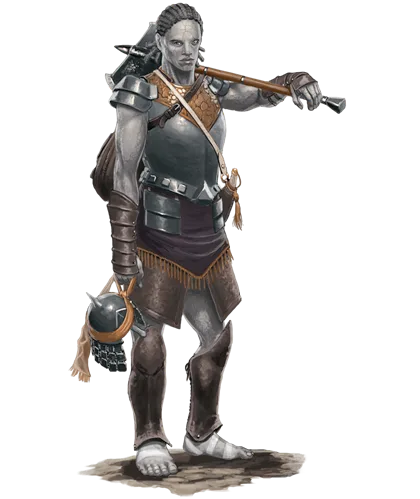 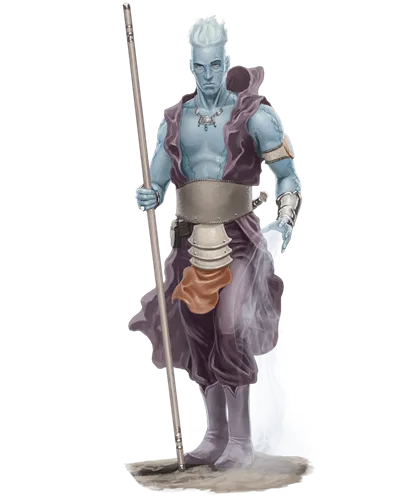 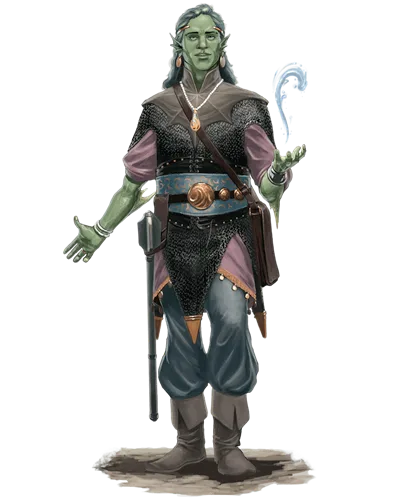 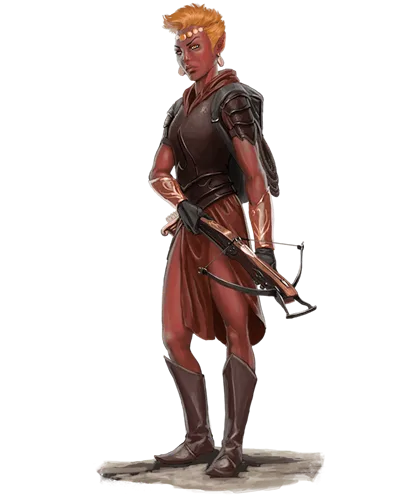 ## Heirs to Elemental Power Genasi inherit something from both sides of their dual nature. They resemble humans but have unusual skin color (red, green, blue, or gray), and there is something odd about them. The elemental blood flowing through their veins manifests differently in each genasi, often as magical power. Seen in silhouette, a genasi can usually pass for human. Those of earth or water descent tend to be heavier, while those of air or fire tend to be lighter. A given genasi might have some features reminiscent of the mortal parent (pointed ears from an elf, a stockier frame and thick hair from a dwarf, small hands and feet from a halfling, exceedingly large eyes from a gnome, and so on). Genasi almost never have contact with their elemental parents. Genies seldom have interest in their mortal offspring, seeing them as accidents. Many feel nothing for their genasi children at all. Some genasi live as outcasts, driven into exile for their unsettling appearance and strange magic, or assuming leadership of savage humanoids and weird cults in untamed lands. Others gain positions of great influence, especially where elemental beings are revered. A few genasi leave the Material Plane to find refuge in the households of their genie parents. ## Wild and Confident Genasi rarely lack confidence, seeing themselves as equal to almost any challenge in their path. This certainty might manifest as graceful self-assurance in one genasi and as arrogance in another. Such self- confidence can sometimes blind genasi to risk, and their great plans often get them and others into trouble. Too much failure can chip away at even a genasi’s sense of self, so they constantly push themselves to improve, honing their talents and perfecting their craft. ## Genasi Lands As rare beings, genasi might go their entire lives without encountering another one of their kind. There are no great genasi cities or empires. Genasi seldom have communities of their own and typically adopt the cultures and societies into which they are born. The more strange their appearance, the harder time they have. Many genasi lose themselves in teeming cities, where their distinctiveness hardly raises an eyebrow in places accustomed to a variety of different people. > GENASI ON ATHAS > Although any world that includes one or more elemental planes can feature genasi, on Athas, the world of the Dark Sun campaign setting, elemental forces hold greater sway than they do on other worlds. As a people touched by elemental power, genasi are viewed as seers, prophets, and chosen ones. The birth of a genasi, whether a slave, a noble, or a member of a desert tribe, is an auspicious event. Most Athasians believe a given genasi is destined for greatness—or infamy. Those living on the frontier, though, have a much harder time. People there tend to be less accepting of differences. Sometimes a cold shoulder and a suspicious glare are the best genasi can hope for; in more backward places, they face ostracism and even violence from people who mistake them for fiends. Facing a hard life, these genasi seek isolation in the wilds, making their homes in mountains or forests, near lakes, or underground. Most air and fire genasi in the Realms are descendants of the djinn and efreet who once ruled Calimshan. When those rulers were overthrown, their planetouched children were scattered. Over thousands of years, the bloodlines of those genasi have spread into other lands. Though far from common, air and fire genasi are more likely to be found in the western regions of Faerûn, along the coast from Calimshan north up to the Sword Coast, and into the Western Heartlands to the east. Some remain in their ancient homeland. In contrast, water and earth genasi have no common history. Individuals have difficulty tracing their own lineage, and bloodlines occasionally skip a generation or two. Many earth genasi originated in the North and spread out from there. Water genasi come from coastal areas, the largest concentration of them hailing from the regions surrounding the Sea of Fallen Stars. The distant land of Zakhara is known only in legends to most inhabitants of Faerûn. There, genies and spellcasters enter into bargains, and genasi can result from such pacts. Those genasi have been sources of great weal and woe in the history of that land. > GENASI BACKGROUNDS > Each genasi subrace has its own temperament, which might make some backgrounds more suitable than others. > Air genasi are proud of their heritage, sometimes to the point of haughtiness. They can be flamboyant, and are keen to have an audience. They rarely stay in one place for long, always looking for a new sky to see and breathe. Air genasi who don’t live in cities favor open lands such as plains, deserts, and high mountains. Fitting backgrounds include charlatan, entertainer, and noble. > Earth genasi are more withdrawn, and their connection to the earth keeps them from being comfortable in most cities. Their uncommon size and strength makes them natural soldiers, though, and with their stoic demeanor, they can encourage others and become great leaders. Many earth genasi live underground, where they can be in their favored element. When they emerge from their caves, they might roam the hills and mountains or lay claim to old ruins. > Appropriate backgrounds for earth genasi include hermit, outlander, and soldier. > Fire genasi often get themselves into difficulty with their fiery tempers. Like their air genasi cousins, they sometimes flaunt their perceived superiority over common folk. But they also want others to share their high opinion of themselves, so they constantly seek to enhance their reputations. > Likely backgrounds for a fire genasi include criminal, folk hero, and noble. > Water genasi almost all have some experience aboard or around sea vessels. They make excellent mariners and fishers. Like earth genasi, though, water genasi prefer quiet and solitude; the wide shores are their natural homes. They go where they want, do what they want, and rarely feel bound to anything. Good backgrounds for water genasi include hermit and sailor. ## Genasi Names Genasi use the naming conventions of the people among whom they were raised. They might later assume distinctive names to capture their heritage, such as Flame, Ember, Wave, or Onyx. ### Air Genasi As an air genasi, you are descended from the djinn. As changeable as the weather, your moods shift from calm to wild and violent with little warning, but these storms rarely last long. Air genasi typically have light blue skin, hair, and eyes. A faint but constant breeze accompanies them, tousling the hair and stirring the clothing. Some air genasi speak with breathy voices, marked by a faint echo. A few display odd patterns in their flesh or grow crystals from their scalps. | Unending Breath, Lightning Resistance, Mingle with the Wind | Aradaea | Valdesh | Familial: Raised by mother(s), and/or father(s), and/or sibling(s) | Elemari (Genasi) | Haku-Aradae (True Humans) | 200,000 years | Dexterity, Intelligence | Normal | Unlimited | 35 | Flying (Glide), Walking | Aethyrian Common, Primordial, Auran | 100 years | 20 years | 100 lbs | 6 ft | Medium | Whites, Yellows, Blues | Thick, Light Colors, Wavy, Beardless | Elemental | Region, Magic | Yes | No |
| Elemari Koga (Earth Genasi) | Elemental humanoids with a close connection to the Plane of Earth that live in a secluded community of Genasi which relies on strongly held ideals of community responsibility and tradition | Those who think of other planes at all consider them remote, distant realms, but planar influence can be felt throughout the world. It sometimes manifests in beings who, through an accident of birth, carry the power of the planes in their blood. The genasi are one such people, the offspring of genies and mortals. The Elemental Planes are often inhospitable to natives of the Material Plane: crushing earth, searing flames, boundless skies, and endless seas make visiting these places dangerous for even a short time. The powerful genies, however, don’t face such troubles when venturing into the mortal world. They adapt well to the mingled elements of the Material Plane, and they sometimes visit—whether of their own volition or compelled by magic. Some genies can adopt mortal guise and travel incognito. During these visits, a mortal might catch a genie’s eye. Friendship forms, romance blooms, and sometimes children result. These children are genasi: individuals with ties to two worlds, yet belonging to neither. Some genasi are born of mortal–genie unions, others have two genasi as parents, and a rare few have a genie further up their family tree, manifesting an elemental heritage that’s lain dormant for generations. Occasionally, genasi result from exposure to a surge of elemental power, through phenomena such as an eruption from the Inner Planes or a planar convergence. Elemental energy saturates any creatures in the area and might alter their nature enough that their offspring with other mortals are born as genasi. ## Heirs to Elemental Power Genasi inherit something from both sides of their dual nature. They resemble humans but have unusual skin color (red, green, blue, or gray), and there is something odd about them. The elemental blood flowing through their veins manifests differently in each genasi, often as magical power. Seen in silhouette, a genasi can usually pass for human. Those of earth or water descent tend to be heavier, while those of air or fire tend to be lighter. A given genasi might have some features reminiscent of the mortal parent (pointed ears from an elf, a stockier frame and thick hair from a dwarf, small hands and feet from a halfling, exceedingly large eyes from a gnome, and so on). Genasi almost never have contact with their elemental parents. Genies seldom have interest in their mortal offspring, seeing them as accidents. Many feel nothing for their genasi children at all. Some genasi live as outcasts, driven into exile for their unsettling appearance and strange magic, or assuming leadership of savage humanoids and weird cults in untamed lands. Others gain positions of great influence, especially where elemental beings are revered. A few genasi leave the Material Plane to find refuge in the households of their genie parents. ## Wild and Confident Genasi rarely lack confidence, seeing themselves as equal to almost any challenge in their path. This certainty might manifest as graceful self-assurance in one genasi and as arrogance in another. Such self- confidence can sometimes blind genasi to risk, and their great plans often get them and others into trouble. Too much failure can chip away at even a genasi’s sense of self, so they constantly push themselves to improve, honing their talents and perfecting their craft. ## Genasi Lands As rare beings, genasi might go their entire lives without encountering another one of their kind. There are no great genasi cities or empires. Genasi seldom have communities of their own and typically adopt the cultures and societies into which they are born. The more strange their appearance, the harder time they have. Many genasi lose themselves in teeming cities, where their distinctiveness hardly raises an eyebrow in places accustomed to a variety of different people. > GENASI ON ATHAS > Although any world that includes one or more elemental planes can feature genasi, on Athas, the world of the Dark Sun campaign setting, elemental forces hold greater sway than they do on other worlds. As a people touched by elemental power, genasi are viewed as seers, prophets, and chosen ones. The birth of a genasi, whether a slave, a noble, or a member of a desert tribe, is an auspicious event. Most Athasians believe a given genasi is destined for greatness—or infamy. Those living on the frontier, though, have a much harder time. People there tend to be less accepting of differences. Sometimes a cold shoulder and a suspicious glare are the best genasi can hope for; in more backward places, they face ostracism and even violence from people who mistake them for fiends. Facing a hard life, these genasi seek isolation in the wilds, making their homes in mountains or forests, near lakes, or underground. Most air and fire genasi in the Realms are descendants of the djinn and efreet who once ruled Calimshan. When those rulers were overthrown, their planetouched children were scattered. Over thousands of years, the bloodlines of those genasi have spread into other lands. Though far from common, air and fire genasi are more likely to be found in the western regions of Faerûn, along the coast from Calimshan north up to the Sword Coast, and into the Western Heartlands to the east. Some remain in their ancient homeland. In contrast, water and earth genasi have no common history. Individuals have difficulty tracing their own lineage, and bloodlines occasionally skip a generation or two. Many earth genasi originated in the North and spread out from there. Water genasi come from coastal areas, the largest concentration of them hailing from the regions surrounding the Sea of Fallen Stars. The distant land of Zakhara is known only in legends to most inhabitants of Faerûn. There, genies and spellcasters enter into bargains, and genasi can result from such pacts. Those genasi have been sources of great weal and woe in the history of that land. > GENASI BACKGROUNDS > Each genasi subrace has its own temperament, which might make some backgrounds more suitable than others. > Air genasi are proud of their heritage, sometimes to the point of haughtiness. They can be flamboyant, and are keen to have an audience. They rarely stay in one place for long, always looking for a new sky to see and breathe. Air genasi who don’t live in cities favor open lands such as plains, deserts, and high mountains. Fitting backgrounds include charlatan, entertainer, and noble. > Earth genasi are more withdrawn, and their connection to the earth keeps them from being comfortable in most cities. Their uncommon size and strength makes them natural soldiers, though, and with their stoic demeanor, they can encourage others and become great leaders. Many earth genasi live underground, where they can be in their favored element. When they emerge from their caves, they might roam the hills and mountains or lay claim to old ruins. > Appropriate backgrounds for earth genasi include hermit, outlander, and soldier. > Fire genasi often get themselves into difficulty with their fiery tempers. Like their air genasi cousins, they sometimes flaunt their perceived superiority over common folk. But they also want others to share their high opinion of themselves, so they constantly seek to enhance their reputations. > Likely backgrounds for a fire genasi include criminal, folk hero, and noble. > Water genasi almost all have some experience aboard or around sea vessels. They make excellent mariners and fishers. Like earth genasi, though, water genasi prefer quiet and solitude; the wide shores are their natural homes. They go where they want, do what they want, and rarely feel bound to anything. Good backgrounds for water genasi include hermit and sailor. ## Genasi Names Genasi use the naming conventions of the people among whom they were raised. They might later assume distinctive names to capture their heritage, such as Flame, Ember, Wave, or Onyx. ### Earth Genasi As an earth genasi, you are descended from the cruel and greedy dao, though you aren’t necessarily evil. You have inherited some measure of control over earth, reveling in superior strength and solid power. You tend to avoid rash decisions, pausing long enough to consider your options before taking action. Elemental earth manifests differently from one individual to the next. Some earth genasi always have bits of dust falling from their bodies and mud clinging to their clothes, never getting clean no matter how often they bathe. Others are as shiny and polished as gemstones, with skin tones of deep brown or black, eyes sparkling like agates. Earth genasi can also have smooth metallic flesh, dull iron skin spotted with rust, a pebbled and rough hide, or even a coating of tiny embedded crystals. The most arresting have fissures in their flesh, from which faint light shines. | Earth Walk, Merge with Stone, Powerful Build | Aradaea | Valdesh | Communal: Raised by a village, order, or organization | Elemari (Genasi) | Haku-Aradae (True Humans) | 200,000 years | Strength, Constitution | Tremorsense | 20 ft | 25 | Burrowing, Walking | Aethyrian Common, Primordial, Terran | 100 years | 20 years | 200 lbs | 5.25 ft | Medium | Browns, Greys, Yellows | Thick, Dark Colors, Wavy, Light Beards | Elemental | Region, Magic | Yes | No |
| Elemari Sotan (Water Genasi) | Elemental humanoids with a close connection to the Plane of Water that live in a secluded community of Genasi which relies on strongly held ideals of community responsibility and tradition | Those who think of other planes at all consider them remote, distant realms, but planar influence can be felt throughout the world. It sometimes manifests in beings who, through an accident of birth, carry the power of the planes in their blood. The genasi are one such people, the offspring of genies and mortals. The Elemental Planes are often inhospitable to natives of the Material Plane: crushing earth, searing flames, boundless skies, and endless seas make visiting these places dangerous for even a short time. The powerful genies, however, don’t face such troubles when venturing into the mortal world. They adapt well to the mingled elements of the Material Plane, and they sometimes visit—whether of their own volition or compelled by magic. Some genies can adopt mortal guise and travel incognito. During these visits, a mortal might catch a genie’s eye. Friendship forms, romance blooms, and sometimes children result. These children are genasi: individuals with ties to two worlds, yet belonging to neither. Some genasi are born of mortal–genie unions, others have two genasi as parents, and a rare few have a genie further up their family tree, manifesting an elemental heritage that’s lain dormant for generations. Occasionally, genasi result from exposure to a surge of elemental power, through phenomena such as an eruption from the Inner Planes or a planar convergence. Elemental energy saturates any creatures in the area and might alter their nature enough that their offspring with other mortals are born as genasi. ## Heirs to Elemental Power Genasi inherit something from both sides of their dual nature. They resemble humans but have unusual skin color (red, green, blue, or gray), and there is something odd about them. The elemental blood flowing through their veins manifests differently in each genasi, often as magical power. Seen in silhouette, a genasi can usually pass for human. Those of earth or water descent tend to be heavier, while those of air or fire tend to be lighter. A given genasi might have some features reminiscent of the mortal parent (pointed ears from an elf, a stockier frame and thick hair from a dwarf, small hands and feet from a halfling, exceedingly large eyes from a gnome, and so on). Genasi almost never have contact with their elemental parents. Genies seldom have interest in their mortal offspring, seeing them as accidents. Many feel nothing for their genasi children at all. Some genasi live as outcasts, driven into exile for their unsettling appearance and strange magic, or assuming leadership of savage humanoids and weird cults in untamed lands. Others gain positions of great influence, especially where elemental beings are revered. A few genasi leave the Material Plane to find refuge in the households of their genie parents. ## Wild and Confident Genasi rarely lack confidence, seeing themselves as equal to almost any challenge in their path. This certainty might manifest as graceful self-assurance in one genasi and as arrogance in another. Such self- confidence can sometimes blind genasi to risk, and their great plans often get them and others into trouble. Too much failure can chip away at even a genasi’s sense of self, so they constantly push themselves to improve, honing their talents and perfecting their craft. ## Genasi Lands As rare beings, genasi might go their entire lives without encountering another one of their kind. There are no great genasi cities or empires. Genasi seldom have communities of their own and typically adopt the cultures and societies into which they are born. The more strange their appearance, the harder time they have. Many genasi lose themselves in teeming cities, where their distinctiveness hardly raises an eyebrow in places accustomed to a variety of different people. > GENASI ON ATHAS > Although any world that includes one or more elemental planes can feature genasi, on Athas, the world of the Dark Sun campaign setting, elemental forces hold greater sway than they do on other worlds. As a people touched by elemental power, genasi are viewed as seers, prophets, and chosen ones. The birth of a genasi, whether a slave, a noble, or a member of a desert tribe, is an auspicious event. Most Athasians believe a given genasi is destined for greatness—or infamy. Those living on the frontier, though, have a much harder time. People there tend to be less accepting of differences. Sometimes a cold shoulder and a suspicious glare are the best genasi can hope for; in more backward places, they face ostracism and even violence from people who mistake them for fiends. Facing a hard life, these genasi seek isolation in the wilds, making their homes in mountains or forests, near lakes, or underground. Most air and fire genasi in the Realms are descendants of the djinn and efreet who once ruled Calimshan. When those rulers were overthrown, their planetouched children were scattered. Over thousands of years, the bloodlines of those genasi have spread into other lands. Though far from common, air and fire genasi are more likely to be found in the western regions of Faerûn, along the coast from Calimshan north up to the Sword Coast, and into the Western Heartlands to the east. Some remain in their ancient homeland. In contrast, water and earth genasi have no common history. Individuals have difficulty tracing their own lineage, and bloodlines occasionally skip a generation or two. Many earth genasi originated in the North and spread out from there. Water genasi come from coastal areas, the largest concentration of them hailing from the regions surrounding the Sea of Fallen Stars. The distant land of Zakhara is known only in legends to most inhabitants of Faerûn. There, genies and spellcasters enter into bargains, and genasi can result from such pacts. Those genasi have been sources of great weal and woe in the history of that land. > GENASI BACKGROUNDS > Each genasi subrace has its own temperament, which might make some backgrounds more suitable than others. > Air genasi are proud of their heritage, sometimes to the point of haughtiness. They can be flamboyant, and are keen to have an audience. They rarely stay in one place for long, always looking for a new sky to see and breathe. Air genasi who don’t live in cities favor open lands such as plains, deserts, and high mountains. Fitting backgrounds include charlatan, entertainer, and noble. > Earth genasi are more withdrawn, and their connection to the earth keeps them from being comfortable in most cities. Their uncommon size and strength makes them natural soldiers, though, and with their stoic demeanor, they can encourage others and become great leaders. Many earth genasi live underground, where they can be in their favored element. When they emerge from their caves, they might roam the hills and mountains or lay claim to old ruins. > Appropriate backgrounds for earth genasi include hermit, outlander, and soldier. > Fire genasi often get themselves into difficulty with their fiery tempers. Like their air genasi cousins, they sometimes flaunt their perceived superiority over common folk. But they also want others to share their high opinion of themselves, so they constantly seek to enhance their reputations. > Likely backgrounds for a fire genasi include criminal, folk hero, and noble. > Water genasi almost all have some experience aboard or around sea vessels. They make excellent mariners and fishers. Like earth genasi, though, water genasi prefer quiet and solitude; the wide shores are their natural homes. They go where they want, do what they want, and rarely feel bound to anything. Good backgrounds for water genasi include hermit and sailor. ## Genasi Names Genasi use the naming conventions of the people among whom they were raised. They might later assume distinctive names to capture their heritage, such as Flame, Ember, Wave, or Onyx. ### Water Genasi The lapping of waves, the spray of sea foam on the wind, the ocean depths—all of these things call to your heart. You wander freely and take pride in your independence, though others might consider you selfish. Most water genasi look as if they just finished bathing, with beads of moisture collecting on their skin and hair. They smell of fresh rain and clean water. Blue or green skin is common, and most have somewhat overlarge eyes, blue-black in color. A water genasi’s hair might float freely, swaying and waving as if underwater. Some have voices with undertones reminiscent of whale song or trickling streams. | Acid Resistance, Amphibious, Call to the Wave | Aradaea | Valdesh | Communal: Raised by a village, order, or organization | Elemari (Genasi) | Haku-Aradae (True Humans) | 200,000 years | Dexterity, Wisdom | Echolocation (60ft / 600ft underwater) | 60 ft (600 ft underwater) | 35 | Swimming, Walking | Aethyrian Common, Primordial, Aquan | 100 years | 20 years | 150 lbs | 5.5 ft | Medium | Blues, Greens, Whites | Thick, Light Colors, Wavy, Beardless | Elemental | Region, Magic | Yes | No |
| Elemari Xeeko (Fire Genasi) | Elemental humanoids with a close connection to the Plane of Fire that live in a secluded community of Genasi which relies on strongly held ideals of community responsibility and tradition | Those who think of other planes at all consider them remote, distant realms, but planar influence can be felt throughout the world. It sometimes manifests in beings who, through an accident of birth, carry the power of the planes in their blood. The genasi are one such people, the offspring of genies and mortals. The Elemental Planes are often inhospitable to natives of the Material Plane: crushing earth, searing flames, boundless skies, and endless seas make visiting these places dangerous for even a short time. The powerful genies, however, don’t face such troubles when venturing into the mortal world. They adapt well to the mingled elements of the Material Plane, and they sometimes visit—whether of their own volition or compelled by magic. Some genies can adopt mortal guise and travel incognito. During these visits, a mortal might catch a genie’s eye. Friendship forms, romance blooms, and sometimes children result. These children are genasi: individuals with ties to two worlds, yet belonging to neither. Some genasi are born of mortal–genie unions, others have two genasi as parents, and a rare few have a genie further up their family tree, manifesting an elemental heritage that’s lain dormant for generations. Occasionally, genasi result from exposure to a surge of elemental power, through phenomena such as an eruption from the Inner Planes or a planar convergence. Elemental energy saturates any creatures in the area and might alter their nature enough that their offspring with other mortals are born as genasi. ## Heirs to Elemental Power Genasi inherit something from both sides of their dual nature. They resemble humans but have unusual skin color (red, green, blue, or gray), and there is something odd about them. The elemental blood flowing through their veins manifests differently in each genasi, often as magical power. Seen in silhouette, a genasi can usually pass for human. Those of earth or water descent tend to be heavier, while those of air or fire tend to be lighter. A given genasi might have some features reminiscent of the mortal parent (pointed ears from an elf, a stockier frame and thick hair from a dwarf, small hands and feet from a halfling, exceedingly large eyes from a gnome, and so on). Genasi almost never have contact with their elemental parents. Genies seldom have interest in their mortal offspring, seeing them as accidents. Many feel nothing for their genasi children at all. Some genasi live as outcasts, driven into exile for their unsettling appearance and strange magic, or assuming leadership of savage humanoids and weird cults in untamed lands. Others gain positions of great influence, especially where elemental beings are revered. A few genasi leave the Material Plane to find refuge in the households of their genie parents. ## Wild and Confident Genasi rarely lack confidence, seeing themselves as equal to almost any challenge in their path. This certainty might manifest as graceful self-assurance in one genasi and as arrogance in another. Such self- confidence can sometimes blind genasi to risk, and their great plans often get them and others into trouble. Too much failure can chip away at even a genasi’s sense of self, so they constantly push themselves to improve, honing their talents and perfecting their craft. ## Genasi Lands As rare beings, genasi might go their entire lives without encountering another one of their kind. There are no great genasi cities or empires. Genasi seldom have communities of their own and typically adopt the cultures and societies into which they are born. The more strange their appearance, the harder time they have. Many genasi lose themselves in teeming cities, where their distinctiveness hardly raises an eyebrow in places accustomed to a variety of different people. > GENASI ON ATHAS > Although any world that includes one or more elemental planes can feature genasi, on Athas, the world of the Dark Sun campaign setting, elemental forces hold greater sway than they do on other worlds. As a people touched by elemental power, genasi are viewed as seers, prophets, and chosen ones. The birth of a genasi, whether a slave, a noble, or a member of a desert tribe, is an auspicious event. Most Athasians believe a given genasi is destined for greatness—or infamy. Those living on the frontier, though, have a much harder time. People there tend to be less accepting of differences. Sometimes a cold shoulder and a suspicious glare are the best genasi can hope for; in more backward places, they face ostracism and even violence from people who mistake them for fiends. Facing a hard life, these genasi seek isolation in the wilds, making their homes in mountains or forests, near lakes, or underground. Most air and fire genasi in the Realms are descendants of the djinn and efreet who once ruled Calimshan. When those rulers were overthrown, their planetouched children were scattered. Over thousands of years, the bloodlines of those genasi have spread into other lands. Though far from common, air and fire genasi are more likely to be found in the western regions of Faerûn, along the coast from Calimshan north up to the Sword Coast, and into the Western Heartlands to the east. Some remain in their ancient homeland. In contrast, water and earth genasi have no common history. Individuals have difficulty tracing their own lineage, and bloodlines occasionally skip a generation or two. Many earth genasi originated in the North and spread out from there. Water genasi come from coastal areas, the largest concentration of them hailing from the regions surrounding the Sea of Fallen Stars. The distant land of Zakhara is known only in legends to most inhabitants of Faerûn. There, genies and spellcasters enter into bargains, and genasi can result from such pacts. Those genasi have been sources of great weal and woe in the history of that land. > GENASI BACKGROUNDS > Each genasi subrace has its own temperament, which might make some backgrounds more suitable than others. > Air genasi are proud of their heritage, sometimes to the point of haughtiness. They can be flamboyant, and are keen to have an audience. They rarely stay in one place for long, always looking for a new sky to see and breathe. Air genasi who don’t live in cities favor open lands such as plains, deserts, and high mountains. Fitting backgrounds include charlatan, entertainer, and noble. > Earth genasi are more withdrawn, and their connection to the earth keeps them from being comfortable in most cities. Their uncommon size and strength makes them natural soldiers, though, and with their stoic demeanor, they can encourage others and become great leaders. Many earth genasi live underground, where they can be in their favored element. When they emerge from their caves, they might roam the hills and mountains or lay claim to old ruins. > Appropriate backgrounds for earth genasi include hermit, outlander, and soldier. > Fire genasi often get themselves into difficulty with their fiery tempers. Like their air genasi cousins, they sometimes flaunt their perceived superiority over common folk. But they also want others to share their high opinion of themselves, so they constantly seek to enhance their reputations. > Likely backgrounds for a fire genasi include criminal, folk hero, and noble. > Water genasi almost all have some experience aboard or around sea vessels. They make excellent mariners and fishers. Like earth genasi, though, water genasi prefer quiet and solitude; the wide shores are their natural homes. They go where they want, do what they want, and rarely feel bound to anything. Good backgrounds for water genasi include hermit and sailor. ## Genasi Names Genasi use the naming conventions of the people among whom they were raised. They might later assume distinctive names to capture their heritage, such as Flame, Ember, Wave, or Onyx. ### Fire Genasi As a fire genasi, you have inherited the volatile mood and keen mind of the efreet. You tend toward impatience and making snap judgments. Rather than hide your distinctive appearance, you exult in it. Nearly all fire genasi are feverishly hot as if burning inside, an impression reinforced by flaming red, coal- black, or ash-gray skin tones. The more human-looking have fiery red hair that writhes under extreme emotion, while more exotic specimens sport actual flames dancing on their heads. Fire genasi voices might sound like crackling flames, and their eyes flare when angered. Some are accompanied by the faint scent of brimstone. | Fire Resistance, Reach to the Blaze | Aradaea | Valdesh | Familial: Raised by mother(s), and/or father(s), and/or sibling(s) | Elemari (Genasi) | Haku-Aradae (True Humans) | 200,000 years | Charisma, Constitution | Low-light Vision | Unlimited | 30 | Walking | Aethyrian Common, Primordial, Ignan | 100 years | 20 years | 150 lbs | 5.75 ft | Medium | Reds, Blacks, Greys | Thick, Dark Colors, Wavy, Light Beards | Elemental | Region, Magic | Yes | No |
| Sylvari-Moda (Modern Sylvari) | Dryads with shared ancestral knowledge | The sylvari are omnivorous humanoid plants. Some sylvari closely resemble humans but with a fey cast to their features such as tilted eyes and pointed ear tips; most display plantlike features such as hardwood for bone structure, have foliage and petals for hair, and bark acting as flesh. They glow faintly during the night. Golden sap moves through their veins instead of blood and pollen falls off of them as they move. They are much more slender than the average human and about a head shorter. While sylvari can seemingly absorb sunlight and become rejuvenated, they still must eat and drink to survive. It is unknown to outsiders if the sylvari die of old age, as they are known to have died only through violence, poison or disease and do not appear to age. When a sylvari is harmed, tendrils form over the wound and their bark expands to recover the area, leaving no scar. They heal at the same general rate as humans. All sylvari have luminescent cells in their skin, causing them to glow in the dark. Sylvari cannot be corrupted by most necromancy, but simply die instead. Sylvari emerge fully formed from golden fruit pods which grow on the branches of the Pale Tree. Prior to emergence they share a bond through the Pale Tree which they call the Dream of Dreams. In this dream, a growing sylvari is exposed to the consciousness of the Pale Tree and the vast pool of knowledge accumulated by all previous sylvari. When a new one emerges, a portion of this knowledge remains with them, including basic wisdom and understanding from the Pale Tree and a small fraction of what other sylvari have seen and experienced, though this rarely includes specific memories. After emergence, the bond with the Pale Tree is weaker but it links all sylvari and, to an extent, other plants. On rare occasion, twins can emerge from the same pod and they exhibit a greater empathy toward one another. Society Sylvari are usually honest, direct and focused, taking most things at face value. With the dream ensuring there is so much in common with the other sylvari, the experience is cherished for creating uniqueness between them. They are eager to learn, experience and understand. Sylvari emerge fully formed from golden fruit pods which grow on the branches of a massive magical tree known as the Pale Tree. Prior to emergence, they share a bond through the Pale Tree which they call the Dream of Dreams. In this dream, a growing sylvari is exposed to the consciousness of the Pale Tree and the vast pool of knowledge accumulated by all previous sylvari. When a new one emerges, a portion of this knowledge remains with them, including basic wisdom and understanding from the Pale Tree and a small fraction of what other sylvari have seen and experienced, though this rarely includes specific memories. Despite the kickstart of knowledge from the dream they still seem naive as there are some matters which seem beyond their comprehension. Emotions and tact, in particular, are difficult for them to grasp, so often a sylvari will state out loud something which would normally be politely avoided by other races. Death too is not fully understood but viewed as something to be embraced and, as with many things in a sylvari's life, is viewed with a great degree of curiosity. These views serve to form an acceptance of and fascination with death that other races may find disturbing. As they are all born from the Pale Tree they could be considered all of the same family; however, their family bond is not as strong as most families, with many sylvari considering others more like distant relatives with few exceptions, such as twins born from the same pod or those who shared dreams, though the latter may also result in lovers. Romance is practiced among the sylvari, disregarding gender between those involved. To a sylvari, love is spiritual and eternal, regardless of physical form and contact, and sexuality is simply a natural part of life. So long as it is entered into with good will and joy, the gender doesn't make a difference. Cycles Dawn The Cycle of Dawn refers to those born between midnight and 6 a.m. These sylvari are typically diplomatic and friendly, and are naturals when it comes to planning and conversing with others. Their Luminary is Aife, an experienced diplomat who has traveled to the major cities of Tyria. Aife is Firstborn of this cycle. Noon The Cycle of Noon refers to those born between 6 a.m. and noon. Those born at this time are fighters, skilled combatants who prefer actions over words. They prefer to experience things firsthand and attack problems head-on. Niamh is their Luminary, the leader of the Wardens and a bold warrior. Niamh is Firstborn of this cycle. Dusk The Cycle of Dusk refers to those born between noon and 6 p.m. They are usually intelligent and philosophical, and enjoy studies and puzzles over physical pursuits. Their luminary is Kahedins, a kind soul who helps newly awakened sylvari understand their visions in the Dream of Dreams. The Sylvari of the Cycle of Dusk are said to be entertainers and crafters during the personal story. Faolain, Kahedins and Trahearne are Firstborn of this cycle. Night The Cycle of Night refers to those born between 6 p.m. and midnight. These sylvari are inclined to be secretive and self-contained, preferring to travel alone. Their Luminary, Malomedies, is very private, and considered a stern and caring mentor. Malomedies describes Sylvari of the Cycle of Night as "sentinels, scoundrels, and mathematicians." Caithe, Malomedies and Wynne are Firstborn of this cycle. ### Government The Pale Tree leads the sylvari; she manifests a spectral being in a chamber at the base of the tree to communicate with others easily and give her guidance and instructions. Various sylvari act as ambassadors to the other races and will send reports to her so that she may judge what to do. On difficult decisions, the Pale Tree will call upon the Firstborn and any sylvari who may be a specialist in the situation(s). The Firstborn, being the oldest and having the most experience of the world, act as leaders to the sylvari, being respected for their wisdom and in turn they lead the sylvari underneath the Pale Tree. Four of them in particular (one of each cycle) have taken on positions of leadership, organization, teaching, and guidance for the sylvari people. Sylvari Names Sylvari names, as well as place names, are generally inspired by Celtic (Irish, Scots Gaelic, and Welsh) names. Sylvari do not normally have surnames, as they're all part of the same "family," though to each other they are more like distant relatives except in special cases. Sylvari do not "choose" their names nor are they outright given by the Pale Tree or other sylvari. Instead, the sylvari simply 'know' their names upon awakening, though why is never explored and the sylvari do not question why this is. Male: Abhean, Cadeyrn, Dagonet, Diarmad, Itheann, Lachaidh, Kahedins, Malomedies, Melydiod, Pellan, Trahearne Female: Aife, Alainn, Amaryl, Benerla, Brigh, Brigit, Caithe, Cinea, Faolain, Geileis, Killeen, Meme, Morwyn, Muireall, Niamh, Noxia, Padra, Rhyn, Saeraquel, Vanus, Vella, Wisteri | Plant Anatomy, Dream of Dreams, Summon Sylvan Companion, Biolumenescence | Vitaea | Azorea | Communal: Raised by a village, order, or organization | Landborn | Sylvari-Vitae (True Sylvari) | 200,000 years | Dexterity, Wisdom | Normal | Unlimited | 35 | Walking | Aethyrian Common, Sylvan | 100 years | 20 years | 150 lbs | 5.5 ft | Medium | Medium Skin Tones | Thick, Brown, Wavy, Beardless | Normal Humanoid | Region | Yes | No |
| Wagbalag Gug (Grung) | A humanoid frog-kin which live in small, insular tribes throughout the jungles | Grungs are aggressive froglike humanoids found in rain forests and tropical jungles. They are fiercely territorial and see themselves as superior to most other creatures. 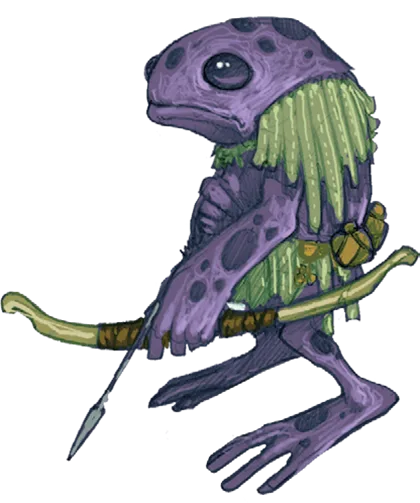 Tree-Dwelling Amphibians. Grungs live in trees and prefer shade. A grung hatchery is maintained in well-guarded ground-level pools. About three months after hatching, a grung tadpole takes on the shape of an adult. It takes another six to nine months for a grung juvenile to reach maturity. Castes and Colors. Grung society is a caste system. Each caste lays eggs in a separate hatching pool, and juvenile grungs join their caste upon emergence from the hatchery. All grungs are a dull greenish gray when they are born, but each individual takes on the color of its caste as it grows to adulthood. Green grungs are the tribe’s warriors, hunters, and laborers, and blue grungs work as artisans and in other domestic roles. Supervising and guiding both groups are the purple grungs, which serve as administrators and commanders. Red grungs are the tribe’s scholars and magic users. They are superior to purple, blue, and green grungs and given proper respect even by grungs of higher status. Higher castes include orange grungs, which are elite warriors that have authority over all lesser grungs, and gold grungs, which hold the highest leadership positions. A tribe’s sovereign is always a gold grung. A grung normally remains in its caste for life. On rare occasions, an individual that distinguishes itself with great deeds can earn an invitation to join a higher caste. Through a combination of herbal tonics and ritual magic, an elevated grung changes color and is inducted into its new caste in the same way that a juvenile of the caste would be. From then on, the grung and its progeny are members of the higher caste. 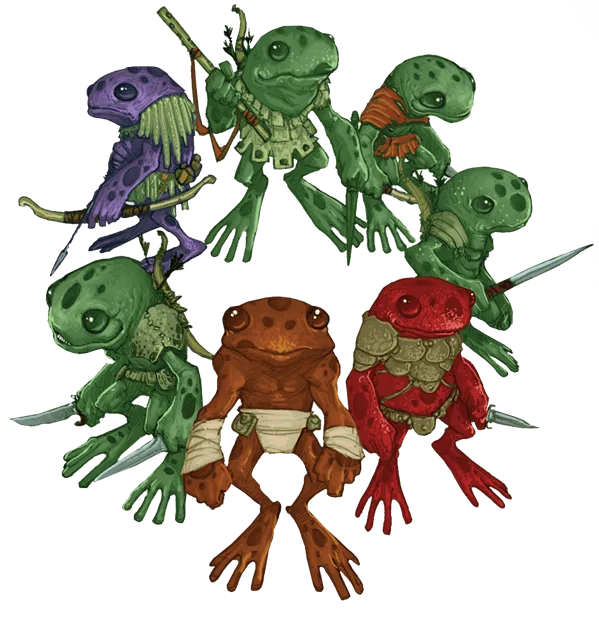 Naturally Toxic. All grungs secrete a substance that is harmless to them but poisonous to other creatures. A grung also uses venom to poison its weapons. Slavers. Grungs are always on the lookout for creatures they can capture and enslave. Grungs use slaves for all manner of menial tasks, but mostly they just like bossing them around. Slaves are fed mildly poisoned food to keep them lethargic and compliant. A creature afflicted in this way over a long period of time becomes a shell of its former self and can be restored to normalcy only by magic. | Amphibious, Arboreal Alertness, Poison Immunity, Poisonous Skin, Standing Leap, Water Dependency | Vitaea | Akaras Wilds | Communal: Raised by a village, order, or organization | Landborn | Sylvari-Vitae (True Sylvari) | 40,000 years | Dexterity, Constitution | Normal | Unlimited | 30 | Swimming, Walking | Aethyrian Common, Wagbalag | 50 years | 10 years | 25 lbs | 2 ft | Small | Vibrant Colors | Hairless | Frog-folk Humanoid | Great Awakening | Yes | No |
| Wagbalag Wug (Bullywug) | A humanoid toad-kin which live in republican settlements in marsh and swamplands | Bullywugs are a race of amphibious toad-people residing predominantly in swampy and marshland areas. Standing between 4 to 5 feet tall, they exhibit a variety of mottled green, brown, and yellow hues on their moist, slimy skin, providing natural camouflage among the vegetation of their habitats. Their large, bulbous eyes come in shades of gold, copper, or red, granting them excellent night vision. 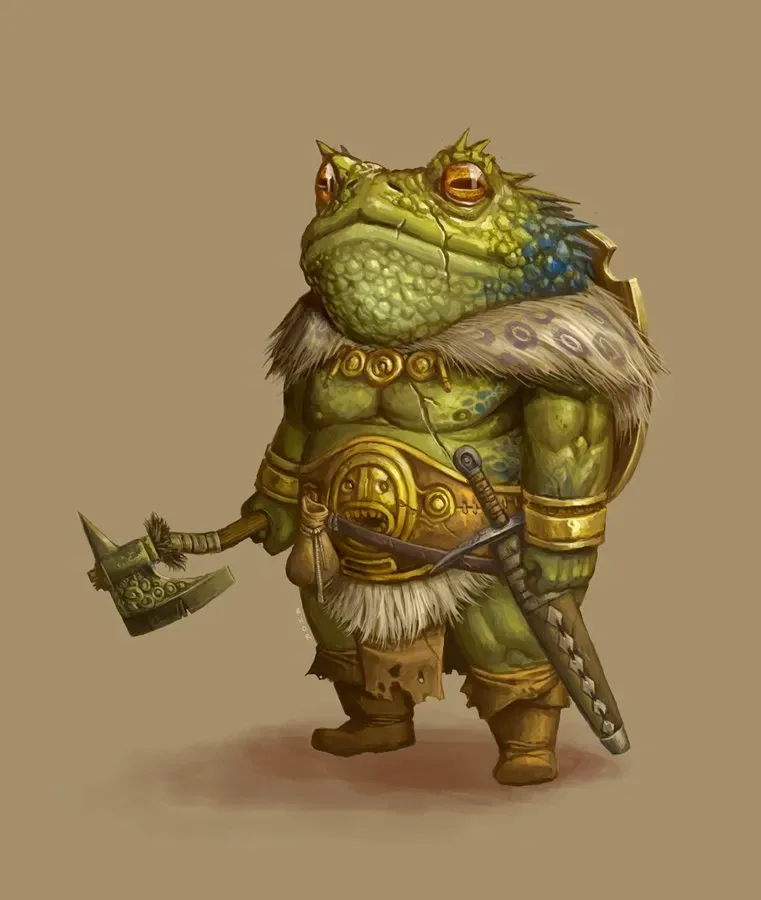 Nature: Bullywugs are territorial and opportunistic creatures. They tend to be quite aggressive, especially when defending their homes or competing for resources. Despite their sometimes menacing demeanor, Bullywugs are adept survivalists, utilizing their environment to its fullest potential and adapting swiftly to changes. Their agile limbs and strong legs aid in swift swimming and powerful leaping, while their long, sticky tongues serve as versatile tools and weapons. Culture: Bullywug society is organized into tribes, each governed by a chieftain who is often the strongest or most cunning member of the group. The chieftain's word is law, and disputes within the tribe are settled through challenges or trials dictated by the leader. Bullywugs value strength, resourcefulness, and adaptability, with members of the tribe proving their worth through hunting, gathering, and defending the territory. Religious practices among Bullywugs often revolve around the worship of deities associated with water, nature, and fertility. Rituals and ceremonies are performed to appease these deities and seek their blessings for abundant resources and protection from predators. Lifestyle: Living in swampy environments, Bullywugs construct their homes from readily available materials such as mud, reeds, and vines. These dwellings are strategically placed for defense and access to resources, often featuring hidden escape routes underwater. Bullywugs are omnivorous, subsisting on a diet of insects, fish, small mammals, and aquatic plants. Hunting and gathering are communal activities, with the fruits of the labor shared among the tribe. Their connection to the swamp environment makes them adept herbalists, utilizing various plants for medicinal and practical purposes. Bullywugs are known for their distinctive vocalizations, using a series of croaks, ribbits, and clicks to communicate with each other. This language, known as Bullywug, is challenging for non-Bullywugs to comprehend and mimic due to its unique tonal and rhythmic qualities. Relations with Other Races: Bullywugs are generally distrustful of outsiders, often viewing them as potential threats or competition for resources. However, they can form tenuous alliances with other races if mutual benefits are evident. They are known to trade with nearby settlements, exchanging herbs, fish, and swamp resources for tools and goods unattainable in their environment. Adventurers: Bullywug adventurers are rare but not unheard of. Driven by the desire for resources, territory, or personal power, these individuals may venture beyond the swamp in pursuit of their goals. Bullywug adventurers are versatile, possessing skills in stealth, survival, and combat, making them valuable assets to adventuring parties, despite their often brusque and territorial nature. | Amphibious, Standing Leap, Speak with Frogs and Toads, Natural Camouflage, Tongue Lash, Amphibian Acrobats, Slippery Hide | Vitaea | Akaras Wilds | Communal: Raised by a village, order, or organization | Landborn | Sylvari-Vitae (True Sylvari) | 40,000 years | Wisdom, Constitution | Normal | Unlimited | 30 | Swimming, Walking | Aethyrian Common, Wagbalag | 50 years | 10 years | 50 lbs | 3 ft | Medium | Greens, Browns, Blacks | Hairless | Toad-folk Humanoid | Great Awakening | Yes | No |
| Rhoxodon (Rhinofolk) | Scattered families of humanoid Rhino-folk which live in a mixed society of semi-nomadic tribes lead by one of the great Khans of the Plain | Rhox are imposing, bipedal rhinoceros-like humanoids, standing between 7 to 8 feet tall. With a thick, greyish-brown hide covered in folds and plates, they are well-armored against threats. A prominent horn, varying in size and shape, adorns their snouts, serving as both a natural weapon and a symbol of their strength and stature. 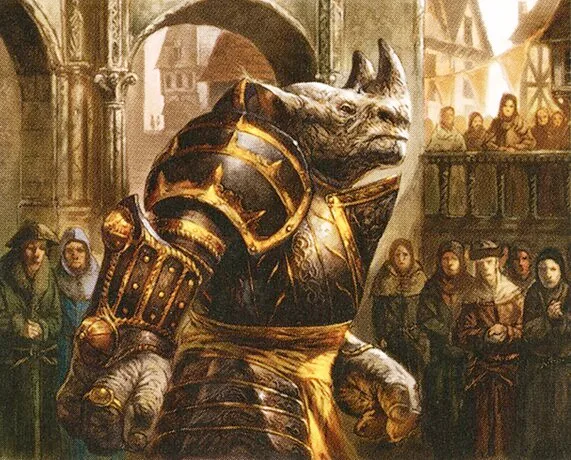 Nature: Proud and bellicose, Rhox are known for their fierce guardianship of their families, friends, and values. They exhibit a strong sense of justice, loyalty, and truth, embodying these principles in their daily lives. Stubborn and prone to fits of anger, they are nonetheless earnest and straightforward, holding a deep disdain for deceit and betrayal. Culture: Rhox society is deeply communal, with tightly knit communities settled predominantly near grasslands and tropical forests. Honor and tradition are pillars of their culture, with each member of the community contributing to the wellbeing and protection of all. The ancient history of the fallen Rhox Empire casts a long shadow, and modern Rhox strive to learn from the past, dreaming of a united future without repeating previous transgressions. Each Rhox village is usually governed by a council of elders, who make decisions based on wisdom and the well-being of the community. Rituals, ceremonies, and storytelling play a crucial role in preserving their history and instilling values in younger generations. Lifestyle: Rhox communities are self-sufficient, relying on agriculture, hunting, and craftsmanship for sustenance. Their settlements are fortified, often featuring watchtowers and strong palisades to defend against potential threats. Rhox have a special affinity for metallurgy, crafting high-quality weapons and armor. Military service is highly regarded, and many Rhox find purpose in serving as part of local guard corps or mercenary companies. Training in combat and strategy is a common part of upbringing, with young Rhox learning to wield their natural strength and horn in defense of their kin. Relations with Other Races: Rhox are initially wary and slow to trust outsiders, holding a collective memory of betrayal and downfall. However, once trust is earned, they prove to be unwavering allies, offering their strength and loyalty without reservation. A breach of this trust is not easily forgiven, and a betrayed Rhox may harbor a lifelong grudge. Despite their isolated nature, Rhox are willing to engage in trade and diplomacy with other races, especially those who show respect for their traditions and values. The shift towards tolerance and cooperation in their culture has opened doors for interaction and mutual learning. Adventurers: Rhox adventurers are not uncommon and are often motivated by a desire to protect their people, reclaim lost glory, or seek justice. They make excellent warriors and paladins, utilizing their natural strength, resilience, and combat skills to face challenges head-on. | Horn, Goring Rush, Rhox Senses, Natural Armor, Powerful Build, Sturdy Stance | Vitaea | Terkon | Familial: Raised by mother(s), and/or father(s), and/or sibling(s) | Landborn | Sylvari-Vitae (True Sylvari) | 40,000 years | Wisdom, Strength | Normal | Unlimited | 25 | Walking | Aethyrian Common, Tarkin, Rhoxan | 250 years | 50 years | 350 lbs | 7.5 ft | Medium | Greys, Whites, Blacks, Browns | Hairless, Bristled Body, Hooved | Rhino-folk Humanoid | Great Awakening | Yes | No |
| Leonin (Lionfolk) | Close-knit communities of nomadic humanoid lion-folk who rely on each other to survive in a challenging landscape with many diverse neighbors | The leonin guard the shining lands of Oreskos, a golden plain where even the gods rarely trespass. Prides of these nomadic, lion-like humanoids rarely interact with other peoples, having all they need in their shimmering homeland and knowing the treachery of strangers. Still, some leonin wonder what lies beyond Oreskos’s border mountains and seek to test themselves in a wider world. 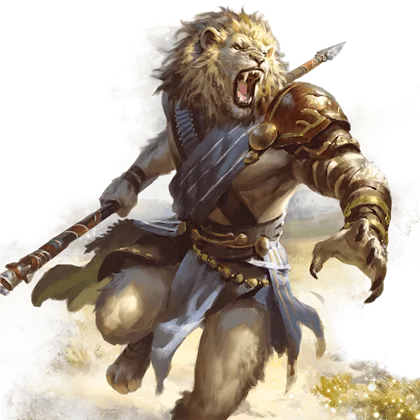 ### Noble and Fierce Leonin tend to be tall compared to humans and move with a boldness that suggests their physical might. Tawny fur covers leonin bodies, and some grow thick manes ranging in shades from gold to black. While their hands prove as nimble as those of other humanoids, leonin have retractable feline claws, which they can extend instantly. This, along with their ability to produce bone-shaking roars, gives most leonin an air that readily shifts between regal and fearsome. Leonin often act with confidence, which can come off as imperiousness. While this can reassure their allies, it can also suggest defiance in the face of what they perceive as imposed authority or unworthy experts. ### Quick to Quarrel Other peoples often perceive leonin as quick to take offense, intolerant of criticism, or belligerent. The truth is that many leonin simply enjoy fighting, whether verbal or physical. They take pleasure in argument, wrestling, sparring, and even battle, enjoying the opportunity to exercise their minds and bodies. It follows, too, that leonin aren’t inclined to carry grudges. A warrior might react with sudden violence to an insult, but when the fight is over (and the leonin’s superiority proven), the insult is forgotten—along with the vanquished foe. ### Pride and Self-Reliance Few leonin devote themselves to the service of the gods. Centuries ago, the leonin worshiped the same gods that humans do, but after many of their prides suffered depravities at the hands of the tyrant Agnomakhos, most leonin rejected the gods. It’s not that they deny the existence of deities; they merely see the gods as mercurial and ultimately unworthy of adoration. The Leonin and the Gods table suggests the range of attitudes that leonin might adopt toward the gods. Leonin rely on themselves and their prides. A pride is bound together by the experience of a shared challenge and, in particular, the sacred act of the hunt. See chapter 3 for more details on Oreskos and the leonin who call that land home. ### Leonin and the Gods Table 4 | d6 | Attitude | | --- | --- | | 1 | I’m amused by the antics of the gods and their earnest, but ultimately deluded, mortal champions, and I feel smugly superior in my detachment. | | 2 | The meddling of the gods in mortal affairs makes me angry and bitter. I wish they would just leave us all alone! | | 3 | I view the gods as worthy adversaries—incredibly clever and well-prepared to play a long game but ultimately doomed to lose their games. | | 4 | I’m certain every bad thing that happens can ultimately be blamed on the gods, but I roll my eyes at each new twist of fate and try to get on with my life. | | 5 | I wish that I could be as naive as humans and other mortals who actually think the gods are looking out for them. I miss that kind of innocence. | | 6 | I don’t talk about it among other leonin, but I actually revere the gods and try to please them by my actions. | ### Leonin Names Along with their personal names, leonin identify themselves by their pride. A member of the Flintclaw pride with the personal name of Ziore, for example, would likely style herself as Ziore of the Flintclaw. Female Names: Aletha, Atagone, Demne, Doxia, Ecate, Eriz, Gragonde, Iadma, Koila, Oramne, Seza, Ziore Male Names: Apto, Athoz, Baragon, Bryguz, Eremoz, Gorioz, Grexes, Oriz, Pyxathor, Teoz, Xemnon, Xior Pride Names: Embereye, Flintclaw, Goldenfield, Ironmane, Starfeller, Sunguides | Claws, Hunter’s Instincts, Daunting Roar | Vitaea | Terkon | Communal: Raised by a village, order, or organization | Landborn | Sylvari-Vitae (True Sylvari) | 40,000 years | Constitution, Strength | Normal | Unlimited | 35 | Walking | Aethyrian Common, Tarkin, Leonin | 150 years | 30 years | 200 lbs | 6.5 ft | Medium | Tans, Coppers, Browns, Golds | Furred, Maned Males | Lion-folk Humanoid | Great Awakening | Yes | No |
| Loxodon (Elephantfolk) | Scattered families of humanoid Elephant-folk which live in a mixed society of semi-nomadic tribes lead by one of the great Khans of the Plain | The humanoid elephants called loxodons are often oases of calm in the busy streets of Ravnica. They hum or chant in sonorous tones and move slowly or sit in perfect stillness. If provoked to action, loxodons are true terrors—bellowing with rage, trumpeting and flapping their ears. Their serene wisdom, fierce loyalty, and unwavering conviction are tremendous assets to their communities. 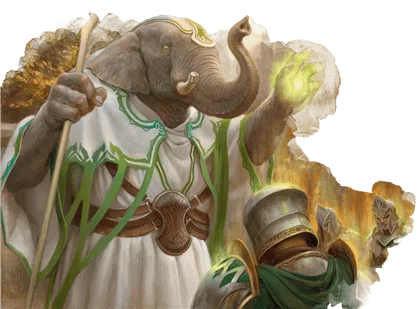 ## Lumbering Giants Loxodons tower above most other humanoids, standing over 7 feet tall. They have the heads—trunks, tusks, ears, and faces—of elephants, and hulking bipedal bodies covered by thick, leathery skin. Each of their hands has four thick digits, and their feet are the flat-bottomed, oval-shaped feet of elephants. Like that of an elephant, a loxodon’s trunk is a useful appendage. In addition to providing a keen sense of smell, the trunk can be used to lift and carry even heavy objects. The trunk can be used to carry both food and liquid to the mouth and can even act as a snorkel. ## Gifted Stoneworkers Loxodons are tireless, patient artisans with an unrivaled intuition about their craft. Although they make nurturing spiritual leaders, their gift for stonework is so ingrained that they are often at a loss when they try to impart that knowledge to others. Among the Selesnya, it primarily falls to loxodons to build the guild’s magnificent, cathedral-like arboretum structures. ## Relentlessly Loyal Loxodons believe in the value of community and life, and thus are most often found in the Selesnya Conclave. Some find fulfillment in the cause of order by joining the Orzhov Syndicate or the Azorius Senate. Loxodons believe that the members of a group have a responsibility to look out for each other. Once they have joined a guild or bonded with other individuals in any capacity, loxodons devote themselves to maintaining that bond. They coordinate their efforts and are often willing to sacrifice themselves for the sake of the group. They expect reciprocal loyalty and commitment from the other members of their communities and can be severe in their disappointment when their trust is betrayed. The primary difference between loxodons who join different guilds is their sense of the size of the community they belong to. For loxodons in the Selesnya Conclave, their community is the world and all living beings in it—everything valuable, meant to live in harmony, and interdependent. For Azorius loxodons, community primarily means a society of different peoples who need adherence to law and order so they can function together. For those in the Orzhov Syndicate, community means the syndicate alone, with its interests taking priority over those of any other group. ## Loxodon Names A loxodon’s name includes subtle tones, produced in a loxodon’s resonant nasal chambers, that indicate status, family connection, and community role. Since most non-loxodons can’t distinguish these underlying tones, let alone produce them, loxodons often translate them into titles, such as Hierarch, Revered, Grandmother, Healer, or Saint, when interacting with other races. Male Names: Bayul, Berov, Brooj, Chedumov, Dobrun, Droozh, Golomov, Heruj, Ilromov, Kel, Nikoom, Ondros, Radomov, Svetel, Tamuj, Throom, Vasool Female Names: Ajj, Boja, Dancu, Dooja, Elyuja, Fanoor, Irij, Jasoo, Katrun, Lyooda, Mayja, Radu, Shuja, Soofya, Totoor, Verij, Vesmova, Yoolna, Zarij, Zoorja | Powerful Build, Natural Armor, Sturdy Stance, Trunk, Keen Smell | Vitaea | Terkon | Familial: Raised by mother(s), and/or father(s), and/or sibling(s) | Landborn | Sylvari-Vitae (True Sylvari) | 40,000 years | Intelligence, Strength | Normal | Unlimited | 25 | Walking | Aethyrian Common, Tarkin, Loxodon | 500 years | 100 years | 450 lbs | 8 ft | Medium | Greys, Whites, Blacks, Browns | Hairless, Bristled Body | Elephant-folk Humanoid | Great Awakening | Yes | No |
| Minos (Minotaur) | Scattered families of humanoid Ox-folk which live in a mixed society of semi-nomadic tribes lead by one of the great Khans of the Plain | The minotaurs of Ravnica are strong in body, dedication, and courage. They are at home on the battlefield, willing to fight for their various causes. They combine a burning fury in battle with keen tactics that make them excellent commanders as well as valuable shock troops. 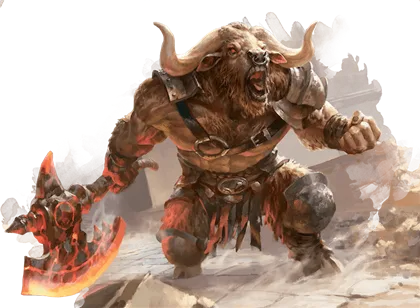 ## Horns and Hooves Minotaurs are barrel-chested humanoids with heads resembling those of bulls. Their horns range in size from about 1 foot long to great, curling weapons easily three times that length. They often ornament their horns with metal rings or sheathe them in metal to protect them from damage. Manes of shaggy fur extend down minotaurs’ necks and powerful backs, and males have long tufts of hair on their chins and cheeks. Their legs end in heavy, cloven hooves. Minotaurs are born with long, tufted tails, but minotaurs of the Ordruun clan (and some others) have their tails docked as part of a coming-of-age ceremony; they find the heavy armor of the Boros legion much more comfortable without a long tail in the way. ## Strength and Zeal Minotaurs are zealous and love battle. They are found among the Gruul Clans, but the minotaurs of the Ordruun family line, long associated with the Boros Legion, are much better known and respected. Boros minotaurs choose the precision of the legion over the fury of the pack. Minotaurs tend to vent their outrage through violence, but they aren’t generally quick to anger. They are passionate, loving their friends and partners fiercely, and they laugh loud and long at good jokes. ## Family and Guild Minotaur legends describe a small pantheon of heroes—perhaps they were once thought of as gods—who established the minotaurs’ place in the world. Every minotaur in Ravnica claims descent from one of these heroes. The Ordruun line is the most prominent, with thousands of members descended from an ancient hero who is said to have taught minotaurs the arts of war. Other important family lines include the Kharran line (primarily associated with the Gruul Scab clan), the Drendaa line (found scattered among the Gruul Clans), and the Tazgral line (divided between the Boros and the Gruul, with a significant number in the Rakdos as well). Since each family line has so many members, minotaurs don’t usually find it helpful to connect the name of the line to their personal names; even though Commander Grozdan of the Boros Legion’s Kamen Fortress is a prominent member of the Ordruun line, he would never call himself Grozdan Ordruun the way a human would. ## Minotaur Names The legends that recount the deeds of ancient minotaur heroes are full of other names as well: those of the retainers, allies, lovers, servants, enemies, and others who played roles, however small, in the lives of the heroes. Almost every minotaur name is drawn from that long list of minor characters of legend, so that those folk are never forgotten. Male Names: Alovnek, Brogmir, Brozhdar, Dornik, Drakmir, Drazhan, Grozdan, Kalazmir, Klattic, Melislek, Nirikov, Prezhlek, Radolak, Rugilar, Sarovnek, Svarakov, Trovik, Vraslak, Yarvem Female Names: Akra, Bolsa, Cica, Dakka, Drakisla, Eleska, Enka, Irnaya, Jaska, Kalka, Makla, Noraka, Pesha, Raisha, Sokali, Takyat, Vrokya, Veska, Yelka, Zarka, Zoka | Powerful Build, Horns, Hammering Horns, Imposing Presence, Labyrinthine Recall | Vitaea | Terkon | Communal: Raised by a village, order, or organization | Landborn | Sylvari-Vitae (True Sylvari) | 40,000 years | Charisma, Strength | Normal | Unlimited | 25 | Walking | Aethyrian Common, Tarkin, Minos | 100 years | 20 years | 350 lbs | 7.5 ft | Medium | Greys, Whites, Blacks, Browns | Furred | Bovine-folk Humanoid, Hooved, Horned | Great Awakening | Yes | No |
| Quillbren (Boarfolk) | Scattered families of humanoid Boar-folk which live in a mixed society of semi-nomadic tribes lead by one of the great Khans of the Plain | Quillbren resemble humanoid boars, standing between 5 to 6 feet tall. They have stout, muscular bodies covered in coarse, bristly fur, ranging from brown to grey shades. Their faces feature large tusks, sharp snouts, and beady eyes, giving them a fierce appearance. Protruding from their backs are rows of large, sharp quills, which they can use for defense or as projectiles. 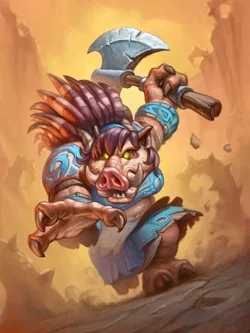 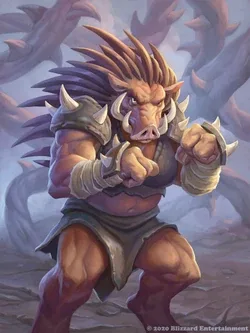 Nature: Quillbren are tenacious, resilient, and resourceful. They are known for their stubbornness and fierce determination, making them formidable foes and loyal allies. A strong sense of community and kinship binds them together, and they are willing to go to great lengths to protect their own. Culture: Quillbren society is tribal and hierarchical, with chieftains leading each tribe and shamans providing spiritual guidance. They have a deep connection to the land and nature, practicing druidic traditions and revering animal spirits. Rituals and ceremonies play a significant role in their culture, serving to strengthen the bond between tribe members and the natural world. Quillbren are skilled hunters and gatherers, relying on the bounty of the land for sustenance. They are adept at using their surroundings to their advantage, crafting tools, weapons, and shelters from available resources. The quills on their back are not only used for defense but also crafted into weapons, tools, and ornaments. Lifestyle: Quillbren tribes are nomadic, moving with the seasons to follow game and find fresh resources. They live in temporary settlements, often in dense forests or rugged hills, where they can easily blend into the environment. Their lives revolve around the hunt, gathering, and spiritual practices, with each member contributing to the tribe’s well-being. While they can be territorial and defensive, Quillbren are not inherently aggressive towards other races. However, they are quick to defend their land and resources if threatened. Trade and alliances with other races are not uncommon, especially when mutual benefits are apparent. Relations with Other Races: Quillbren are cautious but not unfriendly towards outsiders. They value strength, resilience, and respect for nature in their interactions with other races. Those who show a willingness to understand their way of life and respect their traditions can form lasting friendships and alliances with them. Adventurers: Quillbren adventurers are often motivated by a desire to protect their tribe, explore the land, or seek spiritual enlightenment. They make excellent druids, rangers, and barbarians, utilizing their natural abilities, survival skills, and connection to nature to overcome challenges. | Quill Projectile, Horns, Survival Instinct, Natural Armor, Goring Rush | Vitaea | Terkon | Communal: Raised by a village, order, or organization | Landborn | Sylvari-Vitae (True Sylvari) | 40,000 years | Charisma, Constitution | Normal | Unlimited | 30 | Walking | Aethyrian Common, Tarkin, Quillish | 75 years | 15 years | 200 lbs | 5 ft | Medium | Greys, Whites, Blacks, Browns | Furred | Boar-folk Humanoid, Bristled Body, Tusked | Great Awakening | Yes | No |
| Satyr (Goatfolk) | Nomadic families of humanoid goat-folk who travel through the great forests and jungles and known for being merchants, entertainers, and mischief-makers | Satyrs have a well-earned reputation for their good spirits, gregarious personalities, and love of revels. Most satyrs are driven by simple desires, to see the world and to sample its every pleasure. While their spontaneity and whimsy sometimes put them at odds with more stoic peoples, satyrs rarely let the moodiness of others hinder their own happiness. Life is a blessing from the gods, after all, and the proper response to such a gift, as far as most satyrs are concerned, is to accept it with relish. 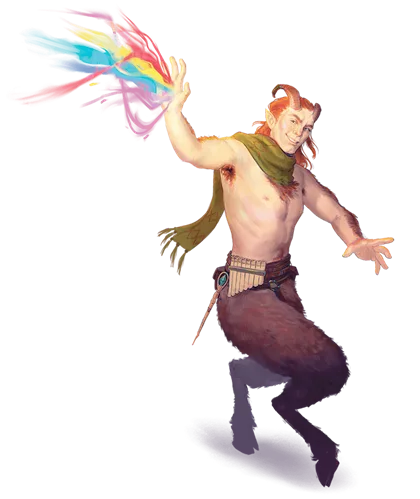 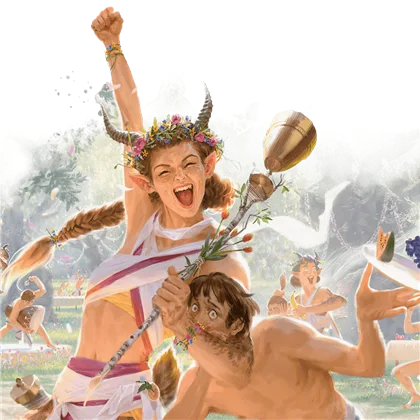 ### Born of the Wild In their physical forms, satyrs embody a fusion of humanoid civilization with the freedom of wild beasts. Generally, they look similar to humans, with a range of builds and features. But their goatlike horns, pointed ears, and furred lower bodies sharply distinguish them. Satyrs’ solid horns connect to their heads at the base of their skulls, while their legs end in sturdy hooves. Thick fur covers their bodies from the waist down, shorter at the waist and longer below the knees. Short, soft hair grows down their neck and spine, along their shoulders, and on their forearms. ### Embracing Life Most satyrs believe that the other peoples of Theros are woefully burdened with the plague of seriousness. Satyrs scoff at the efforts of polis-builders with their laws and right angles, and they poke fun at philosophers with their endless theories and interminable discourse. Satyrs feel that life is to be lived and experienced with all the senses. Satyrs see the world and everything in it as a book of delights, and they want to explore every page. See chapter 3 for more details on the satyr homeland, the Skola Vale. ### The Art of the Revel The humans of the poleis generally think of satyrs’ revels as raucous bacchanals, where anything and everything might happen. This picture isn’t wrong, but it’s incomplete: there’s more to a revel than debauchery. For satyrs, revelry is a way of life. It’s the delight in small things: the song of a bird, a warm breeze, the smell of a tasty pie, relaxing by a river in the sunshine. Life freely offers these gifts, and for a satyr, they are more valuable than gold or glory. To revel means to forget the constraints of time, to let go of the future and past, and to be wholly in the present moment. For satyrs, encountering life with all the senses honors the gods, and—most importantly—it feels really good. Driven by instinct and intuition, most satyrs prove unpredictable, following their sense of wonder wherever it leads. ### Very Odd Indeed Satyrs are known for their eccentricities. Some people spend too much time worrying over why satyrs behave as they do. But satyrs themselves simply are as they are, feeling no need to understand what drives them, much less explain it to others. The Satyr Eccentricities table suggests a few tastes or proclivities your satyr character might possess Satyr Eccentricities | d8 | Characteristic | | --- | --- | | 1 | Flowers are the most amazing things ever. I want to pick them, wear them, and discover their silent secrets. | | 2 | There isn’t a tree or statue that isn’t fun to climb. | | 3 | Nothing wards off bad luck like a jolly dance. | | 4 | Sometimes talking to a plant really helps. | | 5 | If stumped, I smoke a pipe. And if I’m going to smoke a pipe, it’s going to be a splendid pipe. | | 6 | I imagine that my clothes are my glorious soul on display for all the world to behold, and I dress accordingly. | | 7 | Having horns is the best. They are fun to decorate, and they can pop open an amphora, no problem. | | 8 | If I have something really important to say, I always make sure to sing it. | > Myth of Xenagos the Satyr God > The satyr Xenagos savored his reputation for presiding over the most raucous revels his people had ever known. However, when fate led him to discover the nature of the gods and how they were beholden to mortals for their very existence, the whole order of the world felt like a joke—one at his expense. > With immortal power no longer feeling so out of reach, Xenagos set into motion a plan that would propel him to godhood. His victory shook the pantheon, but his victory was short-lived. Heliod dispatched his champion, Elspeth, who faced many trials but ultimately killed the god-satyr by driving the spear, Godsend, through his heart. > Many satyrs remember Xenagos as a satyr who lived life to the fullest and who played tricks that stirred up even the gods. Yet, he’s also an example of how bitterness can turn a great trick nasty and how schemes that get out of hand aren’t fun for anybody. What satyr wants the responsibility of being a god anyway? | Ram, Mirthful Leaps, Reveler, Magic Resistance | Vitaea | Terkon | Familial: Raised by mother(s), and/or father(s), and/or sibling(s) | Landborn | Sylvari-Vitae (True Sylvari) | 40,000 years | Dexterity, Charisma | Normal | Unlimited | 35 | Walking | Aethyrian Common, Sylvan | 100 years | 20 years | 150 lbs | 5.5 ft | Medium | Greys, Whites, Blacks, Browns | Furred | Goat-folk Humanoid, Hooved | Great Awakening | Yes | No |
| Wolfen (Wolffolk) | Territorial clans of humanoid wolf-folk who are fiercely loyal to their communities who are known for the intelligence and distrust of outsiders | The Wolfen are a majestic race of humanoid wolves, standing between 6 to 7 feet tall. With fur ranging in color from greys and browns to blacks and whites, sharp teeth, pointed ears, and penetrating, glowing eyes, the Wolfen encapsulate the raw, untamed essence of the wolf. 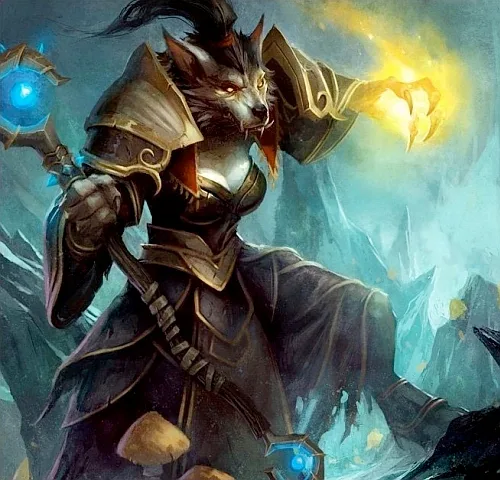 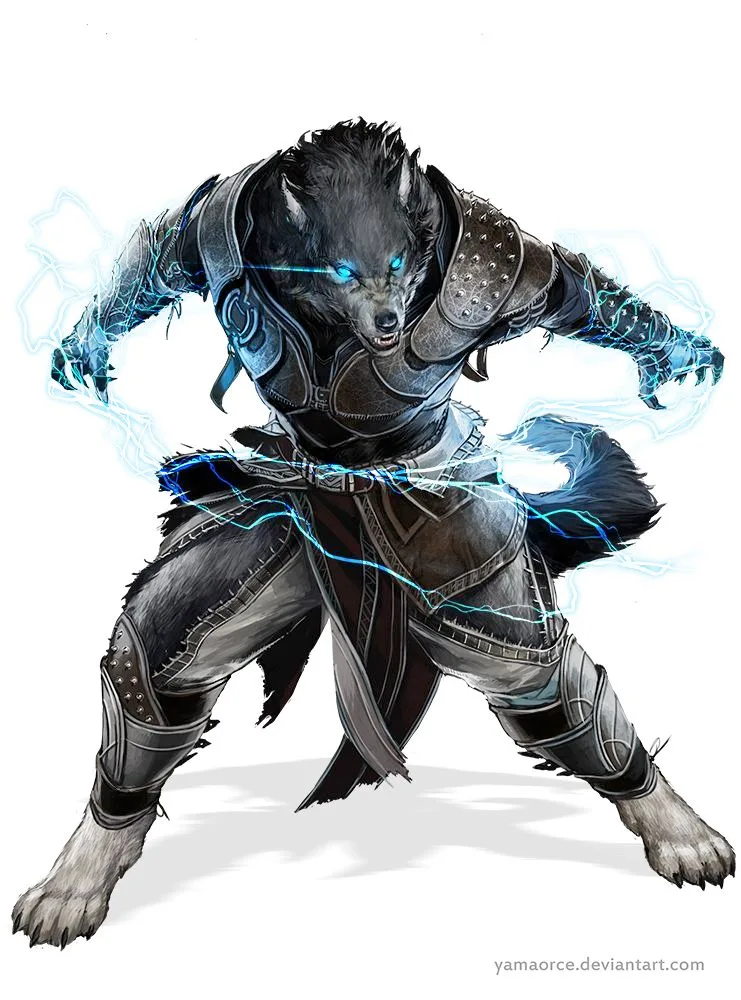 Nature: Known for their loyalty, Wolfen hold the bonds of family and community in high regard. They possess a keen instinct, sharp senses, and a natural affinity for hunting and tracking. Agile and stealthy, their movements are characterized by a quiet grace that belies their size. Courageous and honorable, the Wolfen earn respect, and sometimes fear, from other races. Culture: Wolfen society is built around close-knit family units and community cooperation. Leadership is shared and decisions are made collectively, with each member’s voice valued. They hold a deep respect for hierarchy and social structure, resolved through consensus and mutual respect. Deeply spiritual, Wolfen worship deities of the moon, nature, and the hunt, and believe in living in harmony with the natural world. Many are skilled druids and rangers. Storytelling and oral traditions are important in preserving their history and legends, with the sacred practice of howling under the full moon believed to strengthen communal and divine bonds. Lifestyle: Nomadic by nature, Wolfen traverse vast territories, exceptional hunters who rely on teamwork and strategy. They are adept at navigating various terrains and formulating symbiotic relationships with their environments. While cautious of outsiders, Wolfen are open to trade and diplomacy, and their warriors are valued allies. A bond with a Wolfen, once formed, is steadfast. Relations with Other Races: Wolfen form strong alliances with races that share their values of honor, loyalty, and respect for nature, but will defend fiercely against any threats to their communities or the natural world. Adventurers: Wolfen adventurers often seek to protect their territory, explore new lands, or pursue spiritual enlightenment. They excel in roles such as rangers, druids, and fighters, leveraging their natural abilities and instincts. | Keen Senses, Bite, Cold Resistance, Howl of the Pack | Vitaea | Tiscana | Familial: Raised by mother(s), and/or father(s), and/or sibling(s) | Landborn | Sylvari-Vitae (True Sylvari) | 40,000 years | Charisma, Wisdom | Low-light Vision | Unlimited | 35 | Walking | Aethyrian Common, Wolfish | 100 years | 20 years | 200 lbs | 6 ft | Medium | Greys, Whites, Blacks, Browns | Furred | Wolf-folk Humanoid, Clawed, Tailed | Great Awakening | Yes | No |
| Panthera (Pantherfolk) | Small territorial families of humanoid panther-folk who predominantly live through hunting the beasts of their wild jungles | Hailing from the secluded and dense jungles of the realm, the Panthera are a mysterious and solitary race of panther-folk. Adorned with sleek, spotted or black fur, sharp retractable claws, and keen, glowing eyes, these agile and stealthy humanoids embody the grace and power of the panthers they resemble. 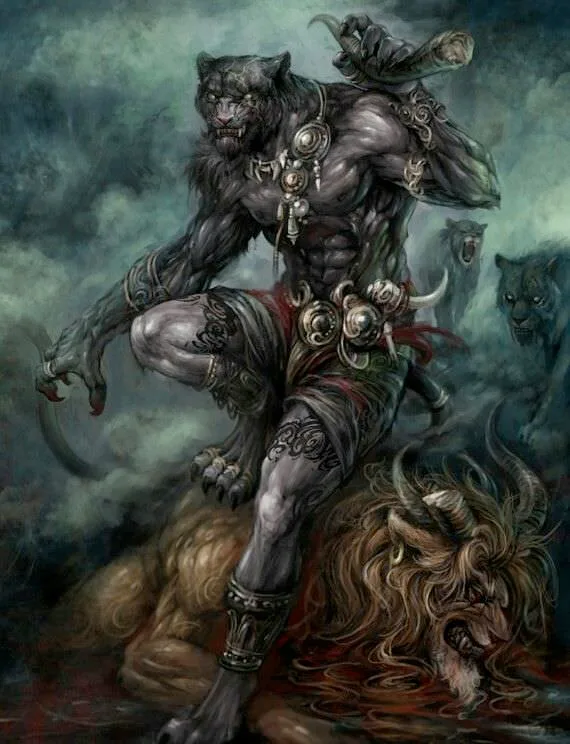 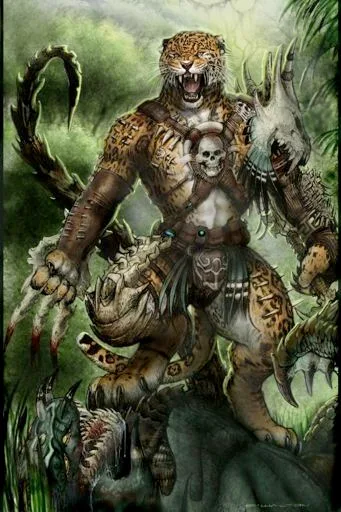 Solitary Hunters: Panthera are natural hunters, relying on their sharp instincts, agility, and stealth to stalk and catch their prey. They are masters of moving silently through the dense foliage, leaving no trace of their passage. Their society values independence and self-reliance, with individuals often going on solitary hunts to prove their worth. Territorial Communities: Panthera form small, closely-knit communities hidden within the depths of the jungle. They are fiercely territorial and mark the boundaries of their lands with scent markings. Intruders are warned away with growls and displays of strength, and those who do not heed these warnings are dealt with swiftly. Spiritual Connection: Panthera have a deep spiritual connection to the jungle and its creatures. They believe in living in harmony with nature and take only what they need to survive. Elders of their communities serve as spiritual guides, interpreting the signs of the jungle and leading ceremonies to honor the spirits of the land. Panthera Subraces: - Black Panthera: Known for their completely black fur and heightened senses, Black Panthera have advantage on Dexterity (Stealth) checks made to hide in dim light or darkness. - Spotted Panthera: Spotted Panthera, with their distinctive coat patterns, are adept at using the terrain to their advantage. They have advantage on Dexterity (Stealth) checks made to hide in forested terrain. | Bite, Stealthy Stalker, Pounce, Panther Camouflage | Vitaea | Machasa | Familial: Raised by mother(s), and/or father(s), and/or sibling(s) | Landborn | Sylvari-Vitae (True Sylvari) | 40,000 years | Dexterity, Charisma | Low-light Vision | Unlimited | 35 | Walking | Aethyrian Common, Panthen | 100 years | 20 years | 200 lbs | 6 ft | Medium | Greys, Whites, Blacks, Browns | Furred | Cat-folk Humanoid, Clawed, Tailed | Great Awakening | Yes | No |
| Apelings (Apefolk) | Scattered communities of humanoid ape-folk who rely on group consensus and elder wisdom for governance | Residing within the expansive and untamed jungles of the land, the Apelings are an intelligent and communal race of ape-folk. With strong limbs, expressive faces, and fur covering their bodies, Apelings bear a striking resemblance to the great apes of the wild, yet their upright posture and keen minds set them apart. 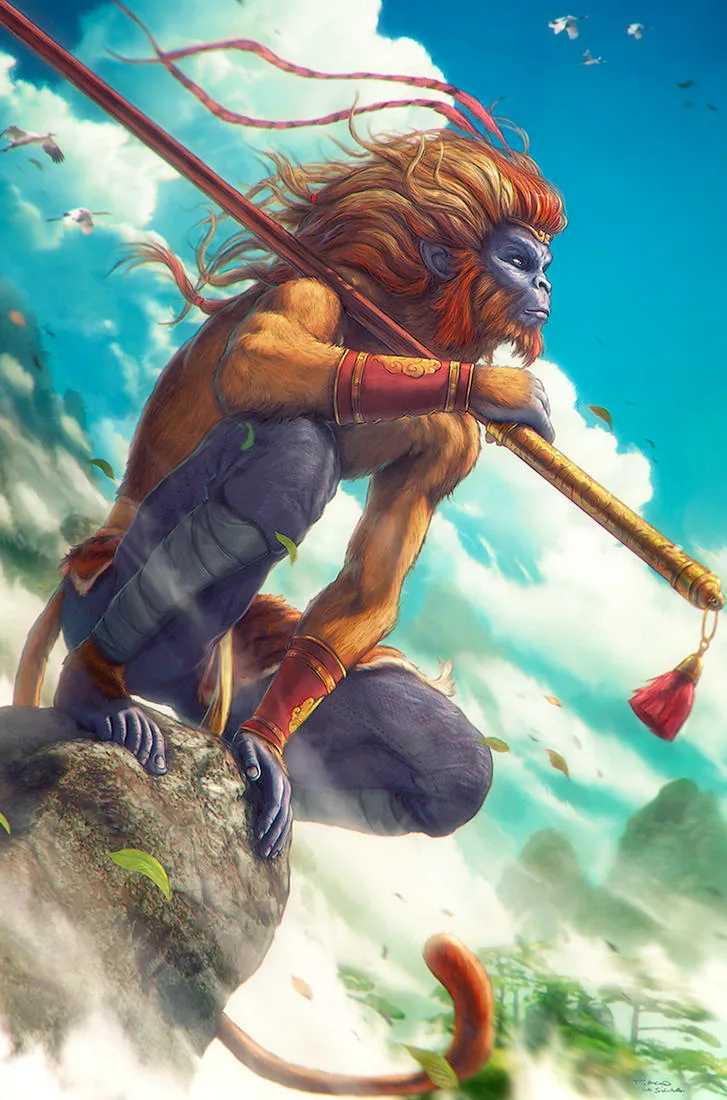 Communal Living: Apelings live in harmonious and closely-knit communities, scattered across jungle and mountainous regions. Each community is self-sustaining, relying on the collective efforts of its members to gather food, construct shelters, and protect their territory. Decisions are made through group consensus, ensuring the well-being of every individual. Elder Wisdom: The wisdom of the elderly is highly revered within Apeling society. Elders serve as mediators, storytellers, and advisors, their insights shaped by years of experience. Apelings believe that the collective wisdom of their ancestors is preserved through oral traditions, and thus storytelling holds a special place in their culture. Natural Climbers: With strong limbs and a natural affinity for heights, Apelings are excellent climbers. They are adept at navigating through the dense canopy, using their agility and strength to traverse from tree to tree with ease. The forest canopy serves as both a hunting ground and a refuge, providing safety from ground-based threats. | Prehensile Feet, Physically Adept, Dexterous Tail, Natural Foragers, Advantaged Grappler | Vitaea | Machasa | Familial: Raised by mother(s), and/or father(s), and/or sibling(s) | Landborn | Sylvari-Vitae (True Sylvari) | 40,000 years | Dexterity, Charisma | Normal | Unlimited | 35 | Climbing, Walking | Aethyrian Common, Apish | 100 years | 20 years | 100 lbs | 4.5 ft | Medium | Greys, Whites, Blacks, Browns | Furred | Ape-folk Humanoid | Great Awakening | Yes | No |
| Orangi (Orangutanfolk) | Semi-nomadic and isolated socialist communities of gentle humanoid orangutan-folk with strong druidic and spiritual tradition and a close connection with the land and their fellow Orang | Hailing from the secluded reaches of dense jungles and ancient forests, the Orangi are a race of orangutan-folk known for their elongated limbs, reddish-brown fur, and profound spiritual connection to the land. Living in harmonious, semi-nomadic communities, the Orangi are bound by a deep sense of unity, mutual aid, and reverence for the natural world around them. 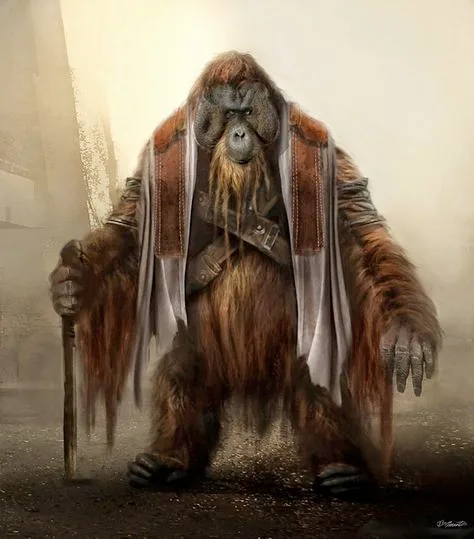 Society and Culture: Orangi society is built upon the principles of socialism, where the well-being of the individual is interwoven with the welfare of the community. Each member contributes according to their abilities and receives according to their needs, fostering an atmosphere of trust, compassion, and cooperation. Leaders are often chosen based on their wisdom, empathy, and understanding of the spiritual traditions that underpin Orangi life. Spirituality and druidic practices are cornerstones of Orangi culture. They believe that every living being shares a collective spirit, and by nurturing this connection, they maintain balance and harmony within their communities and the natural world. Rituals, ceremonies, and meditative practices are common, allowing the Orangi to attune themselves with the energies of the land. Connection with Nature: The Orangi’s semi-nomadic lifestyle and strong druidic tradition have cultivated an intimate relationship with their environment. They are skilled herbalists, gatherers, and trackers, moving through the jungle canopy with ease, thanks to their long limbs and arboreal adaptability. Their communities are often located in the treetops, hidden amidst the foliage, providing both protection and a vantage point to observe the surrounding landscape. The Orangi are natural protectors of the land, combating threats to the natural order and helping the flora and fauna around them thrive. Their spiritual practices often involve communing with nature spirits, seeking guidance, and harnessing the energies of the land for healing and protection. | Prehensile Feet, Advantaged Grappler, Druidic Heritage, Natural Foragers, Natural Herbalist, Lanky Arms | Vitaea | Akaras Wilds | Communal: Raised by a village, order, or organization | Landborn | Sylvari-Vitae (True Sylvari) | 40,000 years | Dexterity, Charisma | Normal | Unlimited | 30 | Climbing, Walking | Aethyrian Common, Orangi | 100 years | 20 years | 150 lbs | 5.5 ft | Medium | Greys, Whites, Blacks, Browns | Furred | Orangutan-folk Humanoid | Great Awakening | Yes | No |
| Gnoll (Hyenafolk) | Highly competitive, war-like bands of humanoid hyena-folk with roaming temporary settlements lead by the fittest and strongest among them | Roaming the arid savannahs and desolate wastelands, Gnolls are a fierce and competitive race of hyena-folk known for their warlike nature and transient lifestyles. With their hunched postures, spotted fur, and powerful jaws, Gnolls embody the untamed ferocity of the wild and the relentless pursuit of survival. 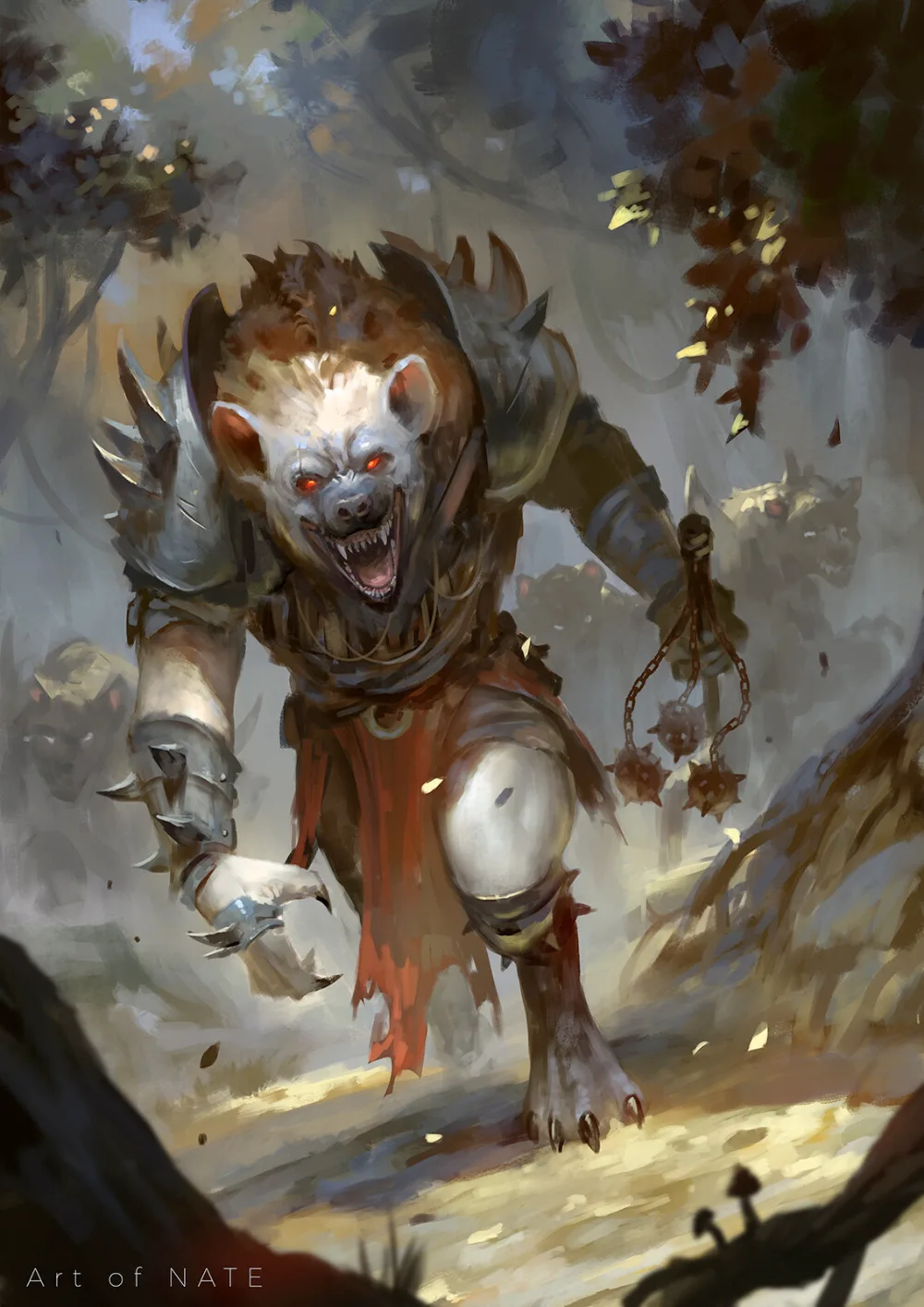 Society and Culture: Gnoll society is organized around strength and fitness, where the mightiest individuals earn the right to lead and make decisions for the group. Leadership is transient and can be contested by any Gnoll who deems themselves worthy, resulting in constant challenges and skirmishes to prove dominance. The Gnolls’ nomadic lifestyle revolves around hunting, raiding, and seeking out new territories, with temporary settlements being established and abandoned as resources are depleted. The Gnolls' competitive spirit drives them to constantly test their limits, hone their combat skills, and seek out worthy adversaries. Their bands are composed of skilled hunters, warriors, and scavengers, each contributing to the group's survival through their unique strengths and abilities. Despite their aggressive nature, Gnolls are deeply loyal to their pack, and the bonds formed through shared battles and hardships are unbreakable. Roaming Warriors: Gnolls are relentless pursuers of strength and glory, always seeking opportunities to prove their worth in battle. Their war bands roam far and wide, engaging in skirmishes, raids, and territorial disputes. The thrill of the hunt and the heat of combat are integral to Gnoll culture, and tales of valor and conquest are passed down through generations. Each Gnoll is a formidable warrior in their own right, equipped with natural weapons such as powerful jaws and sharp claws. They favor hit-and-run tactics, using their agility and keen senses to outmaneuver and overwhelm their enemies. The Gnolls' warlike nature has earned them a fearsome reputation among other races, and their approach to conflict is both ruthless and pragmatic. | Bite, Keen Senses, Survival Instinct, Rampage, Agile Combatant | Vitaea | Terkon | Communal: Raised by a village, order, or organization | Landborn | Sylvari-Vitae (True Sylvari) | 40,000 years | Dexterity, Constitution | Low-light Vision | Unlimited | 35 | Walking | Aethyrian Common, Tarkin, Gnollish | 50 years | 10 years | 250 lbs | 7 ft | Medium | Greys, Whites, Blacks, Browns | Furred | Hyena-folk Humanoid | Great Awakening | Yes | No |
| Lizari (Lizardfolk) | A highly structured and highly rational empire of humanoid lizard-folk who carefully craft their expansive society according to the Great Plan established by a Geniocratic Gerontocracy | > If you’re considering taking a scaled one along on an adventure, remember this important fact. The strange, inhuman glint in its eyes as it looks you over is the same look you might give a freshly grilled steak. > — Tordek, dwarf fighter and adventurer 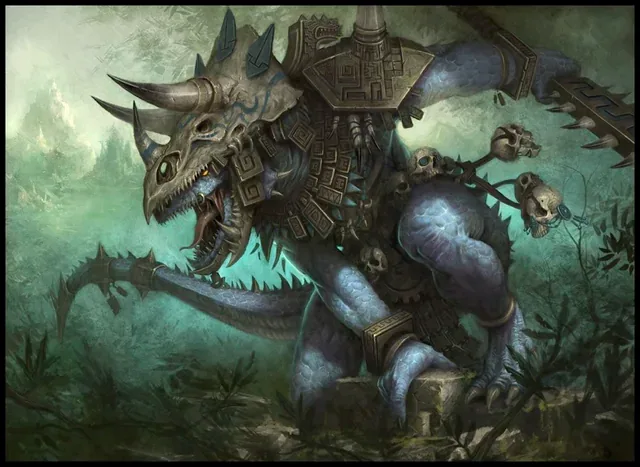 Only a fool looks at the lizardfolk and sees nothing more than scaly humanoids. Their physical shape notwithstanding, lizardfolk have more in common with iguanas or dragons than they do with humans, dwarves, or elves. Lizardfolk possess an alien and inscrutable mindset, their desires and thoughts driven by a different set of basic principles than those of warm-blooded creatures. Their dismal swamp homes might lie hundreds of miles from the nearest human settlement, but the gap between their way of thinking and that of the smooth-skins is far greater. Despite their alien outlook, some lizardfolk make an effort to understand and, in their own manner, befriend people of other races. Such lizardfolk make faithful and skilled allies. ## Alien Minds The lizardfolk’s reptilian nature comes through not only in their appearance, but also in how they think and act. Lizardfolk experience a more limited emotional life than other humanoids. Like most reptiles, their feelings largely revolve around fear, aggression, and pleasure. Lizardfolk experience most feelings as detached descriptions of creatures and situations. For example, humans confronted by an angry troll experience fear on a basic level. Their limbs shake, their thinking becomes panicked and jumbled, and they react by instinct. The emotion of fear takes hold and controls their actions. In contrast, lizardfolk see emotions as traits assigned to other creatures, objects, and situations. A lizardfolk doesn’t think, “I’m scared.” Instead, aggressive, stronger creatures register to the lizardfolk as fearsome beings to be avoided if possible. If such creatures attack, lizardfolk flee, fighting only if cornered. Lizardfolk aren’t scared of a troll; instead, they understand that a troll is a fearsome, dangerous creature and react accordingly. Lizardfolk never become angry in the way others do, but they act with aggression toward creatures that they could defeat in a fight and that can’t be dealt with in some other manner. They are aggressive toward prey they want to eat, creatures that want to harm them, and so on. Pleasurable people and things make life easier for lizardfolk. Pleasurable things should be preserved and protected, sometimes at the cost of the lizardfolk’s own safety. The most pleasurable creatures and things are ones that allow lizardfolk to assess more situations as benign rather than fearsome. ## Cold and Calculating Most humanoids describe cold-blooded people as lacking in emotion and empathy. The same label serves as an apt depiction of lizardfolk. Lacking any internal emotional reactions, lizardfolk behave in a distant manner. They don’t mourn fallen comrades or rage against their enemies. They simply observe and react as a situation warrants. Lizardfolk lack meaningful emotional ties to the past. They assess situations based on their current and future utility and importance. Nowhere does this come through as strongly as when lizardfolk deal with the dead. To a lizardfolk, a comrade who dies becomes a potential source of food. That companion might have once been a warrior or hunter, but now the body is just freshly killed meat. A lizardfolk who lives among other humanoids can, over time, learn to respect other creatures’ emotions. The lizardfolk doesn’t share those feelings, but instead assesses them in the same clinical manner. Yes, the fallen dwarf might be most useful as a meal, but hacking the body into steaks provokes aggression in the other humanoids and makes them less helpful in battle. ## Utility and Survival The lizardfolk mindset might seem unnecessarily cruel, but it helps them survive in a hostile environment. The swamps they inhabit are filled with a staggering variety of threats. Lizardfolk focus on survival above all, without sentiment. Lizardfolk assess everyone and everything in terms of utility. Art and beauty have little meaning for them. A sharp sword serves a useful and good purpose, while a dull sword is a dead weight without a whetstone. Lizardfolk see little need to plan more than a season or so into the future. This approach allows them to maintain their current level of influence in the world, but it limits their growth. Lizardfolk have no interest in developing writing, making long-term plans, or cultivating other methods to progress beyond their simple existence as hunters and gatherers. ## Hapless Soft Ones At their core, lizardfolk view other humanoids with an indifference verging on pity. Born into the world lacking stout scales and sharp teeth, it’s a wonder they have managed to survive for so long. The typical human would barely make it through a day in the swamps. Still, if other creatures prove useful to lizardfolk, those creatures can trigger a protective response made all the stronger by their apparent weakness. The lizardfolk assess such beings as hatchlings, young ones incapable of protecting themselves but who might prove useful in the future if they receive care. ## Lizardfolk Personality You can use the Lizardfolk Quirks table to determine a personality quirk for a lizardfolk character or to inspire a unique mannerism. Lizardfolk Quirks Table 5 | d8 | Quirk | | --- | --- | | 1 | You hate waste and see no reason not to scavenge fallen enemies. Fingers are tasty and portable! | | 2 | You sleep best while mostly submerged in water. | | 3 | Money is meaningless to you. | | 4 | You think there are only two species of humanoid: lizardfolk and meat. | | 5 | You have learned to laugh. You use this talent in response to all emotional situations, to better fit in with your comrades. | | 6 | You still don’t understand how metaphors work. That doesn’t stop you from using them at every opportunity. | | 7 | You appreciate the soft humanoids who realize they need chain mail and swords to match the gifts you were born with. | | 8 | You enjoy eating your food while it’s still wriggling. | ## Lizardfolk Names Lizardfolk take their names from the Draconic language. They use simple descriptives granted by the tribe based on an individual’s notable deeds or actions. For example, Garurt translates as “axe,” a name given to a lizardfolk warrior who defeated an orc and claimed his foe’s weapon. A lizardfolk who likes to hide in a stand of reeds before ambushing an animal might be called Achuak, which means “green” to describe how she blends into the foliage. Lizardfolk make no distinction between male and female in their naming conventions. Each example name includes its translation in parenthesis. Lizardfolk Names: Achuak (green), Aryte (war), Baeshra (animal), Darastrix (dragon), Garurt (axe), Irhtos (secret), Jhank (hammer), Kepesk (storm), Kethend (gem), Korth (danger), Kosj (small), Kothar (demon), Litrix (armor), Mirik (song), Othokent (smart), Sauriv (eye), Throden (many), Thurkear (night), Usk (iron), Valignat (burn), Vargach (battle), Verthica (mountain), Vutha (black), Vyth (steel) | Bite, Slow Breathing, Hunter’s Lore, Natural Armor, Cold-Blooded, Ancient Knowledge | Vitaea | Shikava | Communal: Raised by a village, order, or organization | Landborn | Sylvari-Vitae (True Sylvari) | 40,000 years | Wisdom, Constitution | Normal | Unlimited | 30 | Walking | Aethyrian Common, Lizari | 50 years | 10 years | 200 lbs | 6 ft | Medium | Greens, Blues, Blacks, Purples | Scaled | Lizard-folk Humanoid, Tailed | Great Awakening | Yes | No |
| Tortle (Turtlefolk) | Scattered coastal villages of humanoid turtle-folk who mostly support themselves through maritime trade and fishing | > I caught a big fish. > Now I search for a good friend > To share my lunch with. > — Tortle haiku 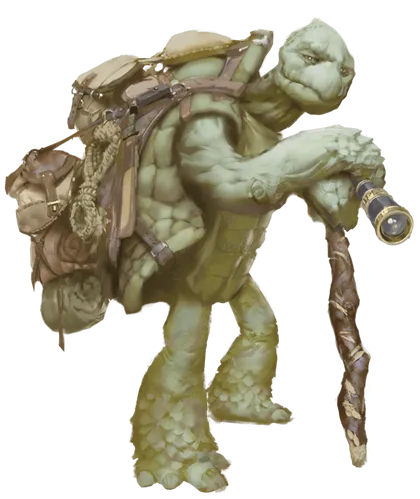 What many tortles consider a simple life, others might call a life of adventure. Tortles are born near sandy coastlines, but as soon as they’re able to walk on two legs, they become nomad survivalists eager to explore the wilderness, experience its many wonders, put their skills to the test, and make new acquaintances. ### Life of a Tortle A tortle hatches from a thick-shelled egg and spends the first few weeks of its life crawling on all fours. Its parents, old and near death, spend what little time they have left telling stories to their offspring. Within a year, the young tortle becomes an orphan, though not before it learns to speak and to survive on its own. A young tortle and its siblings inherit whatever tools, weapons, and gifts their parents left behind. Each young tortle is expected to fend for itself. It leaves the place of its birth and finds its own corner of the wilderness in which to hunt, catch fish, and get by. With each passing year, a tortle hones its survival skills. It forms friendships with its neighbors while also respecting their privacy. At some point, a tortle feels an almost overwhelming urge to venture far away from home and see more of the world. It gathers up its possessions and heads into the wilderness, returning months or years later with stories of its exploits and new skills. When a tortle nears the end of its natural lifespan, it seeks out a mate and procreates. Tortles lay their eggs (numbering as few as one or as many as a dozen) in a fortified compound enclosed by stone walls that are easily defensible. If no such compound exists, they build one. The parents spend the remainder of their lives guarding the compound, defending their offspring, and sharing a lifetime of knowledge before they die. When the children are old enough to leave the compound, they pick up whatever weapons and tools their parents left behind and set out on their own. ### Beliefs Tortles don’t have their own pantheon of gods, but they often worship the gods of other races. It’s not unusual for a tortle to hear stories or legends related to a god and choose to worship that deity. In the Forgotten Realms, tortles are especially fond of Eldath, Gond, Lathander, Savras, Selûne, and Tymora. In the Greyhawk setting, they gravitate toward Celestian, Fharlanghn, Pelor, Pholtus, and St. Cuthbert. Tortles are often drawn to the Gods of Good in Dragonlance and the Sovereign Host in Eberron. Among the nonhuman deities, Moradin and Yondalla relate to tortles most of all. Tortles believe that night and day watch over them and other creatures. The moon is the eye of night that watches over them in darkness, and the sun is the equally vigilant eye of day. Tortles feel most at peace when one or both of these “eyes” are looking down on them. They become more nervous and uneasy when neither orb is visible in the sky. Tortles tend to be most uncomfortable underground, where neither the sun nor the moon is visible to them. Blessed are the days when both the sun and moon are visible in the sky at the same time. Tortles often choose such days to leave their homes and begin a wilderness expedition, or perform some other task they know to be dangerous. ### Adventurers at Heart Tortles have a saying: “We wear our homes on our backs.” The shells they carry around provide all the shelter they require. Consequently, tortles don’t feel the need to root themselves in one place for too long. A tortle settlement is primarily used as a kind of moot, where tortles can socialize with one another, share useful information, and trade with strangers in the safety of greater numbers. Tortles don’t regard these settlements as places worth defending with their lives, and they will abandon a settlement when it no longer serves their needs. Most tortles like to see how other creatures live and discover new customs and new ways of doing things. The urge to procreate doesn’t kick in until the end of a tortle’s life, and a tortle can spend decades away from its native land without feeling homesick. Tortles embrace a simple view of the world. It is a place of wonder, and tortles see beauty in the ordinary. They live for the chance to hear a soft wind blowing through palm trees, to watch a frog croaking on a lily pad, or to stand in a crowded human marketplace. Tortles like to learn new skills. They craft their own tools and weapons, and they are good at building structures and fortifications. They marvel at the works of other civilized creatures, humans in particular, and can lose themselves for years in a city, studying its architectural wonders and learning skills they can put to use when building forts to contain their offspring. Although they spend a considerable portion of their lives in isolation, tortles are social creatures that like to form meaningful friendships. They have no inbred animus toward people of other races. In fact, a tortle will often seek out friendships with non tortles to learn new customs and new points of view. ### Tortle Names Tortles prefer simple, non-gender-specific names that are usually no more than two syllables. If a tortle doesn’t like its name for whatever reason, it can change it. A tortle might change its name a dozen times in its life. Tortles don’t have surnames or family names. Male and Female Names: Baka, Damu, Gar, Gura, Ini, Jappa, Kinlek, Krull, Lim, Lop, Nortle, Nulka, Olo, Ploqwat, Quee, Queg, Quott, Sunny, Tibor, Ubo, Uhok, Wabu, Xelbuk, Xopa, Yog | Claws, Hold Breath, Tortle Shell, Natural Armor, Shell Defense, Powerful Build, Survival Instinct | Vitaea | Eko’Avra | Familial: Raised by mother(s), and/or father(s), and/or sibling(s) | Landborn | Sylvari-Vitae (True Sylvari) | 40,000 years | Wisdom, Intelligence | Normal | Unlimited | 25 | Swimming, Walking | Aethyrian Common, Torten | 500 years | 100 years | 350 lbs | 5 ft | Medium | Greens, Blues, Blacks, Browns | Scaled | Turtle-folk Humanoid, Shelled | Great Awakening | Yes | No |
| Triton (Merfolk) | Monarchic kingdoms of Mer-folk with impressive cities across the sea floors that have complex diplomatic relationships with each other and occasional interactions with the surface world | > Ah, the tritons. Imagine if the elves spent a few centuries far beneath the sea, where their arrogance and pretension could grow undisturbed. At least the tritons spent that time fighting sahuagin and worse, so you know you can count on them in a fight. > — Brego Stoneheart, sea captain 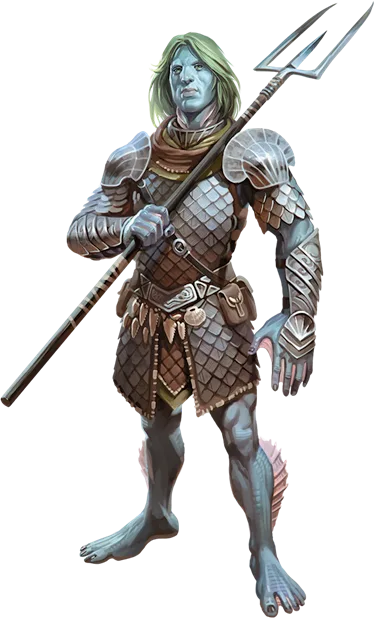 Tritons guard the ocean depths, building small settlements beside deep trenches, portals to the elemental planes, and other dangerous spots far from the eyes of land-bound folk. Long-established guardians of the deep ocean floor, in recent years the noble tritons have become increasingly active in the world above. ## Aquatic Crusaders Centuries ago, tritons entered the world in response to the growing threat of evil elementals. Tritons waged many wars against their enemies on the Plane of Water, driving them into the Darkened Depths where they escaped into the crushing pressure and utter darkness. In time, the tritons noticed that their ancient elemental foes had grown quiet. Expeditions to the depths revealed that krakens, sahuagin, and far worse foes had fled the Plane of Water for the Material Plane. The tritons, driven by a sense of duty and responsibility, would not allow their foes to escape so easily. A great conclave of tritons chose volunteers skilled in weapons and magic as part of an expeditionary force to enter the Material Plane and seek out their enemies. Those tritons spread across the world’s oceans and established protectorates to watch over deep sea trenches, portals, undersea caves, and other locations where their enemies might lurk. They defeated their foes when they found them and drove the rest into hiding. With their foes banished to the deepest reaches of the sea, tritons settled in to watch for any sign of their return. Over time, the tritons extended their stewardship over the sea floor from their initial settlements and built outposts to create trade with other races. Despite this expansion, few folk know of them. Their settlements are so remote even merfolk and sea elves rarely encounter them. ## Haughty Nobles As a result of their isolation and limited understanding of the Material Plane, tritons can come across as haughty and arrogant. They see themselves as caretakers of the sea, and they expect other creatures to pay them deep respect, if not complete deference. This attitude might grate on others, but it arises from a seed of truth. Few know of the tritons’ great victories over dreadful undersea threats. The tritons make little allowance for such ignorance and are delighted to expound upon the great debt others owe them. Tritons also have a tendency to emerge from their isolation under the assumption that other folk will welcome them as respected allies and mentors. Again, distance drives much of this attitude. The tritons’ limited view of the world leaves them ignorant of the kingdoms, wars, and other struggles of the surface world. Tritons readily see such concerns as minor events, a sideshow to the tritons’ role as the world’s true protectors. ## Staunch Champions Despite their off-putting manners, tritons are benevolent creatures at heart, convinced that other civilized races deserve their protection. Their attitude might grate, but when pirate fleets prowl the waves or a kraken awakens from its slumber, they are among the first to take up arms to protect others. Tritons readily sacrifice themselves for the common good. They will fight and die for humans, merfolk, and other creatures without question. Their self-absorbed nature makes them overlook the history of other creatures, but they also endure a sense of guilt over allowing the evils of the Plane of Water to enter the Material Plane and threaten its inhabitants. The tritons believe they owe a debt of honor to the world, and they will fight and die to pay it. At times their fervor and ignorance of the world can lead them astray. Tritons encountering other creatures for the first time can underestimate them, leaving the tritons vulnerable to deception. With their strong martial tradition, tritons can sometimes be too eager to leap into a fight. ## Strangers to the Surface Given their isolation, most tritons have never been to the surface world. They struggle with the idea that they can’t easily move up and down out of water, and the changing of the seasons mystifies them. Tritons also find the variety of social institutions, kingdoms, and other customs bewildering. For all their proud culture, they remain innocent of the surface world. The typical triton protectorate is tightly regimented, organized, and unified around a common cause. A triton on the surface becomes easily confused by the bewildering array of alliances, rivalries, and petty grievances that prevent the surface folk from truly unifying. At its worst, a triton’s arrogance compounds the tendency for the triton not to understand the ways of the surface world. It’s easy for a triton to blame baffling social practices on what the triton perceives as the barbarism, weakness, or cowardice of surface folk. ## Triton Personality Far from flawless, these champions of good mean well, but they are easily frustrated by others. You can select, roll, or adapt a triton-specific quirk from the Triton Quirks table. Use the quirk to inform how you portray your character. Triton Quirks | d6 | Quirk | | --- | --- | | 1 | You phrase requests as orders that you expect to be obeyed. | | 2 | You are quick to boast of the greatness of your civilization. | | 3 | You learned an antiquated version of Common and drop “thee” and “thou” into your speech. | | 4 | You assume that people are telling you the truth about local customs and expectations. | | 5 | The surface world is a wondrous place, and you catalog all its details in a journal. | | 6 | You mistakenly assume that surface folk know about and are impressed by your people’s history. | ## Triton Names Most triton names have two or three syllables. Male names typically end with a vowel and the letter s, and female names traditionally end with an n. Tritons use their home protectorate as a surname, with the name formed by adding a vowel followed by a “th” to the end of the protectorate’s name. Female Triton Names: Aryn, Belthyn, Duthyn, Feloren, Otanyn, Shalryn, Vlaryn, Wolyn Male Triton Names: Corus, Delnis, Jhimas, Keros, Molos, Nalos, Vodos, Zunis Triton Surnames: Ahlorsath, Pumanath, Vuuvaxath | Amphibious, Control Air and Water, Emissary of the Sea, Guardians of the Depths, Amphibious Assault, Underwater Weapon Training | Vitaea | Eko’Avra | Familial: Raised by mother(s), and/or father(s), and/or sibling(s) | Seaborn | Sylvari-Vitae (True Sylvari) | 40,000 years | Charisma, Wisdom | Echolocation (60ft / 600ft underwater) | 60 ft (600 ft underwater) | 25 | Swimming, Walking | Aethyrian Common, Aquan, Triton | 100 years | 20 years | 150 lbs | 5.5 ft | Medium | Greens, Blues, Whites | Scaled | Mer-folk Humanoid | Great Awakening | Yes | No |
| Loca-Toa (Fishfolk) | Theocratic communities of humanoid fish-folk living in scattered coastal shallows that are known to be cult-like followers of a prophet who has inspired the powerful faith of the community | Kuo-Toa are humanoid fish-folk with slippery, scaly skin ranging in color from shades of grey to muddy brown. Their bodies are streamlined and sleek, built for efficient movement through water. Wide, unblinking eyes adorn their faces, often of a pale or luminescent hue, offering them excellent vision in the murky underwater environments. Membranous fins run along their limbs and spine, aiding in their aquatic mobility, and their mouths are filled with rows of sharp teeth. 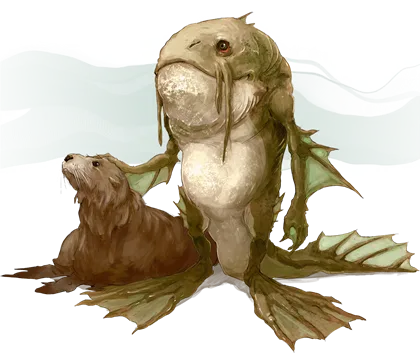 Habitat: Scattered along the coastal shallows, Kuo-Toa establish submerged tribal communities. These settlements are often concealed among the undersea terrain and flora, providing them with defense against predators and enemies. They craft their homes from materials found both above and below the water, such as driftwood, coral, and seashells. Society and Culture: Kuo-Toa communities are deeply theocratic and often led by a prophet who channels the divine will of their deities. Their society is characterized by a fervent and sometimes cult-like devotion to their faith, with the entire community participating in elaborate rituals and ceremonies. The prophet's visions and interpretations guide the Kuo-Toa, providing them with a sense of purpose and direction. Despite their challenging history marked by war, slavery, and mistreatment from other aquatic races, the Kuo-Toa remain resilient and proud. Their faith acts as a unifying force, enabling them to endure hardships and band together to protect their way of life. The communal bond among the Kuo-Toa is strong, and they are willing to defend their kin and beliefs fervently. Lifestyle: Kuo-Toa are adept hunters both above and below the water. They utilize a variety of hunting techniques, often crafting ingenious traps and tools from available resources. Their diet primarily consists of fish, crustaceans, and occasionally seabirds and coastal creatures. Kuo-Toa are known for their resourcefulness and ability to make use of every part of their catch. Interactions with Other Races: The Kuo-Toa are wary of outsiders due to their history of exploitation and conflict. However, they are not inherently hostile and can form alliances with those who show them respect and understanding. Their unique spirituality and the strength of their faith can be both intriguing and unsettling to other races, leading to a range of interactions from curiosity to conflict. Special Abilities: Kuo-Toa possess the ability to breathe underwater and are excellent swimmers. Their slippery skin makes them difficult to grapple, and their unblinking eyes grant them keen perception, especially in low-light underwater conditions. Their strong faith sometimes manifests in divine blessings or interventions, particularly when the community is under threat. | Amphibious Assault, Underwater Weapon Training, Observant and Athletic, Leviathan Will, Divine Blessing, Slippery Hide, Amphibious, Water Dependency | Vitaea | Ilo’Avra | Communal: Raised by a village, order, or organization | Seaborn | Sylvari-Vitae (True Sylvari) | 40,000 years | Intelligence, Charisma | Echolocation (60ft / 600ft underwater) | 60 ft (600 ft underwater) | 25 | Swimming, Walking | Aethyrian Common, Aquan, Kuotan | 100 years | 20 years | 100 lbs | 5 ft | Medium | Greens, Blues, Whites | Scaled | Fish-Folk Humanoid | Great Awakening | Yes | No |
| Cephalon (Octopus) | Vitaea | Seaborn | No | No | ||||||||||||||||||||||
| Picatha (Fishfolk) | Vitaea | Eko’Avra | Seaborn | No | No | |||||||||||||||||||||
| Sherkan (Sahuagin, Sharkfolk) | Humanoid shark-folk with strong family ties and a reputation for ruthless ferocity and a distaste for other races | Sahuagin, also called sea devils, are a race of shark-like humanoids with prominent snouts, claws, fins, a tail and a maw filled with sharp teeth. They are known to be skilled hunters, raiders and warriors, dwelling in the oceans. Most Sahuagin are a bit smaller than humans but heavier but they grow until they die, getting only stronger and more cunning over the years. The female and male Sahuagin look alike and outsiders often have fail to distinguish them, especially because they are equally strong and ferocious. 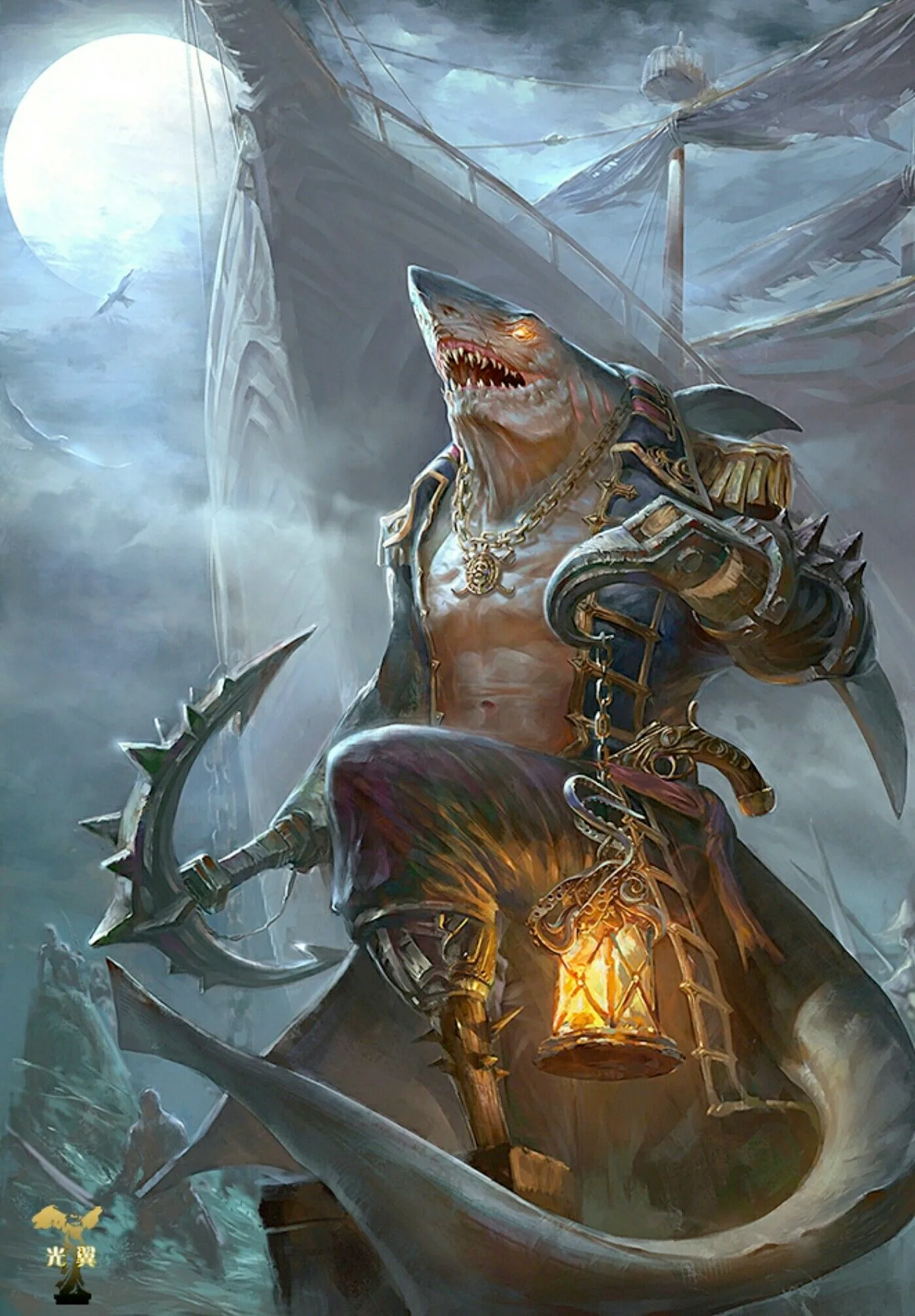 Society: Sahuagin society is organized around small nomadic bands, with each band consisting of tightly-knit family units. These bands roam the vast expanses of the ocean, following migratory patterns of prey and seasonal currents. The Sahuagin place great importance on family bonds, with each member playing a vital role in the survival and prosperity of the group. Despite their ruthless reputation, Sahuagin are fiercely protective of their kin and are known for their unyielding loyalty to their family. The hierarchy within a band is established through strength and combat prowess, with the most formidable Sahuagin leading as the Alpha. Disputes within the group are resolved through ritualized combat, ensuring the continual strength of the band. Culture: Sahuagin culture is deeply rooted in their connection to the ocean and its inhabitants. They are adept hunters, utilizing their keen senses and swift movements to capture prey. Their distaste for other races is well-known, and they are often unwilling to engage in diplomacy, preferring to keep to themselves and maintain their nomadic lifestyle. The Sahuagin revere the might of the ocean and its creatures, especially sharks, which they consider to be sacred. Rituals and ceremonies are conducted to honor these revered creatures and to seek their favor in hunting and combat. Habitat: Sahuagin predominantly dwell in the ocean’s depths, making temporary homes in underwater caves and reefs. They are well-adapted to life underwater but are also capable of venturing onto land for short periods, particularly in pursuit of prey or defending their territory.Live of a Traveler Few sahaugin choose the path of a traveler out of their own will and it is often because one of their superiors send them on a long lasting mission or they are on a mission for their god for the greater good of their race for which they sacrifice their own connections with the band. Often outcast Sahuagin are also traveling and avoid the contact to their race because they are afraid of getting killed on sight. ## Sahaugin Names Most sahaugin names cannot be spoken by surface dwllers and so they often adpot new names for them if they have to deal with them. Sahuagin have no family names but often have a byname based on a special trait or ability that sets them apart from their peers and adopt the name of the community they were born in, so that everybody knows of their origin. Otherwise sahuagin like to use names of heroes and other mythological figures are given to the young sahuaging when reaching adulthood. Male Names: Korel, Hokel, Ambrakai, Talfai, Lorkel, Hokei Femal Names: Soril, Orokil, Tambrakae, Ralfae,Markil, Tarkae | Amphibious, Water Dependency, Underwater Weapon Training, Amphibious Assault, Savage Attacks, Blood Frenzy, Water Acrobat, Bite | Vitaea | Sag’Avra | Communal: Raised by a village, order, or organization | Seaborn | Sylvari-Vitae (True Sylvari) | 40,000 years | Strength, Dexterity | Echolocation (60ft / 600ft underwater) | 60 ft (600 ft underwater) | 25 | Swimming, Walking | Aethyrian Common, Aquan, Sahuagin | 100 years | 20 years | 200 lbs | 6 ft | Medium | Greens, Blues, Whites | Scaled | Shark-folk Humanoid | Great Awakening | Yes | No |
| Naga (Yuan-Ti, Snakefolk) | An authoritarian theocracy of snake-folk known for their cold-blooded court intrigue and a strong hatred for other races | > Ye cannot goad one of the serpent folk into hatred or fear, or evoke in it love or friendship. They may feign such things to cozen ye, but within they are always coldly, calmly calculating. > — Elminster 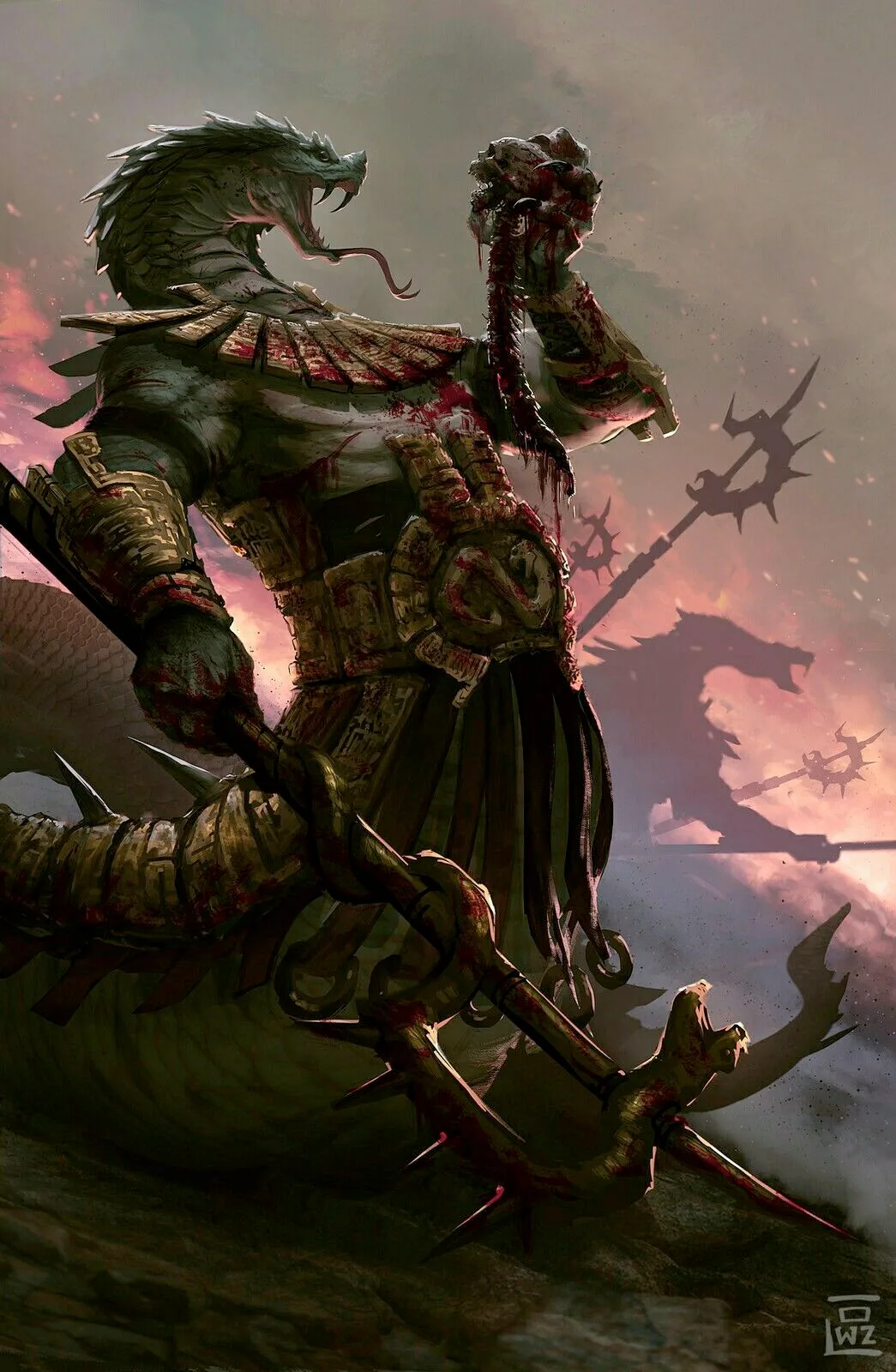 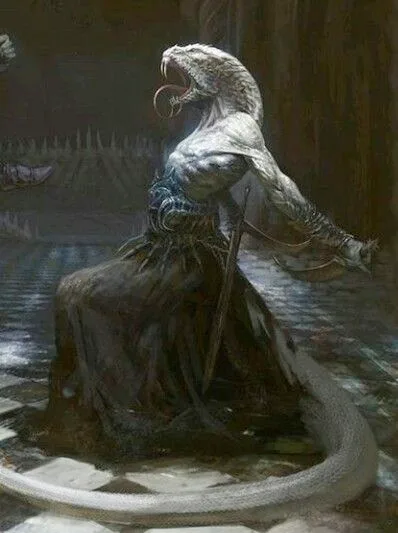 The serpent creatures known as naga are all that remains of an ancient, decadent serpent empire. Ages ago, in the earliest days following the Great Awakening, their priest-philosophers uncovered profane rites that reshaped their bodies and minds, refining themselves into a caste-based society of perfected forms in which the most serpentine are the leaders and the most outwardly humanoid are spies and agents in foreign lands. ## Serpents Awakened The serpents who became naga were among the earliest awakened civilizations of Vitaea. Their society built great temples of stone and forged metal into armor, tools, and weapons. In their ceremonies they paid homage to the serpent as the embodiment of the qualities they most appreciated. They developed a philosophy of separating emotion from intellectual pursuits, allowing them to focus their energy on personal advancement and expanding their territory. They believed themselves to be the most enlightened mortals in the world, and in their hubris they sought to become ever greater. In time, their devotion to the ophidian ideal turned inward. Through ritual, sacrifice, and the manipulation of Aethyr, they learned not merely to honor the serpent—but to become more perfectly aligned with it. ### One Race, Many Forms The bodies of all yuan-ti have a mix of humanoid and snakelike parts, but the proportion varies from individual to individual. After the initial metamorphosis from serpents, their society quickly coalesced into a caste system based on how complete a person’s transformation was. The vast majority of yuan-ti fall into three categories — abominations, malisons, and purebloods — while the mutated broodguards and exceedingly rare anathemas have their place in the hierarchy as well. All yuan-ti can interbreed. Females usually lay clutches of eggs, which are stored in a common hatchery, although live births aren’t uncommon. A mating between yuan-ti of different types almost always produces eggs that hatch into yuan-ti of the weaker parent, so most choose partners of the same type in the interest of maintaining the strength of their personal bloodline. The yuan-ti know rituals that can transform an individual into a more powerful type. The cost and time required to perform the ritual is prohibitive, and as a result most yuan-ti never get the opportunity to undergo such a transformation. Every use of the ritual must be modified to suit the individual undergoing transformation, and requires rare herbs, exotic magical substances, snakes, and one or more mortals to be sacrificed and eaten as part of the procedure. ## Undercover Empire The civilization that gave rise to the naga was among the richest in the mortal world. It rapidly progressed in metalworking, using keen intellect and magic to discover the secrets of making steel. Its military shattered rival tribes and developed advanced tactics for fighting in forests and open plains. The civilization grew into a cluster of allied city-states. Conquered neighbors were allowed to keep their leaders and culture so long as they paid tribute, swore allegiance to the victors, and incorporated their conquerors’ serpent doctrines into their beliefs. These victories sent a constant influx of food, ore, and slaves back to the home cities. The wealth of the empire allowed the ruling elite plenty of time to focus on intellectual pursuits. These nobles turned to philosophy and ritual, offering magic and sacrifice in pursuit of the perfection of the ophidian form. In time, they discovered how to reshape themselves into that ideal—but the cost of the change was high, requiring many sacrifices for each individual transformation. Entire populations of captives in one city-state were consumed to fuel the first great ascensions, and once the knowledge of these rites spread to other leaders, the demand for sacrifices grew without limit. As the rites demanded more and more living essence, the naga intensified their raids on bordering settlements to sustain their transformation. > Calm long-view schemers, innate deceivers, and immune to poison — yuan-ti make perfect courtiers. And, worse for the rest of us, rulers. > — Elminster The physical and magical prowess of the naga empire allowed them to retain their holdings for several hundred years, until a combination of drought, attacks by enemies (including dragons and rival awakened beings), civil war, torpor among their guiding doctrines, and the rise of iron weapons among their enemies finally loosened their hold over nearby lands. The naga withdrew to their fortified cities and underground temples, ceding the rest of their territory to their former subjects. They vanished in a matter of weeks, all but disappearing from the world. Naga structures throughout the land were torn down to celebrate liberation from the serpent-bodied oppressors, and within a few generations the naga were all but forgotten by the emerging civilizations of Vitaea. For over a thousand years after their empire fell, the naga remained ensconced in their hidden strongholds, biding their time until they were ready to strike again. Today, with their numbers greatly diminished and their enemies much stronger than in ages past, the naga know they cannot rely on open conquest to reclaim their dominance. Instead, operating from subterranean ruins and hidden enclaves, naga agents infiltrate foreign governments to discover weaknesses that their leaders can exploit. They look forward to the day when their dominion spreads across the world like venom through the blood, as it once did. Because their population is so small, the naga avoid open warfare. Instead, they gain influence by controlling rulers—and those close to them—through blackmail, drugs, magic, and subterfuge carried out by disguised purebloods. > “From the deep jungles and along the trade routes, naga poisons and potent liquors are quietly sold. Beware—some of these brews bind the will of those who partake, leaving them open to the influence of the next serpent-spy they encounter.” > — Elminster ## Emotionless Evil During their ascension, the naga stripped themselves of emotional influence. Now they view the world from a pragmatic and dispassionate perspective. They understand emotional connections in a detached, intellectual way, and recognize that such feelings in others can be exploited through bribes, favors, or threats. As creatures devoid of emotion, yuan-ti exhibit behavior and use tactics that exemplify that outlook (or lack of one). Whether in combat or in daily life, the following principles guide the yuan-ti in all they do. ### Other Lives Are Cheap Yuan-ti put little value on humanoid lives, even those of their own slaves and cultists. They would poison children to carry out a threat against their parents, or turn one person into a broodguard in order to show her family the consequence of resistance. They might refrain from provoking others’ feelings if doing so could adversely affect the yuan-ti’s plans, but they understand humanoid psychology well enough to know that they can get away with this casual disregard for life almost anytime. Furthermore, in the yuan-ti caste system, a greater yuan-ti’s life is worth far more than a lesser one’s. Weaker citizens are expected to lay down their lives to protect their betters. Leaders rely on this zealotry in their plans, and although they don’t needlessly waste the lives of purebloods on futile actions, most strategies include a fallback option in which mobs of purebloods and slaves are thrown at opposing forces in the hope of allowing the malisons and abominations time to escape. ### Survival First Yuan-ti are likely to retreat or flee from conflict if they don’t believe they have a reasonable chance of success. This reaction isn’t out of cowardice, but practicality—yuan-ti value their own lives much too highly to risk them when the odds aren’t in their favor. A short retreat might be just the thing to reach a better tactical position, find allies, or to allow the yuan-ti the opportunity to study their opponents and implement better tactics. Any enemy who chases a group of fleeing yuan-ti might be on the victorious side of a rout or could be heading into a trap; if the enemy has been encountered before, it is likely that the yuan-ti have prepared a special ambush at the end of the pursuit. ### Capture, Not Kill The objective of the yuan-ti as a race is to conquer and enslave others; they don’t espouse the sort of evil that calls for them to butcher or eradicate all who oppose them. In keeping with their goal of domination, the yuan-ti would rather capture potentially useful opponents than kill them. They use many methods for capturing enemies, such as poisoning, knocking out an opponent instead of making a killing blow, throwing nets, using magic such as suggestion, or restraining them in the coils of a giant snake. To force their compliance, enemies might be brainwashed, charmed, tortured, or transformed into broodguards. Those that prove intractable still have their uses, either as sacrifices to the gods or as food. ### Depend on Deceit Naga have no sense of honorable combat. They are naturally stealthy, and if they can sneak up on enemies, either in an ambush or to murder them in their sleep, the yuan-ti will do so—and they actually prefer these tactics to open warfare. Because abominations and malisons can change into the shapes of snakes, they can keep their presence hidden and get into places their normal forms couldn’t enter. Their immunity to poison gives all yuan-ti a tactical advantage in dealing with other creatures. A pureblood serving as a food taster for a royal family could poison a meal and declare it “safe” after taking a bite. > “There are tales of serpent folk hidden within the courts of great cities—merchants, advisors, even rulers themselves. I find such stories difficult to believe.” > — Volo > “Ye should.” > — Elminster ## Roleplaying a Naga When you’re roleplaying a Naga, the following tables contain possible inspiration. They suggest characteristics that a yuan-ti might possess. Naga Personality Traits | d8 | Personality Trait | | --- | --- | | 1 | I see omens in every event and action. The serpent gods continue to advise us. | | 2 | I have very high standards for food, drink, and physical pleasures. | | 3 | I prefer to be alone rather than among other creatures, including my own kind. | | 4 | I sometimes become consumed by philosophy. | | 5 | I believe I am superior to others of my caste. | | 6 | I am driven by wanderlust and want to explore lands far from our cities. | | 7 | I am interested in modern human culture, even as primitive as it is. | | 8 | I await the day when we again conquer lands by force, as we did in the old times. | Naga Ideals | d6 | Ideal | | --- | --- | | 1 | Greed. I display my wealth as a sign of my power and prosperity. (Evil) | | 2 | Aspiration. I strive to follow the path toward becoming an anathema. (Evil) | | 3 | Unity. No leader shall put personal goals above those of our race. (Any) | | 4 | Kinship. My allegiance is to my caste and my city. Other settlements can burn for all I care. (Any) | | 5 | Inspiration. My actions set an example for the lesser castes to emulate. (Any) | | 6 | Power. Everything I choose to do is determined by whether it will make me smarter and stronger. (Evil) | Naga Bonds | d6 | Bond | | --- | --- | | 1 | I will see our empire rise again and, in so doing, win the favor of the serpent gods. | | 2 | I am enamored with the culture and trappings of another society and wish to be part of it. | | 3 | I respect my superiors and obey them without question. My fate is theirs to decide. | | 4 | I have an interest in an unsuitable mate, which I can’t suppress. | | 5 | I respect and emulate a great hero or ancestor. | | 6 | An enemy destroyed something of value to me, and I will find where it lives and kill the offender. | Naga Flaws | d6 | Flaw | | --- | --- | | 1 | I feel twinges of emotion, and it shames me that I am imperfect in this way. | | 2 | I put too much credence in the dictates of a particular god. | | 3 | I frequently overindulge in food and wine, and I am impaired and lethargic for days afterward. | | 4 | I worship a forbidden god. | | 5 | I secretly believe things would be better if I was in charge. | | 6 | If I could get away with it, I would gladly kill and eat a superior yuan-ti. | ## Naga Names Naga names have meanings that have been passed down through the generations, although spellings and inflections have changed over time. Some naga add more sibilants to their birth names to create an exaggerated hissing sound, based on one’s personal preference and whether an individual’s anatomy can more easily pronounce the name in this altered form. An adopted name of this sort is recognized as a variant of the birth name, rather than a unique name unto itself. A naga might refer to itself by its birth name, by its adopted name, or (especially among purebloods) by a name it borrows from the local populace. The Naga Names table provides naga birth names suitable for any campaign. Naga Names | d20 | Name | | --- | --- | | 1 | Asutali | | 2 | Eztli | | 3 | Hessatal | | 4 | Hitotee | | 5 | Issahu | | 6 | Itstli | | 7 | Manuya | | 8 | Meztli | | 9 | Nesalli | | 10 | Otleh | | 11 | Shalkashlah | | 12 | Sisava | | 13 | Sitlali | | 14 | Soakosh | | 15 | Ssimalli | | 16 | Suisatal | | 17 | Talash | | 18 | Teoshi | | 19 | Yaotal | | 20 | Zihu | | Cold-Blooded, Cold-Blooded Intrigue, Serpentine Spellcasting, Poison Resilience, Venomous Bite, Constrict, Serpentine Body | Vitaea | Eskelieh | Communal: Raised by a village, order, or organization | Seaborn | Sylvari-Vitae (True Sylvari) | 40,000 years | Intelligence, Dexterity | Low-light Vision | Unlimited | 25 | Swimming, Walking | Aethyrian Common, Yuantish | 100 years | 20 years | 150 lbs | 6 ft (12ft length) | Medium | Greens, Blues, Blacks, Purples | Scaled | Snake-folk Humanoid, Legless, Tailed | Great Awakening | Yes | No |
| Krekku (Kenku, Ravenfolk) | Council-led communities of flightless raven-folk who generally live in ghetto-like neighborhoods and make up the lower classes of the Aaraki society who generally see them as subservient | > The map we found showed the entrance to the Priest King’s treasure cache right in the middle of the ruined section of the city. We approached our destination without issue, but as we arrived at the burned-out building, a sudden cacophony erupted around us. Birds squawked, cats hissed, and dogs growled. Lidda hustled us back to the city’s safer avenues. Only when we were back within the area patrolled by the guard did she explain that the noises indicated that the wingless folk had claimed that area, and that to trespass would be to court death. > — Gimble, Notes from a Treasure Hunter 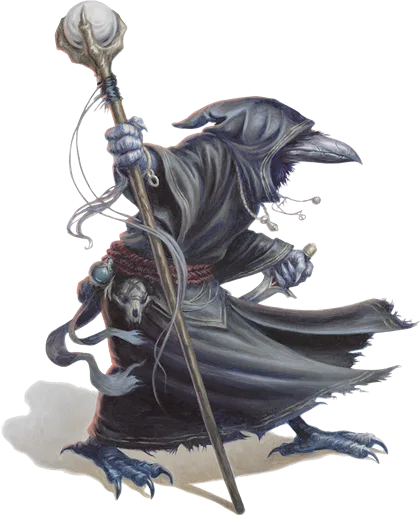 Haunted by an ancient crime that robbed them of their wings, the kenku wander the world as vagabonds and burglars who live at the edge of human society. Kenku suffer from a sinister reputation that is not wholly unearned, but they can prove to be valuable allies. ## An Ancient Curse The kenku once served a mysterious, powerful entity on another plane of existence. Some believe they were minions of Grazz’t, while others say that they were scouts and explorers for the Wind Dukes of Aaqa. Whatever the truth, according to legend, the kenku betrayed their master. Unable to resist the lure of a beautiful sparkling treasure, the kenku plotted to steal the item and escape to the Material Plane. Unfortunately for the kenku, their master discovered their plan before they could enact it. Enraged, the entity imposed three dreadful curses upon them. First, the kenku’s beloved wings withered and fell away from their bodies, leaving them bound to the earth. Second, because their ingenuity and skill had turned toward scheming against their patron, the spark of creativity was torn from their souls. Finally, to ensure that the kenku could never divulge any secrets, their master took away their voices. Once the entity was satisfied that they had been sufficiently punished, the kenku were set loose on the Material Plane. Since then, the kenku have wandered the world. They settle in places that accept them, usually bleak cities that have fallen on hard times and are overrun with crime. ## Dreams of Flight Above all else, kenku wish to regain their ability to fly. Every kenku is born with a desire to take to the air, and those who learn spellcasting do so in hope of mastering spells that will allow them to fly. Rumors of magic items such as flying carpets, brooms capable of flight, and similar objects provoke a great desire for the kenku to acquire the items for themselves. Despite their lack of wings, kenku love dwelling in towers and other tall structures. They seek out ruins that reach to the sky, though they lack the motivation and creativity to make repairs or fortify such places. Even so, their light weight and size allow them to dwell in rickety structures that would collapse beneath a human or an orc. Some thieves’ guilds use kenku as lookouts and messengers. The kenku dwell in the tallest buildings and towers the guild controls, allowing them to lurk in the highest levels and to keep watch on the city below. ## Hopeless Plagiarists As a result of their lack of creativity, kenku function comfortably as minions of a powerful master. Flock leaders enforce discipline and minimize conflicts, but they fail at effective planning or crafting long-term schemes. Although unable to speak in their own voices, kenku can perfectly mimic any sound they hear, from a half?ling’s voice to the noise of rocks clattering down a hillside. However, kenku cannot create new sounds and can communicate only by using sounds they have heard. Most kenku use a combination of overheard phrases and sound effects to convey their ideas and thoughts. By the same token, kenku have no ability to invent new ideas or create new things. Kenku can copy existing items with exceptional skill, allowing them to become excellent artisans and scribes. They can copy books, make replicas of objects, and otherwise thrive in situations where they can produce large numbers of identical items. Few kenku find this work satisfying, since their quest for the freedom of flight makes them ill-suited to settle into a routine. ## Ideal Minions Kenku gather in groups called flocks. A flock is led by the oldest and most experienced kenku with the widest store of knowledge to draw on, often called Master. Although kenku can’t create new things, they have a talent for learning and memorizing details. Thus, ambitious kenku can excel as superb spies and scouts. A kenku who learns of clever schemes and plans devised by other creatures can put them to use. The kenku lack the talent to improvise or alter a plan, but a wise Master sets multiple plans in motion at once, confident that underlings can follow orders to the letter. For this reason, many kenku make an easy living serving as messengers, spies, and lookouts for thieves’ guilds, bandits, and other criminal cartels. A network of kenku can relay a bird call or similar noise across the city, alerting their allies to the approach of a guard patrol or signaling a prime opportunity for a robbery. Since kenku can precisely reproduce any sound, the messages they carry rarely suffer degradation or shifts in meaning. Human messengers might switch words or phrases and garble a message inadvertently, but the kenku produce perfect copies of whatever they hear. ## Kenku Adventurers Kenku adventurers are usually the survivors of a flock that has sustained heavy losses, or a rare kenku who has grown weary of a life of crime. These kenku are more ambitious and daring than their fellows. Others strike out on their own in search of the secrets of flight, to master magic, or to uncover the secret of their curse and find a method to break it. Kenku adventurers, despite their relative independence, still have a tendency to seek out a companion to emulate and follow. A kenku loves to mimic the voice and words of its chosen companion. > ROLEPLAYING A KENKU > If you’re playing a kenku, constant attempts to mimic noises can come across as confusing or irritating rather than entertaining. You can just as easily describe the sounds your character makes and what they mean. Be clear about your character’s intentions unless you’re deliberately aiming for inscrutable or mysterious. > You might say, “Snapper makes the noise of a hammer slowly and rhythmically tapping a stone to show how bored he is. He plays with his dagger and studies the Lords’ Alliance agent sitting at the bar.” Creating a vocabulary of noises for the other players to decode might sound like fun, but it can prove distracting and could slow down the game. ## Kenku Names Given that kenku can duplicate any sound, their names are drawn from a staggering variety of noises and phrases. Kenku names tend to break down into three categories that make no distinction between male and female names. Kenku thugs, warriors, and toughs adopt noises made by weapons, such as the clang of a mace against armor or the sound made by a breaking bone. Non-kenku refer to the kenku by describing this noise. Examples of this type of name include Smasher, Clanger, Slicer, and Basher. Kenku thieves, con artists, and burglars adopt animal noises, typically those common in urban settings. In this manner, kenku can call out to each other while those who overhear them mistake them for common animals. Non-kenku use names that refer to the sound made or the animal a kenku mimics, such as Rat Scratch, Whistler, Mouser, and Growler. Some kenku turn their back on crime to pursue legitimate trades. These kenku adopt noises made as part of their craft. A sailor duplicates the sound of a fluttering sail, while a smith mimics the clanging of a hammer on metal. Non-kenku describe these folk by their trade sounds, such as Sail Snap, Hammerer, and Cutter. | Expert Duplication, Kenku Recall, Mimicry, Raven’s Feathers, Feathered Descent | Vitaea | Zarriel | Familial: Raised by mother(s), and/or father(s), and/or sibling(s) | Skyborn | Sylvari-Vitae (True Sylvari) | 40,000 years | Charisma, Dexterity | Normal | Unlimited | 25 | Walking | Aethyrian Common, Auran, Kenkish | 50 years | 10 years | 50 lbs | 3 ft | Small | Blacks, Greys, Dark Purples | Feathered | Raven-folk Humanoid, Winged, Taloned | Great Awakening | Yes | No |
| Aaraki (Aarakocra, Falconfolk) | A republican empire of proud humanoid eagle-folk with a far-reaching territory spanning many of the world’s high mountain peaks | Aarakocra are majestic, eagle-like humanoids who hail from the towering peaks of the world's highest mountains. With their sharp talons, powerful wings, and keen eyesight, they are well-adapted to life in the skies. Organized into a widespread republican empire, Aarakocra control a vast territory and exert influence over the lower-lying lands. 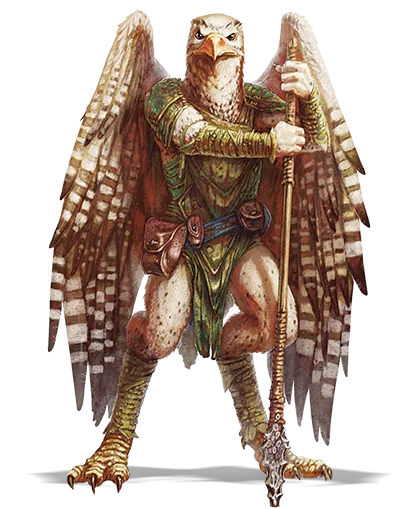 ## Beak and Feather From below, aarakocra look much like large birds. Only when they descend to roost on a branch or walk across the ground does their humanoid appearance reveal itself. Aarakocra stand about 5 feet tall and have a wingspan of around 15 feet. Covered in feathers of varying shades of brown, white, and gold, they possess sharp beaks and talons reminiscent of eagles. Their eyes are typically amber or golden, gleaming with intelligence and pride. Feathers cover their bodies. Their plumage typically denotes membership in a tribe. Males are brightly colored, with feathers of red, orange, or yellow. Females have more subdued colors, usually brown or gray. Their heads complete the avian appearance, being something like a parrot or eagle with distinct tribal variations. ## Sky Wardens Nowhere are the aarakocra more comfortable than in the sky. They can spend hours in the air, and some go as long as days, locking their wings in place and letting the thermals hold them aloft. In battle, they prove dynamic and acrobatic fliers, moving with remarkable speed and grace, diving to lash opponents with weapons or talons before turning and flying away. Once airborne, an aarakocra leaves the sky with reluctance. On their native plane, they can fly for days or months, landing only to lay their eggs and feed their young before launching themselves back into the air. Those that make it to a world in the Material Plane find it a strange place. They sometimes forget or ignore vertical distances, and they have nothing but pity for those earthbound people forced to live and toil on the ground. ## Avian Mannerisms The resemblance of aarakocra to birds isn’t limited to physical features. Aarakocra display many of the same mannerisms as ordinary birds. They are fastidious about their plumage, frequently tending their feathers, cleaning and scratching away any tiny passengers they might have picked up. When they deign to descend from the sky, they often do so near pools where they can catch fish and bathe themselves. Many aarakocra punctuate their speech with chirps, sounds they use to convey emphasis and to shade meaning, much as a human might through facial expressions and gestures. An aarakocra might become frustrated with people who fail to pick up on the nuances; an aarakocra’s threat might be taken as a jest and vice versa. The idea of ownership baffles most aarakocra. After all, who owns the sky? Even when explained to them, they initially find the notion of ownership mystifying. As a result, aarakocra who have little interaction with other people might be a nuisance as they drop from the sky to snatch livestock or plunder harvests for fruits and grains. Shiny, glittering objects catch their eyes. They find it hard not to pluck the treasure and bring it back to their settlement to beautify it. An aarakocra who spends years among other races can learn to inhibit these impulses. Confinement terrifies the aarakocra. To be grounded, trapped underground, or imprisoned by the cold, unyielding earth is a torment few aarakocra can withstand. Even when perched on a high branch or at rest in their mountaintop homes, they appear alert, with eyes moving and bodies ready to take flight. ## Homelands The Aarakocra Empire is a vast and intricate network of aeries built on high mountain peaks. Governed by a republican system, each aerie is represented by elected officials who gather to debate and make decisions for the welfare of the entire empire. The Aarakocra are proud of their democratic traditions and hold a deep sense of duty towards maintaining order and justice within their territory. However, not all is harmonious within the Aarakocra Empire. The Kenku, a race of flightless avian humanoids, inhabit the lower echelons of Aarakocra society. Once capable of flight, the Kenku have lost this ability over generations due to the oppressive conditions imposed upon them by the Aarakocra. The strained relationship between the Aarakocra and the Kenku is a source of internal tension and discord. ## Relations with Other Races Aarakocra are often viewed with a mix of awe and apprehension by other races. Their imperialistic tendencies and control over high-altitude territories can lead to territorial disputes and tensions. However, they are also respected for their disciplined society and the order they maintain in their realms. While the Aarakocra maintain diplomatic relations with various races, their oppressive treatment of the Kenku is a blemish on their reputation. Some view the Aarakocra as tyrants, exploiting the Kenku and denying them the right to reclaim their heritage of flight. ### Aarakocra Characters Aarakocra characters are often proud, disciplined, and value their freedom above all else. They may be driven by a sense of duty towards their empire, a desire to explore the world beyond the mountain peaks, or a quest to address the injustices within their society. Regardless of their motivations, Aarakocra adventurers bring a unique perspective and set of skills to any adventuring party. ## Aarakocra Names As with much of their speech, aarakocra names include clicks, trills, and whistles to the point that other peoples have a difficult time pronouncing them. Typically, a name has two to four syllables with the sounds acting as connectors. When interacting with other races, aarakocra may use nicknames gained from people they meet or shortened forms of their full names. An aarakocra of either gender may have one of these short names: Aera, Aial, Aur, Deekek, Errk, Heehk, Ikki, Kleeck, Oorr, Ouss, Quaf, Quierk, Salleek, Urreek, or Zeed. | Talons, Eagle Eyed, Light as a Feather, Dive Attack, Call of the Skies, Wind Rider | Vitaea | Zarriel | Familial: Raised by mother(s), and/or father(s), and/or sibling(s) | Skyborn | Sylvari-Vitae (True Sylvari) | 40,000 years | Intelligence, Dexterity | Normal | Unlimited | 25 | Flying (Glide), Walking | Aethyrian Common, Auran, Aarakan | 50 years | 10 years | 75 lbs | 5.5 ft | Medium | Widely Varied | Feathered | Raptor-folk Humanoid, Winged, Taloned | Great Awakening | Yes | No |
| Owlin (Owlfolk) | A scattered community of hermit-like humanoid owl-folk that live in small family units in remote places across the world and are known for their curiosity, wisdom, and racial kinship | Hidden away in the far-reaching corners of the world, the Owlin race leads a secluded and introspective existence. These humanoid owl-folk are recognized by their avian features, large expressive eyes, and a coat of soft, mottled feathers covering their bodies. Resembling owls, they possess a serene and contemplative demeanor, often complemented by an insatiable curiosity and a deep reservoir of wisdom. 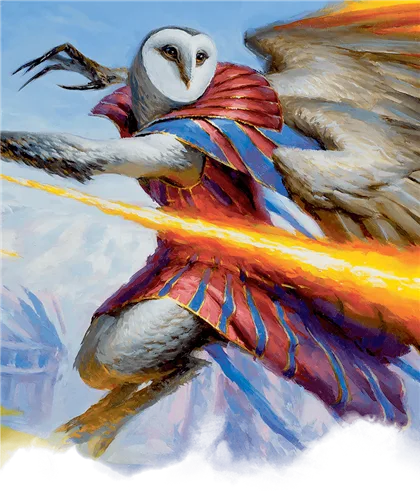 ### Society Owlins typically reside in remote, inaccessible locations, such as dense forests, mountain cliffs, and hidden valleys, where they can pursue their interests in peace and observe the world from a distance. They live in small family units, forming tight-knit bonds with their kin and valuing the tranquility and solitude that their secluded homes offer. Despite their hermit-like nature, Owlins are not isolationists and will occasionally venture into the wider world to share their knowledge or satisfy their curiosity. ### Characteristics Known for their keen intellect and acute senses, Owlins are excellent scholars, researchers, and scouts. They possess remarkable night vision and can rotate their heads to a remarkable degree, allowing them to perceive their surroundings with exceptional clarity. Despite their generally pacific nature, they are capable defenders of their homes, using their sharp talons and beaks when threatened. ### Kinship and Curiosity Owlin communities are sparse, but the bond of racial kinship runs deep among them. They maintain a network of communication through which they share discoveries, wisdom, and news of the wider world. Owlins are drawn to mysteries and the unknown, and many embark on solitary journeys to uncover ancient secrets or observe the wonders of nature. ### Interaction with Other Races While they prefer solitude, Owlins are not unfriendly and will engage with other races, especially when there is an opportunity to acquire new knowledge or satisfy their curiosity. They are respected by many for their wisdom and insight, and their reclusive nature often leads to them being sought out as sages and advisors. | Talons, Light as a Feather, Head Rotation, Silent Flight, Natural Scholar, Wind Rider | Vitaea | Zarriel | Familial: Raised by mother(s), and/or father(s), and/or sibling(s) | Skyborn | Sylvari-Vitae (True Sylvari) | 40,000 years | Wisdom, Dexterity | Low-light Vision | Unlimited | 25 | Flying (Glide), Walking | Aethyrian Common, Auran, Owlish | 100 years | 20 years | 50 lbs | 3.5 ft | Small | Browns, Whites, Greys, Blacks | Feathered | Owl-folk Humanoid, Winged, Taloned | Great Awakening | Yes | No |
| Dragari (Dragonborn) | A confederation of sub-racially divided states of humanoid dragon-folk lead by an oligarchic council of dragons; known for their racial pride, independence, and capitalistic focus | > Her father stood on the first of the three stairs that led down from the portal, unmoving. The scales of his face had grown paler around the edges, but Clanless Mehen still looked as if he could wrestle down a dire bear himself. His familiar well-worn armor was gone, replaced by violet-tinted scale armor with bright silvery tracings. There was a blazon on his arm as well, the mark of some foreign house. The sword at his back was the same, though, the one he had carried since even before he had found the twins left in swaddling at the gates of Arush Vayem. > For all her life, Farideh had known that reading her father’s face was a skill she’d been fortunate to learn. A human who couldn’t spot the shift of her eyes or Havilar’s would certainly see only the indifference of a dragon in Clanless Mehen’s face. But the shift of scales, the arch of a ridge, the set of his eyes, the gape of his teeth—her father’s face spoke volumes. > But every scale of it, this time, seemed completely still—the indifference of a dragon, even to Farideh. > — Erin M. Evans, The Adversary 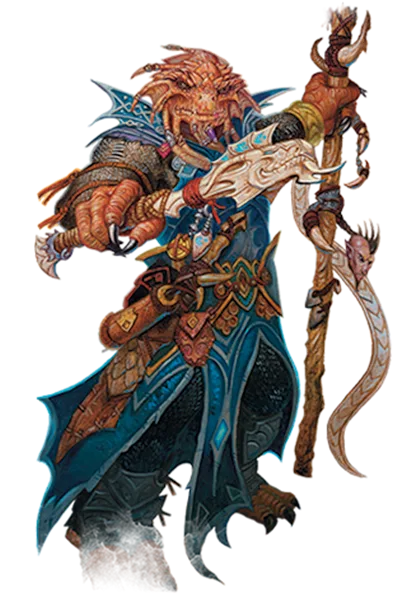 The Dragari are an enigmatic and proud race of humanoid dragon-folk, divided into distinct sub-races that represent different dragon kinds. Each sub-race forms its own state within the greater confederation, and they collectively rule themselves through a powerful oligarchic council composed of ancient and wise dragons. The Dragari are known for their fierce independence, racial pride, and a society built on capitalistic principles, where wealth and influence are the cornerstones of power. ### Physical Characteristics Dragari stand taller than most humans, with scales covering their bodies, sharp claws, and dragon-like heads featuring horns and sometimes frills. Their eyes gleam with the ancient wisdom of dragons, and their bodies are honed to physical perfection. The color and texture of their scales, as well as their abilities, vary according to their sub-race, mirroring the diversity of dragonkind. ### Society Dragari society is structured around a capitalistic hierarchy, where wealth, entrepreneurship, and resourcefulness are highly valued. The confederation is divided into states, each representing a different sub-race of Dragari and governed by its own laws and customs. Despite their internal differences, the Dragari present a united front to the outside world, thanks to the guidance of the Dragon Council, an assembly of the eldest and most powerful dragons from each state. The Dragon Council acts as the ultimate authority, arbitrating disputes between states and leading diplomatic and military efforts. Each state, while maintaining its autonomy, pays homage to the Council and contributes to the common defense and prosperity of the confederation. ### Culture Dragari culture emphasizes individual achievement, honor, and the accumulation of wealth and knowledge. They are proud of their dragon heritage and often engage in rituals and ceremonies to honor the ancient dragons who lead them. Education and the pursuit of personal betterment are highly encouraged, leading to a society of well-educated and ambitious individuals. Trade and commerce are the lifeblood of Dragari society, and they have developed a reputation as shrewd negotiators and astute business beings. The marketplace is a focal point of their communities, bustling with activity as goods, services, and information are exchanged. ### Relations with Other Races The Dragari maintain a stance of cautious independence when dealing with other races. They are not quick to trust but are willing to form alliances and trade agreements if it benefits their interests. Their racial pride sometimes leads to friction with other races, but their wisdom and diplomatic acumen often help in smoothing relations. ### Adventurers Dragari adventurers are not uncommon and often seek to accumulate wealth, knowledge, or power. They can be found in various roles, such as merchants, mercenaries, scholars, or diplomats. Their natural abilities, coupled with their education and upbringing, make them versatile and formidable adventurers. ### Dragari Traits Due to their diverse nature and the influence of the dragon ancestry, Dragari possess a variety of traits and abilities, often dependent on their sub-race. Common traits include enhanced physical and mental attributes, breath weapons, resistance to elements, and a keen business sense that aids them in trade and negotiations. | Bite, Claws, Powerful Tail, Draconic Ancestry, Breath Weapon, Forceful Presence, Heavy Metabolism, Scaled Vulnerability, Chromatic Warding, Gem Flight, Metallic Breath Weapon | Vitaea | Dragar | Familial: Raised by mother(s), and/or father(s), and/or sibling(s) | Skyborn | Sylvari-Vitae (True Sylvari) | 40,000 years | Intelligence, Constitution | Normal | Unlimited | 30 | Walking | Aethyrian Common, Draconic | 200 years | 40 years | 250 lbs | 6.5 ft | Medium | Chromatic, Metallic, & Gem Colors | Scaled, Spines, Fins | Dragon-folk Humanoid, Tailed, Clawed | Great Awakening | Yes | No |
| Skink (Kobolds) | Scattered tribes of small, subterranean, humanoid dragon-folk who are known for their low sense of self-preservation and a strong veneration for dragons. | > Kobolds are a lot less cute when they learn how to cast fireballs. > — Volo 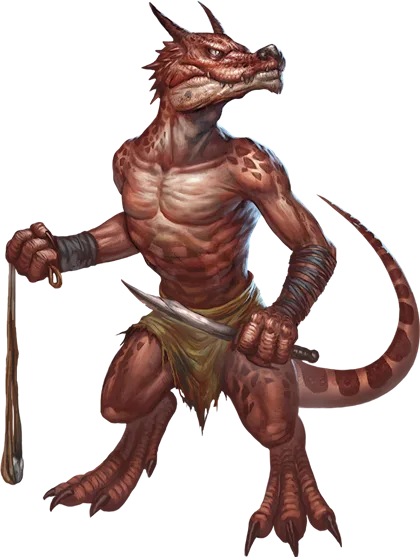 Kobolds are often dismissed as cowardly, foolish, and weak, but these little reptilian creatures actually have a strong social structure that stresses devotion to the tribe, are clever with their hands, and viciously work together in order to overcome their physical limitations. In the kobolds’ version of a perfect world, the creatures would be left alone to dig their tunnels and raise the next generation of kobolds, all the while seeking the magic that will free their imprisoned god (see the “Kurtulmak: God of Kobolds” sidebar). In the world they occupy, kobolds are often bullied and enslaved by larger creatures — or, when they live on their own, they are constantly fearful of invasion and oppression. Although individually they are timid and shy away from conflict, kobolds are dangerous if cornered, vicious when defending their eggs, and notorious for the dangerous improvised traps they use to protect their warrens. > KURTULMAK: GOD OF KOBOLDS > The god of kobolds was a vassal of Tiamat. When the gnome god Garl Glittergold stole a treasure from Tiamat’s hoard, she sent Kurtulmak to retrieve it. Garl lured his pursuer into a maze-like cavern, then collapsed the exits behind him, trapping Kurtulmak for all eternity. Kurtulmak is a hateful deity, one who despises all life except for kobolds. He especially hates Garl Glittergold, gnomes, and fey creatures that enjoy playing pranks. He taught the first kobolds how to mine, tunnel, hide, and ambush. He is dominated by his emotions—intelligent, but not wise. Arrogant and prone to gloating, he carries grudges, has a huge chip on his shoulder, and spends a lot of time fashioning elaborate revenge scenarios against those who have disrespected him. ## Expert Tunnelers Kobolds are naturally skilled at tunneling. Similar to dwarves, they seem to have a near-instinctive sense of what sections of stone or earth are strong or weak, are bearing a load or are safe to excavate, or are likely to contain minerals or offer access to water. This ability enables them to fashion secure homes in places where other creatures wouldn’t feel safe. Kobolds take advantage of their size by creating small-diameter tunnels that they can easily pass through, but that require larger creatures to hunch over or even crawl to make progress. In places where a tunnel opens into a chasm and continues on the other side, the kobolds might connect the two passages with a rope bridge or some other rickety structure, designed to collapse under the weight of any creature heavier than a kobold. On occasion, the route through a kobold lair runs along a ledge that borders a cavern or a crevasse, and the kobolds might erect a railing or a wall that prevents them from falling off the edge — high enough to protect a kobold but low enough to serve as a tripping hazard for a larger creature. Those of other humanoid races have little good to say about kobolds, but they do admit that the little reptilians do respectable tunnel work using simple tools. If a band of kobolds is enslaved by more powerful creatures, the kobolds are usually put to work enlarging their masters’ living area and protecting vital areas of the lair with traps and other defenses. Some human communities hire kobolds to dig their sewer tunnels, paying them with food and tools the kobolds wouldn’t have access to on their own. If they are treated well and left alone to do the job, the kobolds work industriously and build a network of passages beneath the streets, connecting them to a nearby waterway and greatly improving the town’s sanitation. If the kobolds like the area and aren’t mistreated by the humans, they might build a warren and make a permanent home there, while continuing to expand the town’s sewers as the community grows. These so-called “city kobolds” live underground but might make occasional nighttime forays up to the surface. Roughly one quarter of the towns and cities in the world have kobold communities living under them, but the kobolds are so good at staying hidden that the surface-dwelling citizens in the area often don’t know what lies beneath them. Because the kobolds make sure they stay out of the way of anyone more dangerous than themselves, grow their own subterranean food, and prefer to sneak about at night, the people of a town might go for weeks or months without noticing evidence that kobolds are in the area, and years between actual sightings. ## Able Scavengers Kobolds are adept at identifying broken, misplaced, discarded, or leftover crafted items from other creatures that can still be put to use. They prefer to scavenge objects that have clearly been lost or thrown away, which is easy to do without attracting attention. At the same time, they don’t automatically shy away from trying to grab items that are the property of other creatures, because such objects are more likely to be in good condition and thus more useful or valuable. When they go after items that aren’t free for the taking, kobolds try to remain undetected and don’t give their targets reason to harm them. For example, a group of city kobolds might sneak into a cobbler’s house at night to loot it of knives, leather bits, nails, and other useful items, but if they are at risk of discovery, they run away rather than attack anyone in the house. By fleeing before they can be seen or identified, they avoid getting into a situation where the townsfolk would try to hunt down all kobolds and put the tribe’s survival at risk. Some aggressive individual kobolds and tribes do exist, but in general kobolds don’t purposely provoke retaliatory attacks from the creatures they steal from. It’s better to be cautious and overlooked than to be considered dangerous and a threat. In a couple of situations, kobolds might abandon this careful approach. First, because of their hatred of gnomes, city kobolds often go out of their way to target gnomes’ houses and shops. Even in such cases, the kobolds’ fear of retaliation usually prevents them from trying to directly harm the gnomes, but they might spit in the milk, balance dishes on tables so they’re easily knocked over and broken, or scatter sewing needles all over the floor — petty, vengeful acts that humiliate, injure, or anger the gnomes, but not so much that the gnomes want to hunt down and kill the kobolds. Because of the kobolds’ animosity, gnomes tend to avoid or abandon settlements that have a severe infestation of kobolds, and conversely kobolds are usually driven out of communities that have a large gnome population. Second, kobolds are always on the lookout for magic that might help them free their imprisoned god, Kurtulmak. Typical kobolds don’t know how to use a wand, a spellbook, or anything with more magical power than a potion, but they all believe that the tribal sorcerer can figure out how to use any such item they come across. When kobolds sense an opportunity to separate a magic item from its owner, they are often willing to take the chance of revealing themselves because the potential reward is worth the risk. ## Dragon Servitors Kobolds believe that they were created by Tiamat from the blood of dragons — a view supported by their reptilian (they would say draconic) appearance. In every kobold tribe, the legend of the creatures’ origin is passed down from elder to hatchling, giving each individual and every generation a reason to feel pride and self-respect. The kobolds prefer to run away than fight, to live off the scraps of others, and they are often dominated by larger humanoids, but they know that there is greatness within them and they are proud that they were chosen to be the blood-kin of dragons. Kobolds willingly serve chromatic dragons and worship them as if they were demigods — mighty beings of divine descent. This isn’t a casual sort of worship or lip service; kobolds are awed in the presence of a dragon, as if an actual avatar of a deity were in their presence. Kobolds fall all over themselves to obey orders from a dragon, even if they are dangerous orders. Although kobolds usually don’t worship Tiamat directly, they recognize her as the dragon-goddess of all chromatic dragons, and as the master of their racial god, Kurtulmak. ## Arcane Magic Users Unlike some other humanoids, kobolds don’t fear or shun arcane magic. They see magic as part of their connection to dragons, and are proud to be blessed with the ability to wield such power. Young kobold sorcerers are trained by elders, and the training has an almost religious significance. Most kobold sorcerers are of the draconic bloodline origin and specialize in either damaging magic (which can also be used in mining), augmentation (of materials or allies), or divination (to find raw materials and foresee threats to the tribe). The main reason why kobolds depend on arcane magic rather than divine is Kurtulmak’s imprisonment, which makes it difficult for him to grant spells to mortals and for those mortals to receive his favor. Furthermore, kobolds are so frail that a single hit from a human’s weapon can kill one of them, so a tribe has little use for healing magic, and a sorcerer can meet most of the tribe’s other magic-related needs. Kobold shamans are very rare; priests of Kurtulmak, when they reveal themselves, are easily recognized by orange garb (usually just a roughly torn sash or cloak) decorated with an image of a gnome’s skull. ## Life and Outlook Kobolds have a tribal society in which they all take on specialized roles that protect and sustain the tribe. The strongest kobolds are trained to be hunters and warriors, the most clever are crafters and strategists, the toughest are miners and beast-wranglers, and so on. Even a stupid or physically weak kobold is given a role in the tribe, whether something as simple as picking mushrooms for food or watching over hatchlings, and they all understand that their actions contribute to the survival of the group. The tribe practices for the eventuality of defending the lair against intruders, and their plans always include knowing the best escape routes and who is responsible for blocking tunnels to deter pursuit. Kobolds feel a cool affinity or something like kinship for other members of their tribe, but they are rarely affectionate with each other. Two kobolds who’ve known each other for over a decade might consider each other friends or enemies, but the strength of this sentiment is much fainter than any comparable human emotion. Since most of their waking time is spent working, adversarial kobolds rarely have opportunities to exchange insults, let alone come to blows over their differences. Kobolds choose mates primarily for convenience. Their lack of emotional bonding means they have no concept of marriage or permanent family relationships. Their eggs are placed in a common tribal hatchery with no effort to keep track of who each one’s mother is. This practice and the communal raising of the hatchlings mean that the tribe operates like a group of cousins. Because they lay eggs, and the eggs don’t require much tending, kobold females aren’t exempted from war or work. Furthermore, kobolds can slowly change sex. If most males or females of a tribe are killed, some survivors change over several months until the tribe is balanced again. In this way, the tribe can quickly repopulate with just a few survivors. Because of these factors, kobolds don’t have assigned gender roles for young or adults. A leader, sorcerer, miner, or crafter is as likely to be female as male. ### Grow Fast, Die Early Kobolds grow and mature much more swiftly than members of other humanoid races. At 6 years old a kobold is considered an adult. Most succumb to violence, accidents, or disease by age 20, but a kobold can live for up to 120 years — a longevity they attribute to being distantly related to dragons. A female can lay up to six eggs per year, and an egg matures for two to three months before it hatches. Kobolds don’t engage in funeral ceremonies; a dead kobold’s body is burned or disposed of in some other convenient way (or, in a cannibalistic tribe, eaten). Kobolds believe that if they die in service to their tribe, Kurtulmak immediately sends each of them back to life as the next egg laid in the hatchery. If a particularly important or respected member of a tribe dies, the hatchery is closely monitored. The next egg laid is immediately separated from the rest and carefully protected. Once it hatches, the resultant young kobold is groomed to fill a position of importance. ### Food and Cannibalism Although their sharp teeth would suggest they are carnivores, kobolds are actually omnivores, and can eat just about anything, including meat, fruit, tree bark, bone, leather, and eggshells (a newly hatched kobold’s first meal is usually its own shell). A hungry tribe leaves nothing behind from a kill, eating everything that’s edible and using the rest to make tools or adornments. Kobolds shed teeth as they wear out and grow new ones their entire lives. Many wear their own shed teeth as jewelry, with more teeth indicating an older — and wiser — kobold. Some unscrupulous individuals wear teeth stolen or harvested from others in an attempt to make them seem older and more respectable. Most kobold tribes avoid eating what they call “talking meat” — intelligent creatures — because such behavior prompts retaliation. The fear of starvation can make them flexible about this principle, however, and if their options are either attacking such creatures or going hungry, kobolds are practical. A few tribes, particularly those in lightly populated areas, practice cannibalism, believing it is foolish to waste good meat. In any case, kobolds that eat humanoids don’t simply start consuming corpses or prisoners right after a battle; they’re more inclined to tie their victims to saplings and slowly roast them over a fire, or put them in a giant cook pot to make stew. Fortunately for the prisoners, the kobolds’ almost comedic preparations sometimes give rescuers time to locate and free the captives before the kobolds settle down for the main course. ### Hatred Because the gnome god Garl Glittergold trapped the kobold god Kurtulmak in an inescapable maze, kobolds are bitterly hateful toward gnomes. Although they usually don’t seek out gnomes to do them violence, if hostile kobolds encounter a mixed group of gnomes and other humanoids, the kobolds instinctively attack the gnomes. Kobolds in battle with gnomes are much less likely to run away because their hatred overrules their sense of self-preservation. A kobold’s cautious nature doesn’t mean it can’t get angry. The blood of dragons flows in its veins, and like a raging drake, a kobold that is pushed too far or has its back against the wall can become a miniature storm of fangs and claws as it desperately tries to defend its life. Likewise, kinship to their own tribe can prompt kobolds to battle another kobold tribe for resources or territory. Such conflicts aren’t common, because two tribes will always prefer to expand in different directions if they come into contact, but they do happen. For example, two neighboring tribes that want exclusive claim to a flock of mountain goats might skirmish with each other every few days. Eventually the leader of one warring tribe realizes it is losing due to attrition and moves its tribe to another area, ceding the contested territory to its more successful neighbors. As demonstrated by their hatred of gnomes, kobolds have a persecution complex and easily take offense at the actions or deeds of other races. They aren’t forgiving of other races, and they enjoy nursing their hatred until they get a chance to wreak revenge on a creature or a race that has wronged them. ## Environment Kobolds are cold-blooded and thus prefer temperate and tropical climates. Kobold tribes in colder regions tend to be smaller in population and more aggressive in their hunting, since food is relatively scarce in such areas. Partly out of fear and partly because their eyes are sensitive to sunlight, kobolds prefer the security of a cave to living in the open air, and can be found in any sort of terrain that can support tunneling. In a swamp or along a coastline where digging into the soft ground is problematic, kobolds entrench themselves in dense woods, hills, or large rock outcroppings, creating warrens above the water line. Kobolds reside most commonly in hilly or mountainous terrain. Such locations usually have natural caves suitable for living space, plenty of room to dig, and ready sources of food. Although lairing in these locations puts kobolds in competition with surface-dwelling humanoids, their ability to avoid detection often means their warrens go unnoticed by their larger rivals. If it’s lucky, a tribe of kobolds that is discovered by a group of larger humanoids might form a mutually beneficial arrangement, relying on the humanoids for protection from invaders and in return providing services such as excavating new living spaces and disposing of trash. If it’s unlucky, the tribe is enslaved by the other humanoids, and the kobolds serve similar roles but under threat of death. > URDS: WINGED KOBOLDS > Winged kobolds, known as urds, hatch seemingly at random from kobold eggs, even in a tribe that has no adult urds. Although being able to fly is an incredible gift, and it would be expected for kobolds to interpret the wings as a blessing from Tiamat, ordinary kobolds resent urds and don’t get along with them. Fragments of kobold legends speak of Kuraulyek, a winged godling servant of Kurtulmak, who betrayed his master in some way. Kobolds see urds as Kuraulyek’s favorites, and they project their resentment of this traitor onto their winged kin. ### Kobold Names Kobold names are derived from the Draconic tongue and usually relate to a characteristic of the owner, such as scale color, distinctive body parts, or typical behavior. For example, “Red Foot,” “White Claw,” and “Scurry” are Common translations of often-used names. A kobold might change its name when it becomes an adult, or add additional word-syllables after important events such as completing its first hunt, laying its first egg, or surviving its first battle. The Kobold Names table presents kobold names suitable for any campaign. Kobold Names Table 12 | d20 | Name | d20 2 | Name 3 | | --- | --- | --- | --- | | 1 | Arix | 11 | Molo | | 2 | Eks | 12 | Ohsoss | | 3 | Ett | 13 | Rotom | | 4 | Galax | 14 | Sagin | | 5 | Garu | 15 | Sik | | 6 | Hagnar | 16 | Sniv | | 7 | Hox | 17 | Taklak | | 8 | Irtos | 18 | Tes | | 9 | Kashak | 19 | Urak | | 10 | Meepo | 20 | Varn | | Agile Combatant, Bite, Claws, Cold-Blooded, Crafty Trappers, Poison Crafters, Alchemical Tinkering, Geomancer’s Affinity | Vitaea | Kazaru | Communal: Raised by a village, order, or organization | Earthborn | Sylvari-Vitae (True Sylvari) | 40,000 years | Intelligence, Dexterity | Tremorsense | 20 ft | 30 | Burrowing, Swimming | Aethyrian Common, Draconic | 50 years | 10 years | 100 lbs | 3 ft | Small | Chromatic & Metallic Colors | Scaled | Lizard-folk Humanoid, Clawed | Great Awakening | Yes | No |
| Mychiddian (Myconid, Mushroomfolk) | Globally-interconnected communities of humanoid mushroom-folk who live in caves, ravines, and dark grottoes across the world that are often considered mysterious but mostly harmless by other races | Mychiddians, the humanoid mushroom-folk, are a peculiar and mystifying race, dwelling in the secluded darkness of caves, ravines, and shadowy grottoes scattered across the world. Standing at a stature comparable to humans, they exhibit a vast diversity in physical features, varying extensively within and between their global interconnected communities, known as circles. Despite their human-like height, Mychiddians are characteristically slow movers. 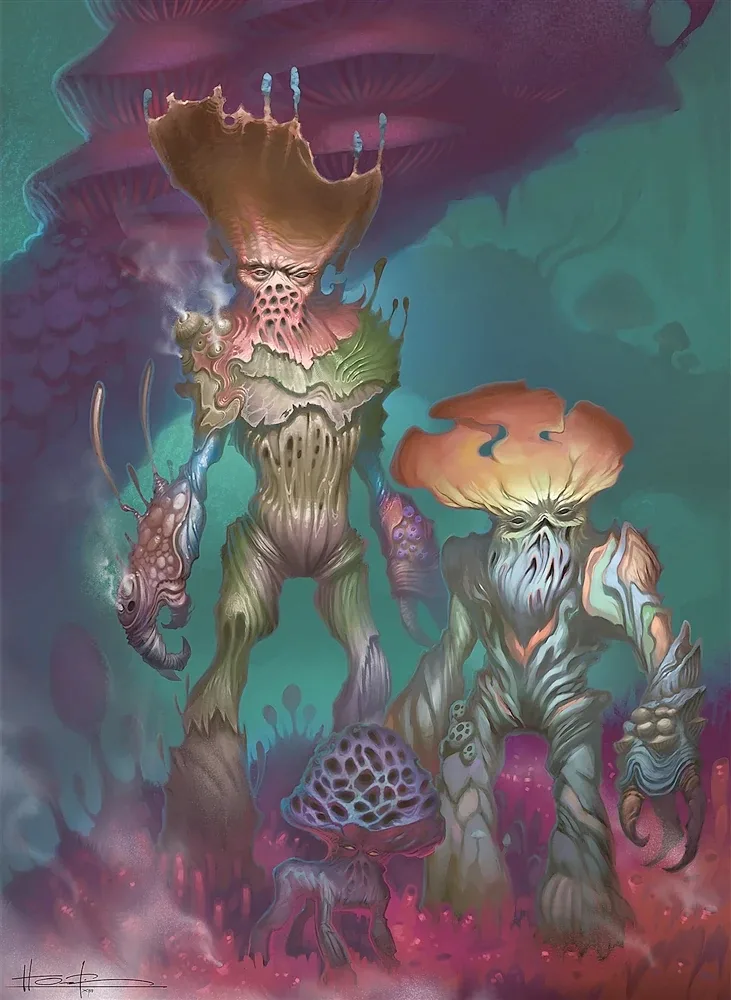 Their bodies, true to their fungal lineage, possess a soft texture reminiscent of mushrooms, yet beneath this lies a structure of hard, near-surface bones that emanate a metallic feel, constituting an endoskeleton. This unique anatomy renders Mychiddians lightweight, typically weighing between 20 to 30 pounds (9 to 14 kg), but also bestows them with a tough natural hide, balancing their mobility constraints. Society and Behavior: Mychiddians lead harmonious lives within their circles, maintaining a sense of global connection through intricate networks, reminiscent of the mycelial threads of fungi. These communities, while appearing enigmatic to other races, are predominantly benign, fostering mutual respect and cooperation. The Mychiddians’ secluded habitats and elusive nature have led to an aura of mystery surrounding them, yet they remain mostly harmless entities in the eyes of the world. Interactions and Perceptions: To the outside world, Mychiddians are seen as creatures of curiosity and wonder. Their seemingly cryptic existence and unconventional habitats have sparked tales and speculations, painting them as both intriguing and inscrutable beings. While interactions with other races are limited, encounters with Mychiddians often leave an impression of a race that is gentle yet resilient, connected yet secluded, and above all, harmoniously coexisting with the natural world around them. | Light as a Feather, Poison Resilience, Mycelial Network, Biolumenescence, Rapport Spores, Pacifying Spores, Distress Spores, Endoskeletal | Vitaea | Communal: Raised by a village, order, or organization | Earthborn | Sylvari-Vitae (True Sylvari) | 40,000 years | Charisma, Wisdom | Blindsight (30ft) | 30 ft | 20 | Walking | Aethyrian Common, Mycelial | 50 years | 10 years | 50 lbs | 3 ft | Small | Browns, Greens, Blacks, Greys | Hairless | Mushroom-Folk Humanoid | Great Awakening | Yes | No | |
| Skettan (Skaven, Ratfolk) | Vast hordes of highly competitive humanoid rat-folk with little care for their mortality who live in a huge network of underground tunnels and are organized into darwinocratic clans where leadership is achieved by eliminating rivals | In the dark, labyrinthine underworld beneath the surface, the Skettan carve out their sprawling, chaotic empire. These humanoid rat-folk have a brutal, survival-of-the-fittest society, organized into various clans vying for power, resources, and influence. Skettan live and die by the rule of the strong, often literally, as their leaders achieve their positions through lethal cunning and treachery. Members of this race are marked by a constant sense of paranoia and a keen awareness of the dangers that lurk around every corner, including betrayal from their own kind. However, they generally possess a disregard for the mortality of others. 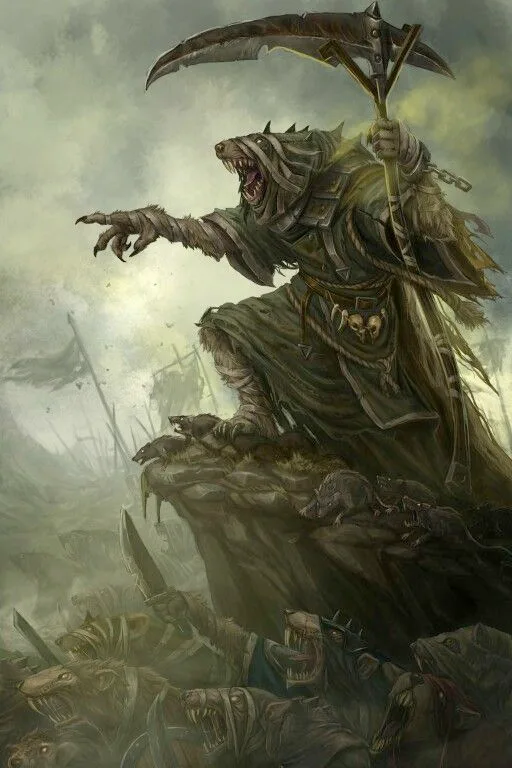 ### Physical Characteristics Skettan are rodent-like in appearance, standing between 4 to 5 feet tall. They have fur ranging from gray to brown, beady eyes that gleam in the dark, and long, pink tails. Their bodies are agile and lean, built for skulking in the shadows and maneuvering through the complex tunnels that make up their subterranean world. ### Society and Culture Skettan society is divided into numerous clans, each with its own focus, be it warfare, alchemy, or even arcane studies. These clans are in a constant state of internal and external conflict. Leadership is determined in a "darwinocratic" fashion: those who can eliminate their rivals either through physical might, subterfuge, or other forms of manipulation rise to the top. Their vast underground lairs are sprawling, disorderly places, filled with the sounds of chittering voices and the clatter of machinery. Despite their chaotic nature, these warrens are highly functional, supporting the Skettan's ceaseless drive for expansion and conquest. 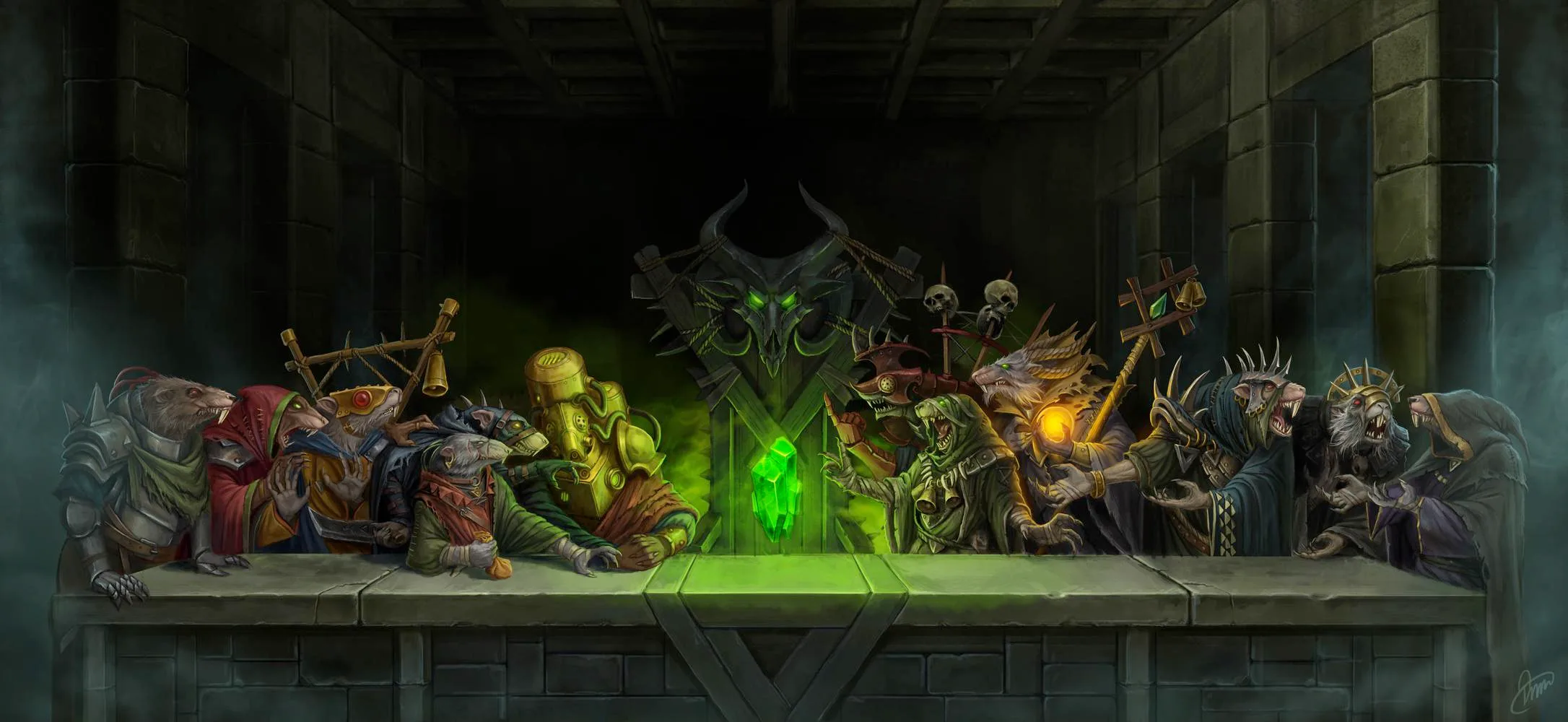 ### Broodmothers and Clan Identity The Skettan population is predominantly male, with each clan featuring only a few broodmothers. These rare, highly-guarded females are the cornerstone of each clan's future, birthing all members of the next generation. Each broodmother belongs to one of the great Skettan clans, and her offspring are considered members of that clan by birthright. The importance of the broodmothers in Skettan society cannot be overstated. They are fiercely protected and often secluded deep within the clan's territory, far away from the reach of rival clans or internal treachery. The presence of a broodmother often serves as a unifying force for the otherwise fractious clan members, reminding them that their survival and future prosperity are inexorably linked to her well-being. ### Alignment and Religion Skettan tend to lean toward chaotic alignments, with the struggle for survival and power overriding any concern for laws or morality. Religious practices among the Skettan often involve dark pacts and appeasements to gods and entities that embody the harsh, ruthless ideals they hold dear. ### Adventurers Adventuring among the Skettan is often a means to an end. Whether seeking new technologies, arcane secrets, or simply proving their worth by besting surface-world foes, Skettan adventurers are pragmatic and ruthless, willing to do whatever it takes to achieve their goals. | Keen Smell, Plagueborn, Born Coward, Dexterous Tail, Clanborn, Clan Pestilent, Clan Skryche, Clan Mourden, Clan Shyv, Clan Mars | Vitaea | Kavzar | Communal: Raised by a village, order, or organization | Earthborn | Sylvari-Vitae (True Sylvari) | 40,000 years | Dexterity, Constitution | Darkvision | 60 ft | 30 | Burrowing, Climbing | Aethyrian Common, Skettish | 50 years | 10 years | 125 lbs | 5 ft | Small | Greys, Whites, Blacks, Browns | Furred | Rat-folk Humanoid | Great Awakening | Yes | No |
| Mulvarp (Molefolk) | Small insular communities of subterranean, humanoid mole-folk with a high value placed on skill and craftsmanship who are lead by a guild-like government | Mulvarps are subterranean humanoids with features resembling that of moles. Short-statured but sturdy, these mole-folk have evolved to thrive in the labyrinthine tunnels and chambers they carve beneath the surface world. A Mulvarp's fur is generally earth-toned, ranging from deep browns to soft grays, ideal for blending into their environment. Their hands are large and clawed, perfect for digging and tunneling. 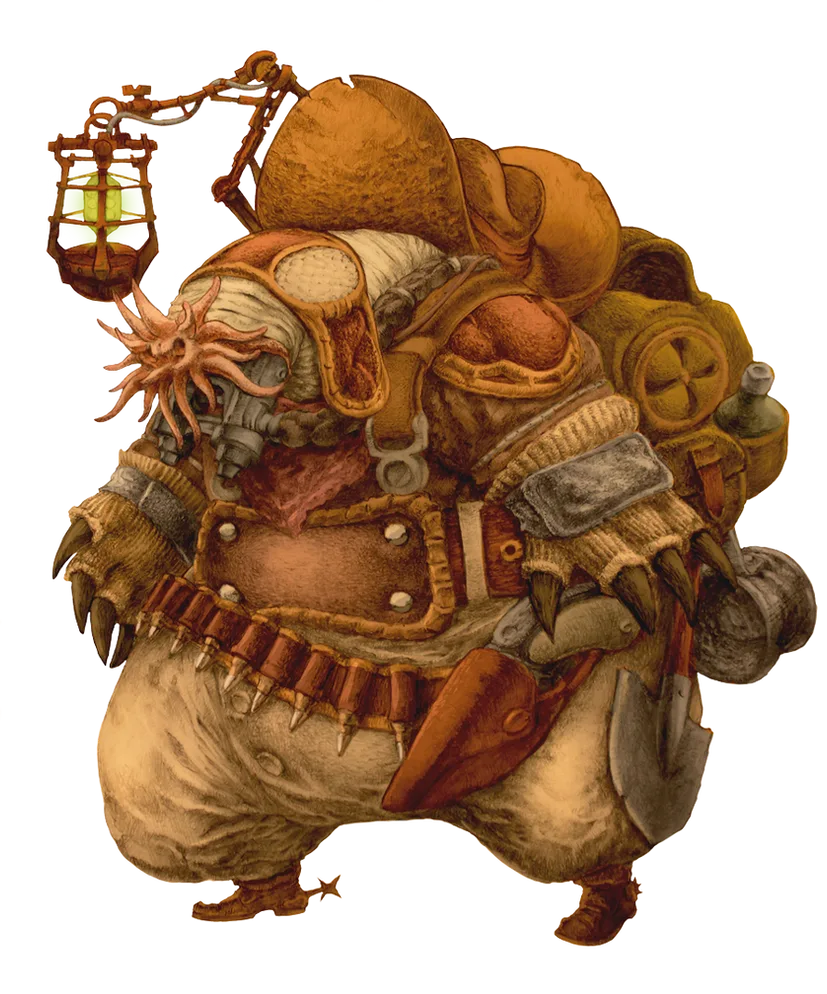 ### Society and Culture Mulvarp society is organized around guild-like institutions, each focused on a particular craft or skill. From blacksmithing to alchemy, from masonry to mining—each guild serves as both a place of learning and a governing body. Leadership is based on expertise and accomplishment, and guildmasters hold significant influence within Mulvarp communities. Due to their subterranean lifestyle, Mulvarps have an intrinsic respect for the earth, viewing it as both their home and their lifeblood. Their communities are often insular and highly self-sufficient, valuing skill and craftsmanship above all else. ### Government The Mulvarp government is a composite of guilds, each led by its most accomplished member, known as the guildmaster. Together, these guildmasters form a governing council that oversees the affairs of the Mulvarp community. Decisions are reached through reasoned debate and consensus, with each guildmaster's voice weighted according to their expertise in the matter at hand. ### Religion and Spirituality Mulvarps do not commonly adhere to surface religions, but they have their own set of beliefs and superstitions related to the earth and underground spirits. Offerings of precious stones and minerals are often left in concealed alcoves to appease these subterranean deities. ### Relations with Other Races Due to their insular nature, Mulvarps are often wary of outsiders. However, they respect skill and craftsmanship, regardless of its source. Those who prove themselves in these areas may find warm acceptance within a Mulvarp community. Although they seldom venture above ground, Mulvarps are generally peaceable neighbors, preferring to avoid conflict when possible. ### Homeland Mulvarp communities are located deep underground, in expansive networks of tunnels and chambers. These settlements are marvels of engineering, with intricate, well-designed infrastructures to ensure the flow of fresh air, the drainage of water, and the structural integrity of their subterranean homes. ### Adventurers Mulvarp adventurers are rare but not unheard of. Often they are young guild apprentices sent out to gather rare materials, artifacts, or knowledge, or are those rare individuals born with an insatiable curiosity about the world above. | Stonecunning, Stone Camouflage, Earth Shaper, Psionic Sensitive, Claws, Vibratory Sense | Vitaea | Zarriel | Familial: Raised by mother(s), and/or father(s), and/or sibling(s) | Earthborn | Sylvari-Vitae (True Sylvari) | 40,000 years | Wisdom, Dexterity | Tremorsense | 20 ft | 25 | Burrowing, Walking | Aethyrian Common, Terran, Mulvarpen | 150 years | 25 years | 50 lbs | 3 ft | Small | Greys, Whites, Blacks, Browns | Furred | Mole-folk Humanoid | Great Awakening | Yes | No |
| Formian (Antfolk) | An empire of humanoid ant-folk who live in highly structured, hive-like, subterranean colonies governed by matriarchal leaders who influence simple-minded male drones to support their empire across their many subterranean and interlinked colonies | Formians are highly organized, ant-like humanoids who dwell deep in the subterranean tunnels that riddle the lands like vast, complex webs. Their colonies operate as singular entities—highly structured and rigorously maintained by countless drones who follow the guiding force of their matriarchal rulers. 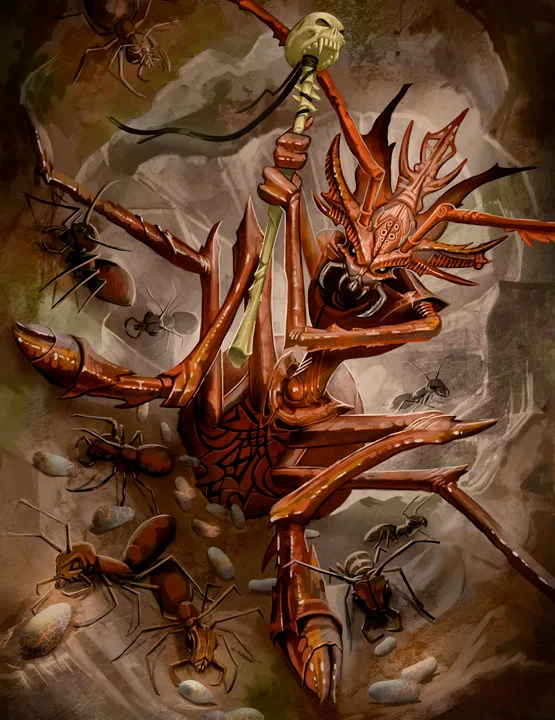 ### Nature and Personality Formians possess an unwavering devotion to their hive, a collective consciousness where each individual's goals and aspirations are integrated into the needs of the greater whole. They are practical, efficient, and virtually unyielding when it comes to the orders of their matriarchs. Although they may seem emotionless to other races, they do experience a form of collective joy, sorrow, and determination that is channeled through their hive-minded link. ### Culture and Governance Formian society is divided into a rigid hierarchy, with each individual having a designated role. At the pinnacle is the Queen, the supreme matriarch whose pheromonal signals dictate the mood, direction, and collective will of the entire colony. Below her are the female warrior-castes and specialized workers, who manage various tasks from resource gathering to colony defense. Lastly, male drones, the simplest in mind and function, perform the most basic duties under the influence of their matriarchal leaders. ### Living Arrangements Formian colonies are sprawling underground complexes, marked by their intricate tunnel designs and grand chambers that serve as both living quarters and workspaces. Each colony is self-sufficient, but they often interconnect with others to form a large, overarching empire. ### Relations with Other Races Formians view other races through the lens of utility: potential allies or hindrances to the growth and prosperity of the hive. They are not inherently hostile, but their collective will and the directives of their matriarchs guide their actions, which may not always align with the goals of outsiders. | Stonecunning, Hive Mind, Exoskeleton, Sensitive Antennae, Four-Legged Sturdiness, Powerful Build, Formian Craftship, Vibratory Sense | Vitaea | Shelloun | Communal: Raised by a village, order, or organization | Earthborn | Sylvari-Vitae (True Sylvari) | 40,000 years | Wisdom, Constitution | Tremorsense | 20 ft | 30 | Burrowing, Walking | Aethyrian Common, Terran, Formian | 75 years | 10 years | 150 lbs | 4.5 ft | Medium | Greys, Whites, Blacks, Browns | Chitinous | Ant-folk Humanoid | Great Awakening | Yes | No |
| Aasaboren (Aasimar) | A scatter number of (usually) individual humanoids of various racial origins who have been influenced by the divines and have taken on some angelic qualities | > I saw her, wreathed in wings of pure light, her eyes blazing with the fury of the gods. The bone devils stopped in their tracks, shielding their faces. Her blade, now a brand of light, swept once, twice, three times. The devils’ heads hit the ground, one after another. And thus we learned that an aasimar traveled in our ragtag band. 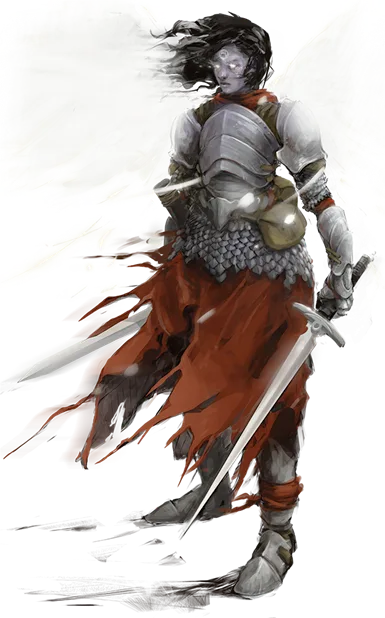 > — Geldon Parl, Of the Tyranny of Dragons Aasimar bear within their souls the light of the heavens. They are descended from humans with a touch of the power of Mount Celestia, the divine realm of many lawful good deities. Aasimar are born to serve as champions of the gods, their births hailed as blessed events. They are a people of otherworldly visages, with luminous features that reveal their celestial heritage. ## Celestial Champions Aasimar are placed in the world to serve as guardians of law and good. Their patrons expect them to strike at evil, lead by example, and further the cause of justice. From an early age, an aasimar receives visions and guidance from celestial entities via dreams. These dreams help shape an aasimar, granting a sense of destiny and a desire for righteousness. Each aasimar can count a specific celestial agent of the gods as a guide. This entity is typically a deva, an angel who acts as a messenger to the mortal world. ## Hidden Wanderers While aasimar are strident foes of evil, they typically prefer to keep a low profile. An aasimar inevitably draws the attention of evil cultists, fiends, and other enemies of good, all of whom would be eager to strike down a celestial champion if they had the chance. When traveling, aasimar prefer hoods, closed helms, and other gear that allows them to conceal their identities. They nevertheless have no compunction about striking openly at evil. The secrecy they desire is never worth endangering the innocent. ## Aasimar Guides An aasimar, except for one who has turned to evil, has a link to an angelic being. That being—usually a deva—provides guidance to the aasimar, though this connection functions only in dreams. As such, the guidance is not a direct command or a simple spoken word. Instead, the aasimar receives visions, prophecies, and feelings. The angelic being is far from omniscient. Its guidance is based on its understanding of the tenets of law and good, and it might have insight into combating especially powerful evils that it knows about. As part of fleshing out an aasimar character, consider the nature of that character’s angelic guide. The Angelic Guide tables offer names and natures that you can use to flesh out your character’s guide. Angelic Guide | d6 | Name | | --- | --- | | 1 | Tadriel | | 2 | Myllandra | | 3 | Seraphina | | 4 | Galladia | | 5 | Mykiel | | 6 | Valandras | Angelic Nature | d6 | Nature | | --- | --- | | 1 | Bookish and lecturing | | 2 | Compassionate and hopeful | | 3 | Practical and lighthearted | | 4 | Fierce and vengeful | | 5 | Stern and judgmental | | 6 | Kind and parental | ## Conflicted Souls Despite its celestial origin, an aasimar is mortal and possesses free will. Most aasimar follow their ordained path, but some grow to see their abilities as a curse. These disaffected aasimar are typically content to turn away from the world, but a few become agents of evil. In their minds, their exposure to celestial powers amounted to little more than brainwashing. Evil aasimar make deadly foes. The radiant power they once commanded becomes corrupted into a horrid, draining magic. And their angelic guides abandon them. Even aasimar wholly dedicated to good sometimes feel torn between two worlds. The angels that guide them see the world from a distant perch. An aasimar who wishes to stop and help a town recover from a drought might be told by an angelic guide to push forward on a greater quest. To a distant angel, saving a few commoners might pale in comparison to defeating a cult of Orcus. An aasimar’s guide is wise but not infallible. Aasimar bear within their souls the light of the heavens. They are descended from humans with a touch of the power of Mount Celestia, the divine realm of many lawful good deities. Aasimar are born to serve as champions of the gods, their births hailed as blessed events. They are a people of otherworldly visages, with luminous features that reveal their celestial heritage. | Celestial Resistance, Restorative Touch, Light Bearer, Divine Path, Radiant Spirit, Radiant Consumption, Necrotic Shroud | Various | Familial: Raised by mother(s), and/or father(s), and/or sibling(s) | Special | 600,000 years | Charisma, Wisdom | Low-light Vision | Unlimited | 30 | Flying (Glide), Walking | Aethyrian Common, Celestial | Extended | None | Varies | Varies | Varies | Varies | Varied | Divine Wings, Produces Light | Divine Influence | Yes | No | ||
| Soraboren (Changeling) | A scattered number of (usually) individual humanoids shapeshifters with widely unknown origins that often use their mercurial forms to blend into their local societies | > Long ago there was a woman named Jes, and she had one hundred children. Her rivals conspired against her and swore to kill her children. Jes begged the Sovereigns for help, but their only answer was the wind and rain. In the depths of her despair, a lonely traveler took her hand. “I will protect your children if they follow my path. Let them wander the world. They may be shunned and feared, but they will never be destroyed.” Jes agreed, and the traveler gave her his cloak. When she draped it over her children, their old faces melted away and they could be whoever they wanted to be. And so it remains. Though the children are shunned by all, the gift of the Traveler protects them still. > —Chance, changeling priest 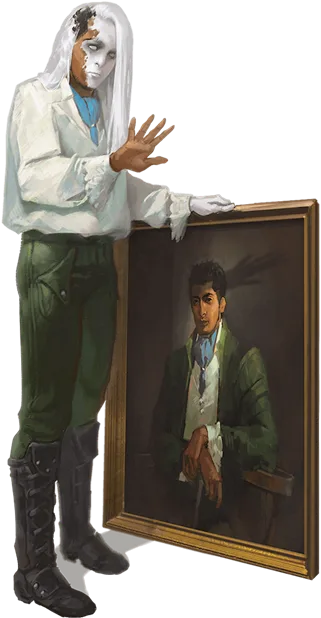 Changelings can shift their forms with a thought. Many changelings use this gift as a form of artistic and emotional expression. It’s also an invaluable tool for grifters, spies, and others who wish to deceive. This leads many people to treat changelings with suspicion. ### A Hidden People Wherever humans live, changelings reside also; the question is whether their presence is known. Changelings are born to one of three paths. A few are raised in stable communities where changelings are true to their nature and deal openly with the people around them. Some are orphans, raised by other races, who find their way in the world without ever knowing another like themselves. Others are part of nomadic changeling clans spread across the Five Nations, families who keep their true nature hidden from the single-skins. Some clans maintain safe havens in major cities and communities, but most prefer to wander the unpredictable path of the god known as the Traveler. In creating a changeling adventurer, consider the character’s relationships with people around them. Does the character conceal their true changeling nature? Do they embrace it? Do they have connections to other changelings or are they alone and in search of companions? ### Masks and Personas In their true form, changelings are pale, with colorless eyes and silver-white hair. It is rare to see a changeling in that form, for a typical changeling changes their shape the way others might change clothes. A casual shape — one created on the spur of the moment, with no depth or history — is called a mask. A mask can be used to express a mood or to serve a specific purpose and then might never be used again. However, many changelings develop identities that have more depth. They build an identity over time, crafting a persona with a history and beliefs. This focused identity helps a changeling pinpoint a particular skill or emotion. A changeling adventurer might have personas for many situations, including negotiation, investigation, and combat. Personas can be shared by multiple changelings; there might be three healers in a community, but whoever is on duty will adopt the persona of Tek, the kindly old medic. Personas can even be passed down through a family, allowing a younger changeling to take advantage of contacts established by the persona’s previous users. ### Changeling Names A changeling might use a different name for each mask and persona and adopt new names as easily as they change faces. The true name of a changeling tends to be simple and monosyllabic; however, there are often accents to a changeling’s name that are expressed through shapeshifting, something single-skins will likely miss. So, two changelings might have the name Jin, but one is Jin-with-vivid-blue-eyes and one is Jin-with-golden-nails. Changelings have a fluid relationship with gender, seeing it as one characteristic to change among many. Changeling Names: Aunn, Bin, Cas, Dox, Fie, Hars, Jin, Lam, Mas, Nix, Ot, Paik, Ruz, Sim, Toox, Vil, Yug | Aethyr | None: Not raised but created, spawned, or catalyzed into existence | Special | 600,000 years | Charisma, Dexterity | Normal | Unlimited | 30 | Walking | Aethyrian Common | 150 years | 25 years | 150 lbs | 5.5 ft | Medium | Mercurial | Hairless | Amorphous Humanoid | Magic | Yes | No | |||
| Machaboren (Warforged) | A scattered number of (usually) individual mechanically and magically constructed humanoids created by other races and imbued with a mortal soul, often designed for a purpose such as war or labor | > “Pierce was built by design, while you were built by accident,” Lakashtai said. “The soul is what matters, not the shape of the vessel.” > “What makes you think he has a soul?” Gerrion said. > “What makes you think you do?” > —Keith Baker, The Shattered Land 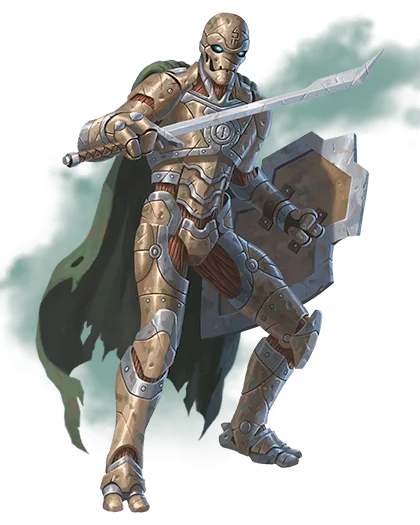 The warforged were built to fight in the Last War. While the first warforged were mindless automatons, House Cannith devoted vast resources to improving these steel soldiers. An unexpected breakthrough produced sapient soldiers, giving rise to what some have only grudgingly accepted as a new species. Warforged are made from wood and metal, but they can feel pain and emotion. Built as weapons, they must now find a purpose beyond war. A warforged can be a steadfast ally, a cold-hearted killer, or a visionary in search of meaning. ### Living Steel and Stone Warforged are formed from a blend of organic and inorganic materials. Root-like cords infused with alchemical fluids serve as their muscles, wrapped around a framework of steel, darkwood, or stone. Armored plates form a protective outer shell and reinforce joints. Warforged share a common facial design, with a hinged jaw and crystal eyes embedded beneath a reinforced brow ridge. Beyond these common elements of warforged design, the precise materials and build of a warforged vary based on the purpose for which it was designed. Although they were manufactured, warforged are living humanoids. Resting, healing magic, and the Medicine skill all provide the same benefits to warforged that they do to other humanoids. ### Warforged Personality The warforged were built to serve and to fight. For most of their existence, warforged had a clearly defined function and were encouraged to focus purely on that role. The Treaty of Thronehold gave them freedom, but many still struggle both to find a place in the post-war world and to relate to the creatures who created them. The typical warforged shows little emotion. Many warforged embrace a concrete purpose — such as protecting allies, completing a contract, or exploring a land — and embrace this task as they once did war. However, there are warforged who delight in exploring their feelings, their freedom, and their relationships with others. Most warforged have no interest in religion, but some embrace faith and mysticism, seeking higher purpose and deeper meaning. The typical warforged has a sexless body shape. Some warforged ignore the concept of gender entirely, while others adopt a gender identity. The more a warforged develops its individuality, the more likely it is to modify its body, seeking out an artificer to customize the look of its face, limbs, and plating. ### Quirks Warforged often display an odd personality trait or two, given how new they are to the world. The Warforged Quirks table contains example quirks. Warforged Quirks | d8 | Quirk | | --- | --- | | 1 | You analyze — out loud — the potential threat posed by every creature you meet. | | 2 | You often misread emotional cues. | | 3 | You are fiercely protective of your friends. | | 4 | You try to apply wartime discipline to every situation. | | 5 | You don’t know how to filter your feelings and are prone to dramatic emotional outbursts. | | 6 | You don’t understand clothing beyond its utility and assume it denotes a person’s function. | | 7 | You are obsessed with your appearance and constantly polish and buff yourself. | | 8 | War is the only thing that makes sense to you, and you’re always looking for a fight. | ### Warforged Names Most warforged were assigned numerical designations for use in military service. Many of them adopted nicknames, often given to them by their comrades. As independent individuals, some have chosen new names as a way to express their path in life. A few take on human names, often the name of a fallen friend or mentor. Warforged Names: Anchor, Banner, Bastion, Blade, Blue, Bow, Cart, Church, Crunch, Crystal, Dagger, Dent, Five, Glaive, Hammer, Iron, Lucky, Mace, Oak, Onyx, Pants, Pierce, Red, Rod, Rusty, Scout, Seven, Shield, Slash, Smith, Spike, Temple, Vault, Wall | Constructed Resilience, Sentry's Rest, Integrated Protection, Specialized Design, Extra Language | Various | None: Not raised but created, spawned, or catalyzed into existence | Special | 2000 years | Varies | Varies | Varies | 30 | Walking | Aethyrian Common | None | None | Varies (Heavy) | Varies | Medium | Varies | Hairless | Contructed, Designed Humanoid | Magic | Yes | No | ||
| Vikrinboren (Simic Hybrid) | A group of individuals of various racial origins who have undergone genetic mutation through the work of the Vikrin Society to take on aspects of other races or creatures though scientific experimentation in search of biological perfection | The Vikrinboren are a group of unique, genetically altered individuals born from the relentless pursuit of biological perfection by the Vikrin Society. The Society itself is a fusion of arcane magic and scientific methodology, working to splice together different racial and creature traits into willing—or sometimes unwilling—subjects. From Dwarven resilience to Dragonborn breath weapons to the chameleon-like adaptability of a shapeshifter, Vikrinboren exhibit a broad spectrum of abilities that reflect their diverse genetic makeup. 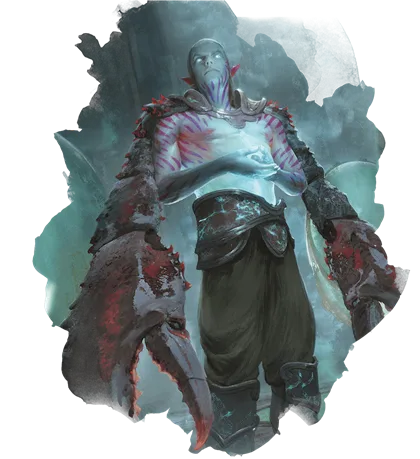 ### Physical Appearance Vikrinboren are as diverse as the various species from which their traits are derived. Some may have scales, others might have wings, and yet others could have gills, feathers, or insect-like appendages. Their physical form is a testament to the ambitious, if not controversial, goals of the Vikrin Society. ### Culture The Vikrinboren don't have a culture of their own per se, but are more of a byproduct of the Vikrin Society's obsession with biological enhancement. As a result, many Vikrinboren feel a certain level of detachment or even alienation from their original races and communities. Within the Society, they are often treated with a mixture of reverence and scientific curiosity. ### Society and Relations Lacking a cohesive society, Vikrinboren relations are often strained, both among themselves and with other races. However, the unifying aspect of their existence is the never-ending quest for biological perfection, guided by the tenets of the Vikrin Society. This journey brings together Vikrinboren of all kinds in pursuit of a common, if elusive, goal. ### Alignment and Religion Vikrinboren alignments are as varied as their genetic makeup, though many trend toward neutral, reflecting the often clinical perspective of the Society that created them. They may follow any number of deities or philosophies, but a good number are devotees of gods of knowledge, magic, or the natural world. | Animal Enhancements, Poison Resilience, Genetic Instability, Extra Language, Biological Template | Ravena | None: Not raised but created, spawned, or catalyzed into existence | Special | 1000 years | Varies | Darkvision | 60 ft | 30 | Walking | Aethyrian Common | Shortened | None | Varies | Varies | Medium | Varies | Varies | Genetically Altered Humanoid | Magic | Yes | No | ||
| Aethaboren (Aethyrborn) | A scattered number of (usually) individual humanoid manifestations of Aethyr created by high concentrations of magical energy which experience extremely short lifespans and a high affinity and hunger for magical energy | Aethaboren are ephemeral beings, born from the intense concentrations of Aethyr—raw magical energy—that suffuse the world. These unique manifestations are touched by arcane forces and drawn to places of great magical power. Their existence is a brief but vivid tapestry of experiences and sensations, for they typically live short, intense lives. Driven by an innate hunger for magical energies, Aethaboren are viewed as both mystical and somewhat tragic figures in a world not fully designed for them. 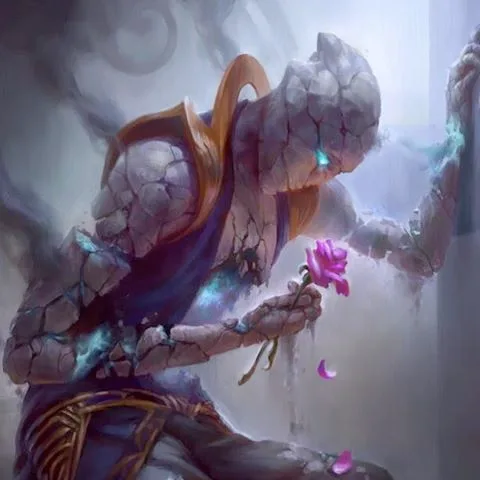 ### Physical Appearance Aethaboren often appear humanoid but are easily distinguishable by their translucent or luminescent skin that seems to shimmer with internal light. They can be a myriad of colors, often reflecting the type or quality of the magic that birthed them. No two Aethaboren look exactly alike, and their form can fluctuate with their mood and magical saturation. ### Culture Aethaboren don't have a conventional culture due to their short lifespans and the individual circumstances of their creation. They are often solitary beings, although they may be drawn to magical academies, sites of arcane power, or other places where they can sate their constant hunger for magic. ### Society and Relations Since they don't form traditional communities, Aethaboren relate to other beings on an individual basis. Many are perceived as mystical or intriguing due to their inherent magical nature, and they can be welcomed as novelties or reviled as omens. They often form relationships quickly and deeply, aware that their time is limited. ### Alignment and Religion Aethaboren lean towards neutrality, driven more by their craving for magical experience than by moral or ethical concerns. They may venerate deities of magic, life, or death, but their devotion is often a personal affair. | Arcane Affinity, Mana Conduit, Live Fast, Die Young, Gifted Aethyrborn, Light as a Feather | Aethyr | None: Not raised but created, spawned, or catalyzed into existence | Special | 500 years | Intelligence, Dexterity | Normal | Unlimited | 30 | Flying (Glide), Walking | Aethyrian Common | 10 years | None | 25 lbs | 5 ft | Medium | Porcelain, Ashen, Purples | Hairless | Fractured, Fleeting, Aethyric | Magic | Yes | No | ||
| Vitaeboren (Werefolk, Shifters) | A scattered number of (usually) individual humanoids of Aradaean descent who have been cursed with therianthropy (often referred to as Werefolk), which is often believed to be spread by humanoids of Vitaean descent | In a world already replete with magic, wonder, and danger, the Vitaeboren stand out as individuals cursed—or perhaps blessed—with therianthropy. Often thought to have been affected by the bestial humanoids of Vitaea, these folk carry within them the essence of various beasts. Whether by scratch, bite, or inheritance, their duality is both a gift and a curse, granting them the might and instincts of animals but also subjecting them to the moons' sway and the mistrust of others. Though rumors and superstition vary widely, mature Vitaeboren generally possess a high level control over their transformations but are still continuously influenced by their bestial natures, even in humanoid form. Scattered among various communities, they are bound by a shared experience but often conflicted by their own individual inclinations. They frequently face discrimination or even persecution, and many learn to hide their condition or move in the shadows of society. 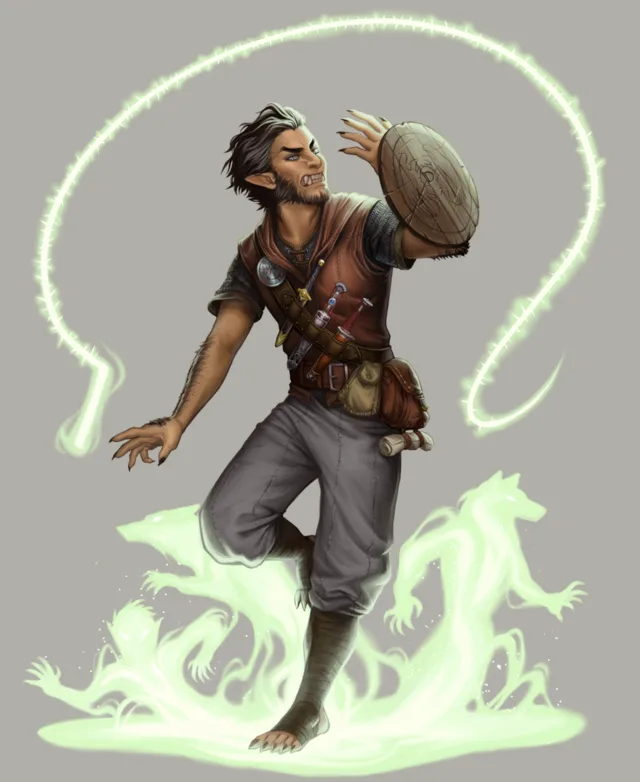 > Geth’s ancient heritage rose up from deep within him, spreading out from the core of his being. Some shifters manifested terrible claws, others massive fangs, still others astounding speed or heightened senses. Geth’s gift from his lycanthrope ancestors was sheer toughness. Strength seeped into his bones and flooded his flesh. His skin hardened, and his hair became coarse like an animal’s tough hide. A sense of invincibility spread through him. For the moment at least, he felt unstoppable! > — Don Bassingthwaite, The Binding Stone Shifters are sometimes called the weretouched, as many believe they are the descendants of humans and lycanthropes. Whatever their origins, shifters have evolved into a unique race. They are humanoids with a bestial aspect; while they can’t fully change shape, they can temporarily enhance their animalistic features — a state they call shifting. Each shifter walks on the knife’s edge between the wilds and the world around them. Do they embrace their primal instincts or the path of civilization? ## The Beast Within Early in childhood, a shifter forms a bond with a beast within, a totemic force that shapes their body and mind. Some shifters believe that these spirits are independent entities, and they may speak of Bear or Wolf as ancestors or guides. Most just see the beast within as a formidable expression of their inner nature, something that emerges as the shifter’s personality takes shape. The beast within is a pool of powerful instincts, and its influence is revealed by a shifter’s personality: a feline shifter may be cool and distant, driven by predatory instincts, while a shifter with a lupine spirit might be drawn to find and protect a pack. When a shifter fully embraces this beast within they physically transform for a short time. A shifter’s beast within is reflected by the shifter’s subrace. Four subraces are especially common: - Beasthide often signifies the bear or boar: stoic, stubborn, and thick-skinned. - Longtooth shifters typically have lupine traits and prefer to run with a pack. - Swiftstride are often predatory and feline, but a swiftstride could also be a cunning rat who darts through the shadows. - Wildhunt shifters are born from any creature that tracks its prey. - Scalefin shifters have a bond with aquatic creatures ranging from predatory sharks to wise octopuses or elegant seahorses. While the beast within certainly has a physical impact on a shifter, it has a spiritual and psychological effect, as well. Two beasthide shifters share the same special ability, but if one has the aspect of the boar and the other is more like a bear, they’ll be quite different in personality. With any shifter, identifying the beast within is a crucial part of understanding the character. ### Similar and Diverse Shifters are similar to humans in height and build but are typically more lithe and flexible. Their facial features have a bestial cast, often with large eyes, flat noses, and pointed ears; most shifters also have prominent canine teeth. They grow fur-like hair on nearly every part of their bodies. The traits of the beast within affect a shifter’s appearance as well. A swiftstride shifter may have catlike eyes and delicate build, while a beasthide shifter might be a massive brute built like a bear. While a shifter’s appearance might remind an onlooker of an animal, they remain clearly identifiable as shifters even when at their most feral. ### The Journey Yet to Come Shifters have a strong presence in the Eldeen Reaches but can be found in rural areas across Khorvaire, where they often live among humans. While they form powerful bonds to friends and kin, shifters place great value on self-reliance and freedom. It’s a shifter proverb to “always be prepared for the journey yet to come,” and most shifters strive to be ready for change or opportunity. Shifters have a natural inclination toward classes with a primal connection. A shifter barbarian draws their rage from the beast within. A shifter ranger indulges their urge to wander and hunt. A shifter rogue harnesses their own predatory instincts. But shifters can pursue any path or faith. ### Shifter Names Shifters have no language of their own and often live in blended communities. Their names typically overlap with the names of other cultures in their region. Many shifters prefer to keep their personal names for their friends and use “wandering names” with strangers. These are usually tied to a physical or personality trait. Shifter Names: Badger, Bear, Cat, Fang, Grace, Grim, Moon, Rain, Red, Scar, Stripe, Swift, Talon, Wolf | Geminaea | None: Not raised but created, spawned, or catalyzed into existence | Special | 2390 years | Varies | Varies | Varies | 30 | Walking | Aethyrian Common | Ageless Immortality | None | Varies | Varies | Varies | Varies | Varies | Aradaean Humanoid with Vitaean Shift-form | Disease, Magic | Yes | No | |||
| Sylvari-Proma (Primordial Sylvari) | Terra | Terra | Proma (Promethian) | 608,690 years | Wisdom, Constitution | Normal | Unlimited | 30 | None | 500 years | 100 years | 100 lbs | 5 ft | Medium | Bark Colors | Foliage | Plant-folk Humanoid | None | No | No | ||||||
| Haku-Proma (Primordial Humans) | Terra | Terra | Proma (Promethian) | 608,690 years | Balanced | Normal | Unlimited | 30 | None | 100 years | 20 years | 150 lbs | 5.5 ft | Medium | Natural Melanin Range | Varied | Normal Humanoid | None | No | Yes | ||||||
| Eldaari (Illithid) | Anevar | Anevar | Otaan (Custodians) | Haku-Proma (Primordial Humans) | 307,490 years | Intelligence | Mindsight | 60 ft | 30 | Levitation | 1000 years | 200 years | 75 lbs | 5 ft | Medium | Blues, Purples, Greens | Hairless | Tentacled Face | Magic | No | No | |||||
| Wataari (Gith) | Anevar | Anevar | Otaan (Custodians) | Haku-Proma (Primordial Humans) | 307,490 years | Charisma | Low-light Vision | Unlimited | 30 | Teleportation | 1000 years | 200 years | 150 lbs | 6 ft | Medium | Browns, Greens, Blues | Straight/Wavy, Dark, Light Beards | Spined, Leathery Skin | Magic | No | No | |||||
| Haku-Aradae (True Humans) | Aradaea | Aradaea | Prota (Ancestors) | Haku-Proma (Primordial Humans) | 306,490 years | Balanced | Normal | Unlimited | 30 | None | 100 years | 20 years | 150 lbs | 5.5 ft | Medium | Natural Melanin Range | Varied | Normal Humanoid | None | No | Yes | |||||
| Sylvari-Vitae (True Sylvari) | Vitaea | Vitaea | Prota (Ancestors) | Sylvari-Proma (Primordial Sylvari) | 306,490 years | Wisdom, Constitution | Normal | Unlimited | 35 | No | No | |||||||||||||||
| Haku-Elda (Proto-Elves) | Aradaea | Aradaea | Prota (Ancestors) | Haku-Aradae (True Humans) | 200,000 years | Dexterity, Wisdom | Low-light Vision | Unlimited | 35 | None | 500 years | 100 years | 100 lbs | 6 ft | Medium | Natural Melanin Range | Fine, Varied Color, Straight, Beardless | Lithe, Pointed Ears, Large Eyes | Magic | No | Yes | |||||
| Haku-Greka (Proto-Orcs) | Aradaea | Aradaea | Prota (Ancestors) | Haku-Aradae (True Humans) | 100,000 years | Strength, Constitution | Tremorsense | 20 ft | 30 | None | 100 years | 20 years | 300 lbs | 6.5 ft | Medium | Browns, Greens, Blacks | Thick, Wooly, Curly, Bearded | Tusks | Diet | No | Yes | |||||
| Haku-Dweka (Proto-Dwarves) | Aradaea | Aradaea | Prota (Ancestors) | Haku-Aradae (True Humans) | 150,000 years | Wisdom, Constitution | Tremorsense | 20 ft | 25 | None | 250 years | 50 years | 150 lbs | 4.5 ft | Medium | Natural Melanin Range | Thick, Varied Color, Curly, Bearded | Stout | Region | No | Yes | |||||
| Haku-Grana (Proto-Giants) | Aradaea | Aradaea | Prota (Ancestors) | Haku-Aradae (True Humans) | 250,000 years | Strength, Constitution | Tremorsense | 60 ft | 40 | None | 1000 years | 200 years | 500 lbs | 10 ft | Large | Natural Melanin Range | Hairless | Enlarged | Magic | No | Yes | |||||
| Haku-Neheki (Nehekaran Human) | Aradaea | Mazhai | Haku (Humans) | Haku-Aradae (True Humans) | 80,000 years | Intelligence, Constitution | Normal | Unlimited | 30 | None | 100 years | 20 years | 150 lbs | 5.5 ft | Medium | Dark Skin Tones | Thick, Wooly, Curly, Beardless | Undead Humanoid | Region | No | Yes | |||||
| Grek’Trok (Trolls) | Aradaea | Enthak | Grekkin (Greenskins) | Grek’Garn (Orcs) | 35,000 years | Strength, Constitution | Tremorsense | 30 ft | 30 | None | 50 years | 10 years | 500 lbs | 9 ft | Large | Browns, Greens, Blacks | Fine, Dark, Straight, Often Hairless | Regenerative Deformations, Tusks | Magic | No | No | |||||
| Gran-Tita (Titans) | Aradaea | Vogdu | Gran (Giantfolk) | Haku-Grana (Proto-Giants) | 225,000 years | Balanced | Tremorsense | 120 ft | 60 | None | 2500 years | 500 years | 10,000 lbs | 25 ft | Gargantuan | Light Skin Tones | Hairless | Enlarged, Aethyr-touched | Magic | No | Yes | |||||
| Gran-Stoma (Storm Giants) | Aradaea | Vogdu | Gran (Giantfolk) | Gran-Tita (Titans) | 200,000 years | Balanced | Tremorsense | 60 ft | 50 | None | 1000 years | 200 years | 5,000 lbs | 20 ft | Giant | Blues, Whites, Greys | Electric | Enlarged, Elemental | Magic | No | No | |||||
| Gran-Cloda (Cloud Giants) | Aradaea | Vogdu | Gran (Giantfolk) | Gran-Tita (Titans) | 200,000 years | Balanced | Tremorsense | 60 ft | 50 | None | 1000 years | 200 years | 5,000 lbs | 19 ft | Giant | Blues, Whites, Purples | Misty | Enlarged, Elemental | Magic | No | No | |||||
| Gran-Fira (Fire Giants) | Aradaea | Vogdu | Gran (Giantfolk) | Gran-Tita (Titans) | 200,000 years | Balanced | Tremorsense | 60 ft | 50 | None | 1000 years | 200 years | 5,000 lbs | 18 ft | Giant | Reds, Blacks, Browns | Firey | Enlarged, Elemental | Magic | No | No | |||||
| Gran-Frosa (Frost Giants) | Aradaea | Vogdu | Gran (Giantfolk) | Gran-Tita (Titans) | 200,000 years | Balanced | Tremorsense | 60 ft | 50 | None | 1000 years | 200 years | 5,000 lbs | 17 ft | Giant | Blues, Whites, Greens | Frosty | Enlarged, Elemental | Magic | No | No | |||||
| Gran-Stona (Stone Giants) | Aradaea | Vargal | Gran (Giantfolk) | Gran-Tita (Titans) | 200,000 years | Balanced | Tremorsense | 60 ft | 50 | None | 1000 years | 200 years | 5,000 lbs | 16 ft | Giant | Greys, Whites, Blacks, Reds | Gemmed | Enlarged, Elemental | Magic | No | No | |||||
| Gran-Maku (Mountain Giants) | Aradaea | Vargal | Gran (Giantfolk) | Gran-Stona (Stone Giants) | 100,000 years | Strength, Constitution | Tremorsense | 60 ft | 45 | None | 500 years | 100 years | 3,500 lbs | 15 ft | Giant | Greys, Whites, Blacks | Hairless | Enlarged | Magic | No | No | |||||
| Gran-Haku (Hill Giant) | Aradaea | Vargal | Gran (Giantfolk) | Gran-Maku (Mountain Giants) | 80,000 years | Strength, Constitution | Tremorsense | 60 ft | 40 | None | 250 years | 50 years | 2,000 lbs | 12.5 ft | Huge | Light Skin Tones | Straight, Brown/Black, Often Hairless | Enlarged | Magic | No | No | |||||
| Gran-Doda (Ettin) | Aradaea | Blackchasm | Gran (Giantfolk) | Gran-Stona (Stone Giants), Haku-Greka (Proto-Orcs) | 50,000 years | Strength, Constitution | Tremorsense | 30 ft | 40 | None | 250 years | 50 years | 2,000 lbs | 10 ft | Huge | Light Skin Tones | Hairless | Enlarged | Magic | No | No | |||||
| Gran-Grek (Ogre) | Aradaea | Blackchasm | Gran (Giantfolk) | Gran-Stona (Stone Giants), Haku-Greka (Proto-Orcs) | 80,000 years | Strength, Constitution | Tremorsense | 30 ft | 40 | None | 75 years | 15 years | 1,000 lbs | 10 ft | Large | Browns, Greens, Blacks | Straight, Brown/Black, Often Hairless | Enlarged, Light orcish features | Mixed Heritage | No | No | |||||
| Centaur | Vitaea | Shelloun/Tarkir | Landborn | Sylvari-Vitae (True Sylvari) | 200,000 years | Dexterity, Strength | Normal | Unlimited | 40 | None | 75 years | 15 years | 750 lbs | 7 ft | Large | Greys, Whites, Blacks, Browns | Furred | Horse-folk Humanoid, 4-legged, Hooved | Great Awakening | No | No | |||||
| Gorillon | Vitaea | Akaras | Landborn | Sylvari-Vitae (True Sylvari) | 200,000 years | Strength, Charisma | Normal | Unlimited | 30 | None | 250 years | 50 years | 350 lbs | 8 ft | Large | Greys, Whites, Blacks, Browns | Furred | Gorilla-folk Humanoid | Great Awakening | No | No |